 Driveway Cost Calculator
Introduction
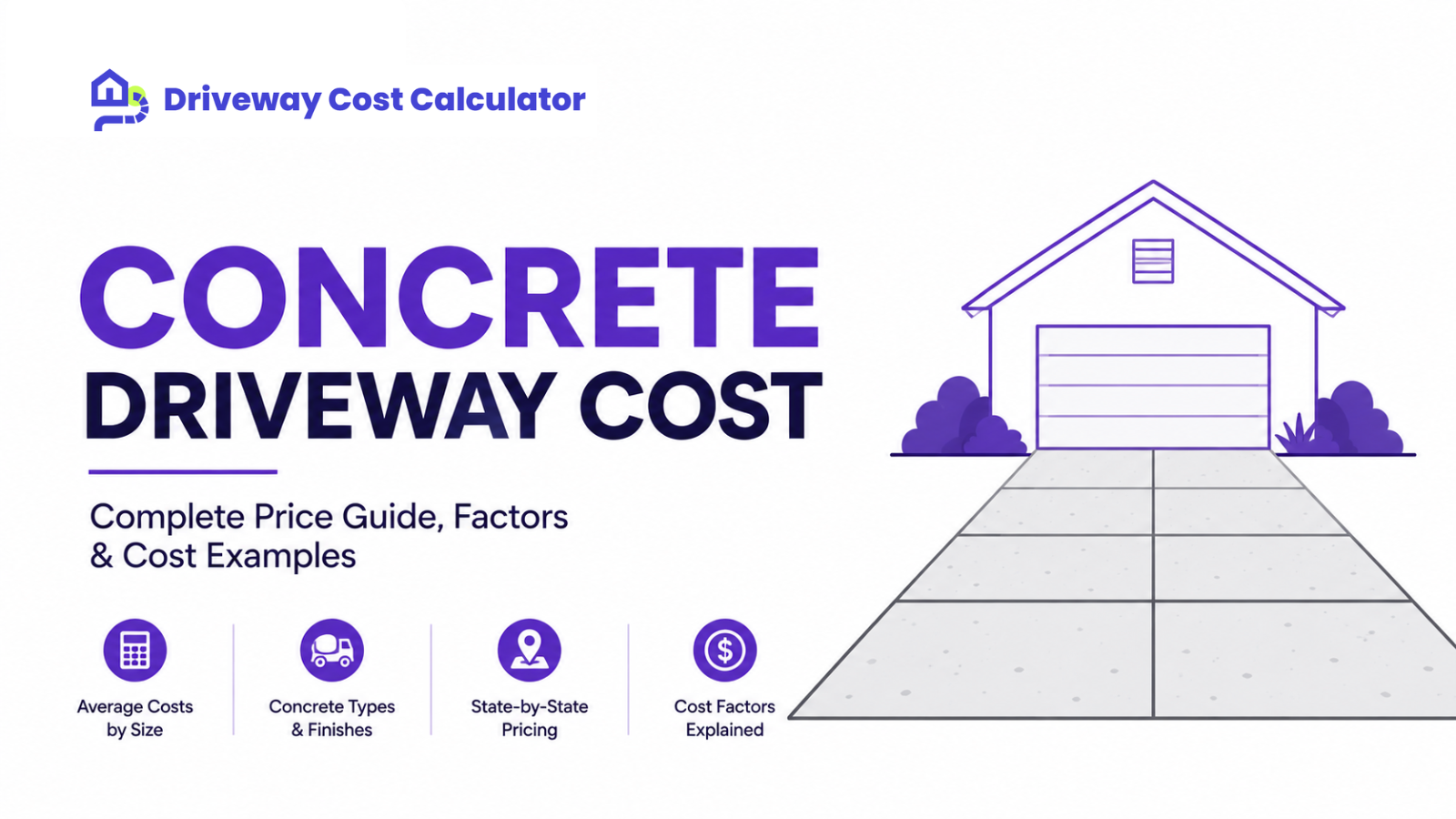
Concrete remains one of the most popular driveway materials in the United States, offering homeowners an excellent combination of durability, curb appeal, and long-term value. Whether you're replacing an aging driveway or installing one for a newly built home, concrete provides a smooth, attractive surface that can serve your property for decades with relatively little maintenance.
Naturally, one of the first questions homeowners ask is:
"How much does a concrete driveway cost in 2026?"
The answer isn't as simple as multiplying your driveway size by a fixed price. Every driveway is different, and professional contractors consider many variables before preparing an estimate. The overall cost depends on the driveway's dimensions, concrete thickness, reinforcement, site preparation, excavation, drainage, labor costs, decorative finishes, permits, and your geographic location.
For this reason, two homeowners installing identical-sized concrete driveways may receive estimates that differ by several thousand dollars.
Understanding these pricing factors before requesting contractor quotes helps you create a realistic budget, compare estimates more confidently, and avoid unexpected expenses during construction.
In this guide, we'll explain average concrete driveway costs, typical price ranges, cost per square foot, the biggest factors affecting installation, hidden costs many homeowners overlook, and practical ways to maximize the value of your investment.
Average Concrete Driveway Cost in 2026
Although prices vary across the United States, most professionally installed residential concrete driveways fall within fairly predictable ranges.
The following table provides a useful starting point for budgeting.
| Project Type | Typical Cost |
|---|---|
| Small driveway | $2,500–$4,500 |
| Standard two-car driveway | $5,000–$8,500 |
| Large driveway | $8,500–$12,000 |
| Decorative concrete driveway | $12,000–$20,000+ |
These estimates generally include both labor and materials for a standard residential installation. However, projects involving significant excavation, poor soil conditions, retaining walls, drainage improvements, or premium decorative finishes may exceed these ranges.
It's also important to remember that local labor rates vary considerably from state to state. Homeowners in major metropolitan areas often pay substantially more than those living in smaller towns or rural communities.
Instead of relying solely on national averages, it's always better to estimate costs using pricing specific to your state and driveway dimensions.
Average Cost Per Square Foot
Most contractors estimate concrete driveway projects using a cost-per-square-foot pricing model.
For a standard residential driveway, homeowners can generally expect installation costs between:
$5 and $12 per square foot
This range typically includes:
- Site preparation.
- Aggregate base.
- Standard concrete placement.
- Finishing.
- Joint cutting.
- Basic cleanup.
However, premium finishes increase costs considerably.
Decorative options such as stamped concrete, colored concrete, exposed aggregate, custom borders, and saw-cut patterns often increase installation costs to:
$12–$20+ per square foot
Although decorative concrete requires a larger initial investment, many homeowners feel the improved appearance and increased curb appeal justify the additional expense.
Concrete Driveway Cost by Driveway Size
Because contractors usually price projects according to square footage, driveway size has one of the greatest influences on the total installation cost.
Below are typical examples for standard residential projects.
| Driveway Size | Typical Cost |
|---|---|
| 250 sq. ft. | $1,500–$3,000 |
| 500 sq. ft. | $2,500–$6,000 |
| 700 sq. ft. | $3,500–$8,000 |
| 900 sq. ft. | $5,000–$10,000 |
| 1,200 sq. ft. | $6,500–$13,000+ |
While larger driveways naturally require more concrete and labor, the cost per square foot doesn't always increase proportionally. Some contractors offer slightly lower unit pricing on larger projects because setup costs are spread across a greater surface area.
Driveway shape also influences pricing.
Straight rectangular driveways are generally the least expensive to construct, while curved driveways, circular driveways, and layouts with multiple parking areas require additional forming, finishing, and labor.
For this reason, two driveways with identical square footage may still have noticeably different installation costs.
Concrete Driveway Cost by Finish
One of concrete's biggest advantages is the variety of decorative finishes available.
Homeowners can choose from several surface treatments depending on their budget and desired appearance.
Standard Broom Finish
A broom finish is the most common residential option.
It provides:
- Good traction.
- Clean appearance.
- Lowest installation cost.
- Minimal maintenance.
For many homeowners, a broom finish offers the best balance between affordability and durability.
Smooth Finish
Smooth-finished concrete creates a modern appearance but may become slippery when wet.
Because of this, smooth finishes are less common for residential driveways and are often combined with textured borders or other decorative elements.
Exposed Aggregate
Exposed aggregate removes the thin surface layer of cement paste to reveal decorative stone underneath.
This finish provides:
- Excellent traction.
- Attractive natural appearance.
- Good durability.
- Unique texture.
Although more expensive than a broom finish, exposed aggregate remains one of the most popular decorative options.
Colored Concrete
Instead of applying color after installation, pigments are mixed directly into the concrete before pouring.
Colored concrete can complement:
- Brick homes.
- Stone facades.
- Landscaping.
- Walkways.
- Patios.
Because coloring affects the entire slab, minor surface wear is generally less noticeable than painted finishes.
Stamped Concrete
Stamped concrete is designed to resemble natural materials such as:
- Brick.
- Slate.
- Flagstone.
- Cobblestone.
- Tile.
Special stamps are pressed into freshly poured concrete before it cures, creating decorative patterns that dramatically improve curb appeal.
Stamped concrete typically represents one of the more expensive residential driveway options because it requires additional materials, specialized tools, and experienced installers.
Decorative Borders
Many homeowners combine standard concrete with decorative borders to achieve a premium appearance without installing an entirely decorative driveway.
Borders may include:
- Colored concrete.
- Brick accents.
- Stone patterns.
- Contrasting textures.
This approach provides visual interest while helping keep overall project costs under control.
Comparing Concrete Finishes
| Finish | Relative Cost | Appearance | Maintenance |
|---|---|---|---|
| Broom Finish | Lowest | Simple | Low |
| Smooth Finish | Low | Modern | Low |
| Exposed Aggregate | Medium | Premium | Low |
| Colored Concrete | Medium | Decorative | Low |
| Stamped Concrete | Highest | Luxury | Moderate |
| Decorative Borders | Medium–High | Premium | Low |
For most homeowners, a standard broom finish offers the best value, while decorative finishes provide greater curb appeal for those willing to invest more in their property's appearance.
What Affects Concrete Driveway Cost?
Although driveway size is one of the biggest pricing factors, contractors evaluate many additional variables before preparing a final estimate.
Understanding these factors helps explain why two homeowners with similarly sized driveways may receive very different quotes.
Concrete Thickness
Thickness plays a major role in both the cost and durability of a concrete driveway.
Most residential driveways are constructed using:
- 4-inch concrete slabs for passenger vehicles.
- 5-inch slabs for heavier pickup trucks.
- 6-inch slabs for RVs, trailers, or frequent commercial vehicle traffic.
Thicker slabs require more concrete and additional labor, increasing installation costs. However, selecting the proper thickness often reduces long-term repair expenses by improving the driveway's strength and resistance to cracking.
Reinforcement
Many concrete driveways include reinforcement to improve structural performance.
Common reinforcement options include:
- Steel reinforcing bars (rebar).
- Welded wire mesh.
- Synthetic reinforcing fibers.
Although reinforcement increases the initial installation cost, it helps control cracking and can improve the driveway's long-term durability, especially in areas with weaker soils or heavier traffic.
Excavation and Base Preparation
Before any concrete is poured, contractors must create a stable foundation.
Preparation often includes:
- Removing vegetation.
- Excavating unsuitable soil.
- Grading the site.
- Compacting the subgrade.
- Installing crushed stone or aggregate base.
- Verifying proper drainage.
A properly prepared base is one of the most important parts of the entire project. Even high-quality concrete can crack or settle prematurely if installed on an unstable foundation.
Drainage
Proper drainage protects both the driveway and your home's foundation.
Depending on your property, contractors may recommend:
- Adjusting the driveway slope.
- Installing drainage channels.
- Adding catch basins.
- Improving grading around the driveway.
Although drainage improvements increase the initial investment, they often prevent much more expensive repairs in the future.
Local Labor Costs
Labor costs vary considerably throughout the United States.
Several factors influence contractor pricing:
- Regional wage rates.
- Contractor demand.
- Project complexity.
- Accessibility for construction equipment.
- Local competition.
For this reason, homeowners in different states—or even neighboring cities—may receive noticeably different estimates for nearly identical projects.
Typical Cost Breakdown
Many homeowners wonder where their money actually goes during a driveway installation.
Although every project is unique, a typical concrete driveway budget is often distributed approximately as follows:
| Project Component | Typical Share |
|---|---|
| Concrete materials | 30–40% |
| Labor | 30–35% |
| Base preparation | 10–15% |
| Excavation | 5–10% |
| Reinforcement | 5–10% |
| Finishing & Cleanup | 5–10% |
These percentages vary depending on the project, but they illustrate that the concrete itself represents only part of the total installation cost.
Professional preparation and skilled installation are equally important.
Hidden Costs Homeowners Often Forget
Many homeowners prepare a budget based only on the contractor's advertised price per square foot.
Unfortunately, several additional costs may arise during construction.
Common examples include:
- Demolition of an existing driveway.
- Disposal of old concrete.
- Tree root removal.
- Soil stabilization.
- Utility location services.
- Permit fees.
- Drainage improvements.
- Landscaping repairs.
- Sidewalk or curb modifications.
Not every project requires these services, but including a small contingency in your budget helps avoid unexpected financial surprises.
Is a Concrete Driveway Worth the Cost?
Although concrete generally costs more to install than gravel or asphalt, many homeowners consider it one of the best long-term investments available.
Some of the biggest advantages include:
- Excellent durability.
- Attractive appearance.
- Low maintenance requirements.
- Long service life.
- Improved curb appeal.
- Potential increase in property value.
A properly installed concrete driveway commonly lasts 30 to 40 years, and some remain in excellent condition even longer with routine maintenance.
When the installation cost is spread over several decades of daily use, the annual cost of ownership is often surprisingly affordable.
For homeowners planning to stay in their property for many years, concrete frequently offers outstanding value.
Concrete vs. Asphalt: Which Costs Less Over Time?
Many homeowners compare concrete and asphalt based only on the initial installation price.
However, long-term ownership costs tell a different story.
Asphalt usually costs less to install, making it attractive for homeowners with limited budgets.
Concrete typically requires a higher upfront investment, but it often lasts significantly longer and requires less routine maintenance.
Over a period of 30 years, asphalt driveways may require:
- Sealcoating every few years.
- More frequent crack repairs.
- Earlier resurfacing or replacement.
Concrete generally requires less maintenance and often remains structurally sound for decades.
For homeowners planning to remain in their home long term, concrete may actually provide the lower lifetime cost despite its higher initial price.
Tips for Saving Money
Installing a quality concrete driveway doesn't necessarily mean spending more than necessary.
Consider the following ways to reduce costs while maintaining quality:
- Compare estimates from at least three contractors.
- Keep the driveway layout simple.
- Avoid unnecessary decorative features.
- Schedule installation during slower seasons if contractors offer discounts.
- Choose the appropriate slab thickness rather than excessive thickness.
- Repair instead of replacing when the existing driveway is still structurally sound.
The cheapest quote isn't always the best value. Quality workmanship often saves money over the lifetime of the driveway.
Frequently Asked Questions
How much does a concrete driveway cost per square foot?
Most standard residential concrete driveways cost between $5 and $12 per square foot, although decorative finishes and complex projects may cost considerably more.
Why is concrete more expensive than asphalt?
Concrete typically requires more material, additional finishing work, and longer curing times. However, it also generally lasts longer and requires less maintenance over its lifetime.
How thick should a concrete driveway be?
Most residential driveways are built using 4 inches of concrete, while heavier vehicles may require 5-inch or 6-inch slabs depending on expected traffic.
How long does a concrete driveway last?
With proper installation and routine maintenance, concrete driveways commonly last 30 to 40 years or even longer.
Does reinforcement increase the price?
Yes. Reinforcement adds material and labor costs, but it also improves durability and helps reduce the risk of cracking.
Is decorative concrete worth the extra cost?
For many homeowners, yes. Decorative finishes such as stamped or colored concrete can dramatically improve curb appeal while increasing the overall appearance of the property.
Should I hire a professional contractor?
For nearly all concrete driveways, yes. Proper excavation, base preparation, reinforcement, finishing, and curing require specialized equipment and experience that are difficult to achieve with a DIY installation.
Final Thoughts
Concrete remains one of the most durable, attractive, and reliable driveway materials available. Although it requires a larger upfront investment than some alternatives, its exceptional lifespan, low maintenance requirements, and timeless appearance make it an excellent long-term choice for many homeowners.
Before beginning your project, compare several contractor estimates, understand local permit requirements, and ensure that every proposal includes proper excavation, base preparation, reinforcement, and the appropriate concrete thickness. These construction details have a significant impact on both the performance and longevity of your driveway.
If you're still planning your budget, using a Driveway Cost Calculator is an excellent place to start. By combining your driveway dimensions, preferred material, and state-specific pricing, it provides a realistic estimate that helps you compare contractor quotes and make informed decisions before construction begins.