 Driveway Cost Calculator
Introduction
If you're planning to install a new driveway in 2026, one of the first questions you'll probably ask is: "How much will it cost?" Whether you're replacing an aging driveway or building one for a newly constructed home, understanding the costs involved is one of the most important steps in planning your project.
Unfortunately, there isn't a single answer that applies to every homeowner. Driveway installation costs vary considerably depending on several factors, including the size of the driveway, the material you choose, your location, labor rates, site preparation, drainage requirements, permits, and optional upgrades.
While many homeowners search for a simple price per square foot, professional contractors evaluate every project individually before preparing an estimate. Two driveways with identical dimensions can have significantly different costs because of differences in soil conditions, accessibility, excavation requirements, or local material prices.
Understanding how driveway pricing works allows you to build a realistic budget, compare contractor quotes with confidence, and avoid unexpected expenses during construction.
In this guide, we'll explain the average driveway costs in 2026, compare the most common driveway materials, discuss the biggest pricing factors, and show you how to estimate your own project before requesting contractor estimates.
Average Driveway Cost in 2026
Although every project is unique, most residential driveway installations in the United States fall within a fairly predictable price range.
In general, homeowners can expect:
| Project Type | Typical Cost |
|---|---|
| Small driveway | $2,000 – $4,000 |
| Standard two-car driveway | $4,000 – $8,000 |
| Large driveway | $8,000 – $12,000+ |
| Premium decorative driveway | $12,000 – $20,000+ |
These figures generally include both labor and materials, but they should only be considered planning estimates. Local labor costs, excavation, permits, drainage improvements, and decorative finishes may increase the final contractor quote.
Rather than relying only on national averages, homeowners should compare estimates based on their state, driveway dimensions, and preferred material.
Average Cost Per Square Foot
Most contractors estimate driveway projects using a cost-per-square-foot model.
Although actual pricing varies across the country, the following ranges provide a useful starting point:
| Material | Typical Installed Cost |
|---|---|
| Gravel | $1 – $3 per sq. ft. |
| Recycled Asphalt | $2 – $5 per sq. ft. |
| Asphalt | $3 – $7 per sq. ft. |
| Concrete | $5 – $12 per sq. ft. |
| Pavers | $10 – $30+ per sq. ft. |
These ranges include standard residential installations. Decorative finishes, thicker pavement, poor soil conditions, or difficult access may increase the total cost.
What Determines the Cost of a Driveway?
Many homeowners assume that driveway size is the only factor that affects price. While square footage certainly matters, contractors consider many additional variables before preparing a final estimate.
Some of the biggest pricing factors include:
- Driveway size.
- Material selection.
- Driveway thickness.
- Site preparation.
- Excavation requirements.
- Existing driveway removal.
- Drainage improvements.
- Soil conditions.
- Local labor costs.
- Permit requirements.
- Decorative finishes.
Understanding each of these variables helps explain why contractor estimates can differ significantly, even for similar-looking projects.
Driveway Size
The size of your driveway is usually the single biggest factor affecting installation cost.
Larger driveways require more materials, more labor, additional excavation, longer installation times, and larger quantities of aggregate or concrete. Because most contractors calculate pricing based on total square footage, increasing the size of the driveway almost always increases the total project cost.
For example, extending a driveway to accommodate a third vehicle or adding a parking pad can substantially increase both material and labor expenses.
Average Cost by Driveway Size
Although prices vary by material and location, homeowners can use these common driveway sizes as a general budgeting reference.
| Driveway Size | Approximate Square Feet | Typical Cost Range |
|---|---|---|
| Single-car driveway | 200–400 sq. ft. | $1,000 – $4,000+ |
| Two-car driveway | 600–800 sq. ft. | $3,000 – $8,000+ |
| Three-car driveway | 900–1,200 sq. ft. | $5,000 – $12,000+ |
| Long rural driveway | 1,500+ sq. ft. | Varies significantly |
| Circular driveway | 1,000+ sq. ft. | Often $10,000+ |
These estimates are intended only as general planning figures. The final cost depends heavily on your chosen material and local labor rates.
Material Selection
The driveway material you choose has one of the greatest influences on both the initial installation cost and the long-term cost of ownership.
Gravel
Gravel remains the most affordable driveway material available. It offers low installation costs, excellent drainage, and relatively simple repairs, making it particularly popular for rural homes and long driveways. However, gravel requires regular grading and occasional replenishment to maintain its appearance and performance.
Asphalt
Asphalt provides a smooth, paved driving surface at a moderate price. Many homeowners choose asphalt because it costs less than concrete while offering good durability, especially in colder climates. Periodic sealcoating is recommended to maximize its lifespan.
Concrete
Concrete generally requires a larger upfront investment, but it offers outstanding durability, minimal maintenance, and one of the longest service lives of any residential driveway material. Many homeowners consider concrete the best long-term value despite its higher installation cost.
Pavers
Paver driveways represent the premium end of residential driveway construction. They provide exceptional curb appeal, outstanding design flexibility, and the ability to replace individual damaged pavers without removing the entire driveway. Their higher installation cost is often justified by their appearance and long-term value.
Site Preparation
One of the biggest costs homeowners often overlook is site preparation. Before the driveway surface can be installed, the property must be properly prepared to create a stable foundation that will support the driveway for many years.
Depending on the condition of your property, site preparation may include:
- Removing vegetation and topsoil.
- Excavating unsuitable soil.
- Grading the site.
- Compacting the subgrade.
- Installing an aggregate base.
- Improving drainage.
- Removing an existing driveway.
Although these tasks are largely hidden once the project is complete, they are critical to the long-term performance of the driveway. Poor site preparation is one of the leading causes of cracking, settlement, and premature failure.
Hidden Costs Homeowners Often Forget
When planning a driveway budget, many homeowners focus only on the installation price while overlooking additional expenses that may arise during construction.
Some of the most common hidden costs include:
- Demolition of an existing driveway.
- Excavation of unsuitable soil.
- Tree root removal.
- Drainage improvements.
- Permit fees.
- Utility location services.
- Soil stabilization.
- Landscaping repairs after construction.
Not every project requires these additional services, but understanding their potential cost helps homeowners build a more realistic budget from the beginning.
Labor Costs
Labor represents a significant portion of most driveway installation projects.
Several factors influence labor costs, including:
- Your geographic location.
- Contractor availability.
- Project complexity.
- Accessibility for equipment.
- The experience of the installation crew.
Although choosing the lowest-priced contractor may seem attractive, quality workmanship often provides better long-term value by reducing future repairs and extending the life of the driveway.
Regional Cost Differences
Driveway installation costs vary considerably throughout the United States.
Several regional factors influence pricing:
- Local labor rates.
- Material availability.
- Transportation costs.
- Climate conditions.
- State and local regulations.
For example, homeowners in large metropolitan areas often pay higher labor rates than those in smaller communities, while remote locations may experience higher transportation costs for materials and equipment.
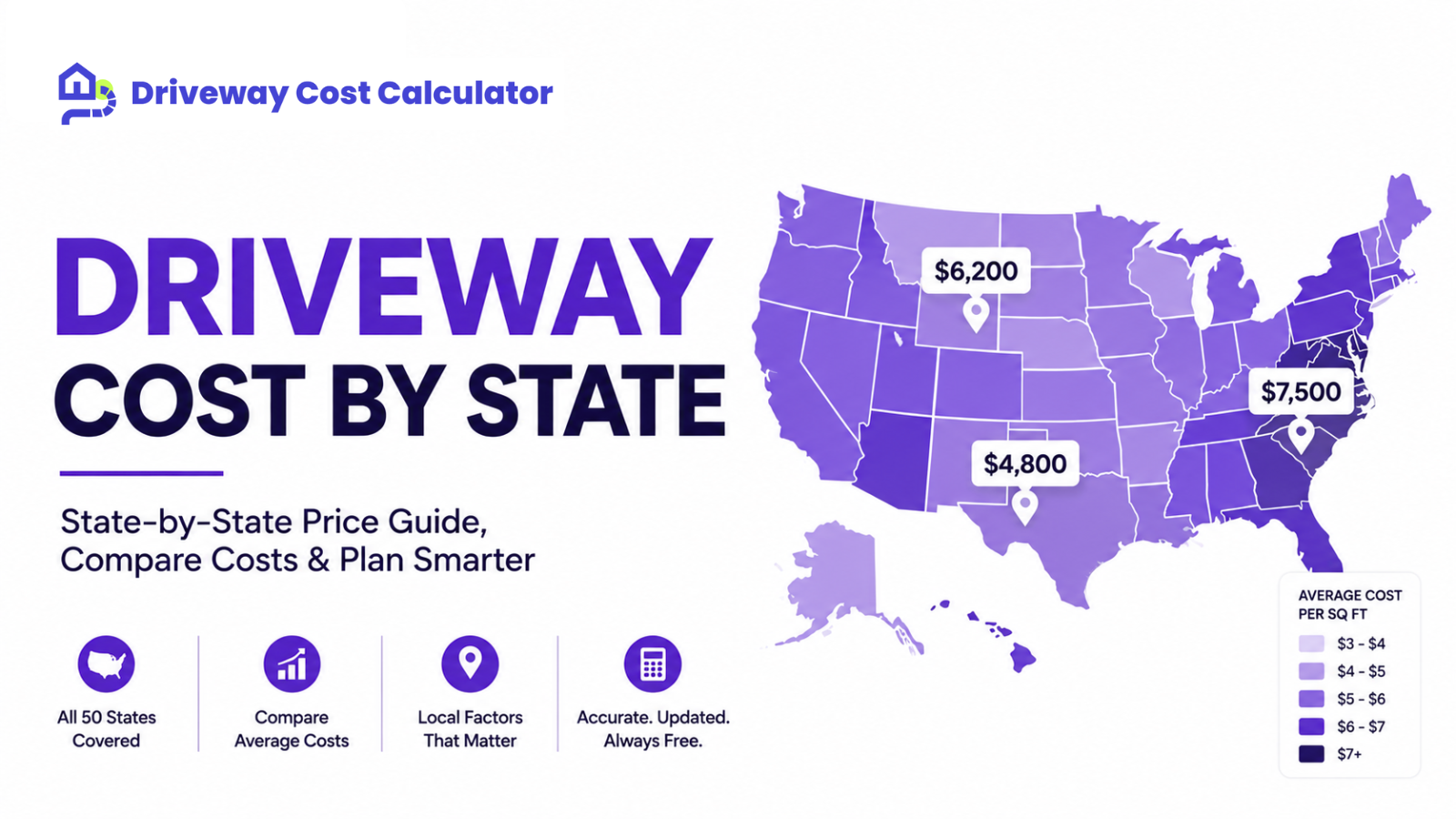
This is one of the primary reasons why state-specific cost estimates are generally much more accurate than relying on a single nationwide average.
Replacement vs. New Installation
Replacing an existing driveway generally costs more than installing one on an undeveloped site because additional work is usually required before construction can begin.
Replacement projects often include:
- Breaking up the old driveway.
- Hauling away debris.
- Repairing or rebuilding the base.
- Correcting drainage problems.
Although replacement projects require a larger investment, they also provide an opportunity to improve the driveway's layout, increase parking space, or upgrade to a more durable material.
How to Estimate Your Driveway Cost
Estimating a driveway project is relatively straightforward once you understand the major cost factors.
A simple approach is:
- Measure the driveway's length and width.
- Calculate the total square footage.
- Select your preferred driveway material.
- Estimate the local cost per square foot.
- Add excavation, demolition, permits, and optional upgrades.
Although this won't replace a professional estimate, it provides a realistic starting point for budgeting your project.
How to Save Money on a New Driveway
Installing a new driveway is a significant investment, but there are several practical ways to reduce costs without sacrificing quality.
- Compare estimates from several contractors.
- Choose a simple driveway layout.
- Select the material that best fits your long-term needs.
- Schedule installation during slower seasons when possible.
- Avoid unnecessary decorative upgrades.
- Repair instead of replace if the existing driveway is still structurally sound.
The goal isn't necessarily to choose the cheapest proposal, but to find the best balance between quality, durability, and price.
Why Use a Driveway Cost Calculator?
While understanding how driveway costs are calculated is valuable, performing every calculation manually can be time-consuming.
A driveway cost calculator simplifies the process by combining several important variables, including:
- Your state.
- Driveway dimensions.
- Selected material.
- Current installation cost ranges.
Instead of researching multiple pricing sources, homeowners receive a fast, realistic estimate that can be used for budgeting and comparing contractor quotes.
Frequently Asked Questions
How much does a typical driveway cost in 2026?
Most residential driveway projects range from approximately $2,000 to more than $10,000, depending on the driveway size, material, site preparation, and local labor costs.
What is the cheapest driveway material?
Gravel is generally the least expensive driveway material to install, making it an excellent choice for homeowners seeking the lowest upfront cost.
Which driveway material offers the best long-term value?
Concrete often provides one of the best long-term values because it combines excellent durability, relatively low maintenance requirements, and a long service life.
Why do contractor estimates vary so much?
Every property is different. Soil conditions, drainage, labor rates, excavation requirements, permits, and material prices all influence the final contractor estimate.
Should I estimate my driveway cost before requesting quotes?
Yes. Creating an initial budget helps you understand expected costs, compare contractor proposals more effectively, and make informed decisions throughout the project.
Final Thoughts
A new driveway is one of the most valuable improvements you can make to your home's exterior, but understanding the true cost requires looking beyond simple square-foot pricing. Material selection, labor rates, site preparation, excavation, drainage, permits, and local market conditions all contribute to the final investment.
Taking the time to understand these pricing factors before contacting contractors allows you to build a realistic budget, compare estimates with confidence, and choose the driveway solution that best meets your needs and long-term goals.
If you're ready to begin planning your project, using a Driveway Cost Calculator is an excellent first step. By combining your driveway dimensions, preferred material, and state-specific pricing, it provides a reliable estimate that helps you budget more accurately before requesting professional contractor quotes.