 Driveway Cost Calculator
Introduction
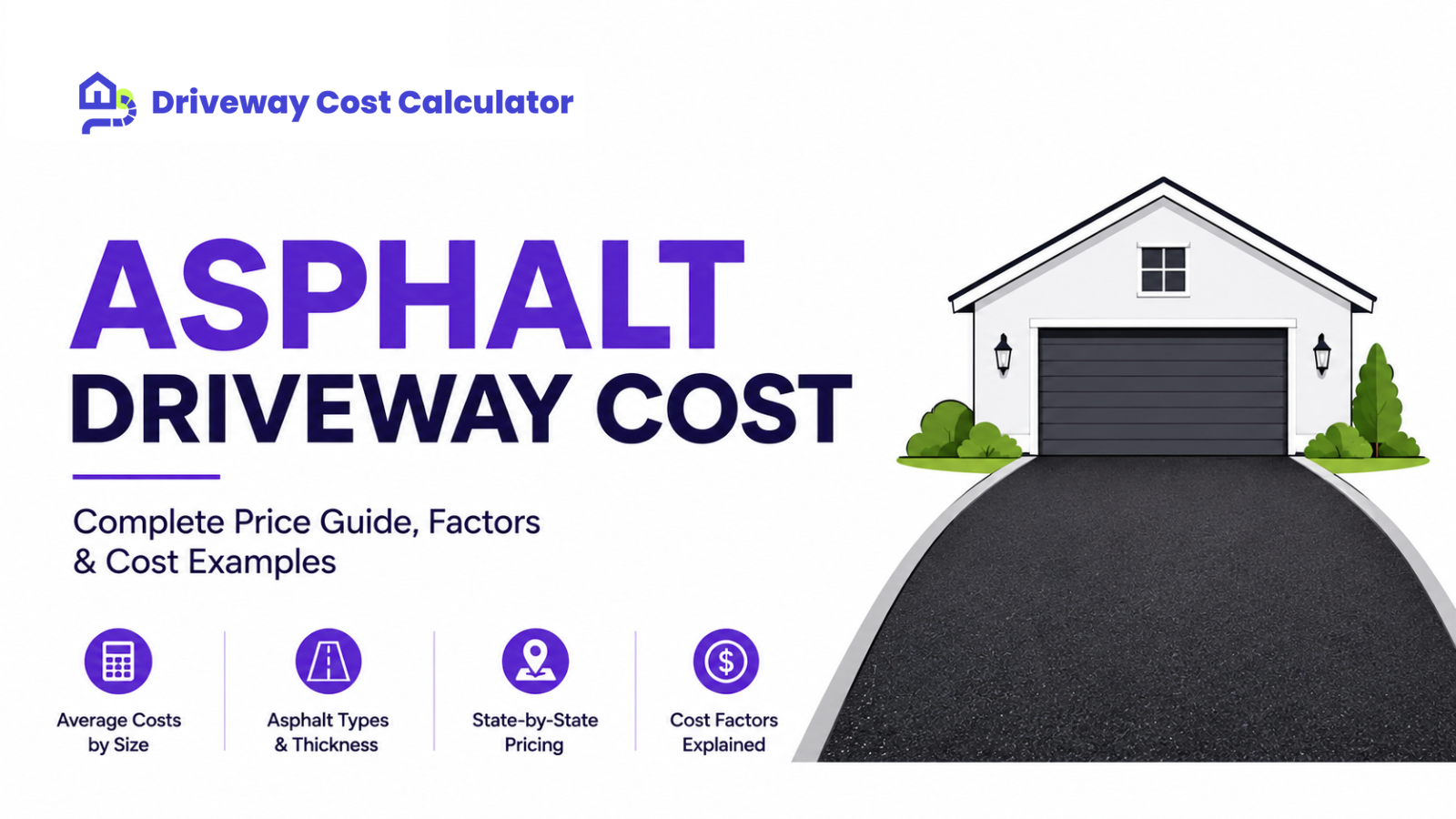
Asphalt has been one of the most popular driveway materials for decades, offering homeowners an excellent balance between affordability, durability, and attractive appearance. Its smooth black finish, relatively quick installation, and lower upfront cost compared to concrete make it a preferred choice for millions of residential properties across the United States.
Whether you're replacing an aging driveway or installing one for a newly constructed home, understanding the total cost of an asphalt driveway is essential before beginning your project.
Naturally, one of the first questions homeowners ask is:
"How much does an asphalt driveway cost in 2026?"
The answer depends on much more than simply measuring the driveway. Professional contractors consider numerous variables before preparing an estimate, including driveway size, asphalt thickness, excavation, base preparation, drainage, labor rates, local material costs, permits, and accessibility.
Even two driveways with identical dimensions may receive noticeably different estimates because of differences in soil conditions, regional labor costs, or site preparation requirements.
Understanding these pricing factors before requesting contractor quotes allows you to build a realistic budget, compare proposals more effectively, and avoid unexpected expenses once construction begins.
In this guide, we'll explain average asphalt driveway costs, installation prices per square foot, what affects pricing, hidden costs homeowners often overlook, maintenance expenses, and practical tips for maximizing the value of your investment.
Average Asphalt Driveway Cost in 2026
Asphalt remains one of the most affordable paved driveway materials available.
Although prices vary across the United States, professionally installed residential asphalt driveways generally fall within the following ranges.
| Project Type | Typical Cost |
|---|---|
| Small driveway | $2,000–$3,500 |
| Standard two-car driveway | $3,500–$6,500 |
| Large residential driveway | $6,500–$10,000 |
| Long or custom driveway | $10,000–$18,000+ |
These estimates usually include excavation, aggregate base preparation, asphalt installation, grading, rolling, and final cleanup.
Projects requiring extensive excavation, poor soil stabilization, drainage improvements, or difficult access may exceed these price ranges.
Average Cost Per Square Foot
Most contractors calculate asphalt driveway costs using a cost-per-square-foot pricing model.
For standard residential installations, homeowners can generally expect installation costs between:
$3 and $7 per square foot
This typically includes:
- Site preparation.
- Aggregate base.
- Asphalt paving.
- Compaction.
- Finish rolling.
- Basic cleanup.
Premium projects involving thicker asphalt, difficult access, or additional preparation may exceed these averages.
Asphalt Driveway Cost by Driveway Size
Because asphalt pricing is based largely on square footage, driveway size has a significant impact on the final cost.
Typical residential examples include:
| Driveway Size | Typical Cost |
|---|---|
| 250 sq. ft. | $900–$2,000 |
| 500 sq. ft. | $1,800–$3,500 |
| 700 sq. ft. | $2,500–$5,000 |
| 900 sq. ft. | $3,500–$6,500 |
| 1,200 sq. ft. | $4,500–$8,500+ |
Larger driveways naturally require more asphalt, additional labor, and longer installation times.
However, contractors sometimes offer a slightly lower cost per square foot for larger projects because equipment setup costs are spread across a larger area.
What Is Asphalt Made Of?
Many homeowners are surprised to learn that asphalt is not simply black pavement.
Modern asphalt consists primarily of:
- Crushed stone.
- Sand.
- Mineral filler.
- Asphalt binder (bitumen).
When heated and compacted, these materials form a strong, flexible surface capable of supporting residential vehicle traffic for many years.
Unlike concrete, asphalt remains somewhat flexible, allowing it to better tolerate freeze-thaw cycles in colder climates.
What Affects Asphalt Driveway Cost?
Although driveway size is important, contractors evaluate several additional factors before calculating the final installation price.
The biggest cost factors include:
- Driveway dimensions.
- Asphalt thickness.
- Base preparation.
- Excavation.
- Drainage.
- Existing driveway removal.
- Local labor rates.
- Accessibility.
- Permit requirements.
- Oil and petroleum prices.
Understanding these variables helps explain why estimates often vary between contractors.
Asphalt Thickness
The thickness of the asphalt layer plays a major role in both installation cost and long-term durability.
Most residential driveways use:
- 2 inches of compacted asphalt over a prepared base for light residential traffic.
- 3 inches for heavier vehicles or increased durability.
- 4 inches or more for commercial applications or unusually heavy loads.
Choosing the proper thickness is one of the best ways to maximize the lifespan of your driveway.
Although thicker asphalt increases the initial installation cost, it often reduces future repair expenses.
Excavation and Base Preparation
A durable asphalt driveway depends on much more than the asphalt itself.
Before paving begins, contractors typically:
- Remove vegetation.
- Excavate unsuitable soil.
- Grade the site.
- Compact the subgrade.
- Install crushed aggregate.
- Verify drainage.
A properly prepared foundation helps prevent settling, rutting, and cracking.
Skipping preparation may reduce the initial cost but often leads to expensive repairs later.
Drainage
Proper drainage is essential for every asphalt driveway.
Standing water gradually weakens both the asphalt surface and the supporting base.
Depending on your property, contractors may recommend:
- Improving driveway slope.
- Installing drainage channels.
- Adding catch basins.
- Adjusting grading around the driveway.
Although drainage improvements increase the initial investment, they often prevent much more expensive structural repairs in the future.
Climate Matters
One advantage of asphalt is its flexibility.
In colder climates where repeated freeze-thaw cycles occur, asphalt often performs better than rigid concrete because it can expand and contract without cracking as easily.
However, extremely hot climates may soften asphalt during summer months, making proper installation and adequate thickness even more important.
For this reason, regional climate should always be considered when selecting a driveway material.
Local Labor Costs
Labor represents a significant portion of every asphalt driveway installation project.
Several factors influence contractor pricing, including:
- Regional wage rates.
- Contractor availability.
- Project complexity.
- Accessibility for paving equipment.
- Local competition.
Homeowners in major metropolitan areas generally pay higher labor costs than those living in smaller towns or rural communities. Seasonal demand can also affect pricing, with many contractors charging higher rates during the busiest months of spring and summer.
Obtaining multiple estimates from reputable contractors is one of the best ways to understand local market pricing and ensure you're receiving a fair quote.
Oil Prices and Material Costs
Unlike concrete, asphalt is made using bitumen, a petroleum-based binder.
Because of this, fluctuations in global oil prices can directly affect asphalt driveway installation costs.
When petroleum prices increase, contractors often pay more for asphalt materials, which may result in higher project estimates.
Material availability, transportation costs, and regional demand can also influence pricing throughout the year.
Although homeowners cannot control these market conditions, obtaining quotes from multiple contractors helps ensure competitive pricing.
Typical Cost Breakdown
Many homeowners wonder where their investment goes during an asphalt driveway installation.
Although every project differs, a typical residential asphalt driveway budget is often divided approximately as follows.
| Project Component | Typical Share |
|---|---|
| Asphalt material | 30–40% |
| Labor | 25–35% |
| Aggregate base | 10–15% |
| Excavation | 5–10% |
| Equipment & paving | 5–10% |
| Final grading & cleanup | 5–10% |
These percentages vary depending on site conditions, but they demonstrate that the asphalt itself represents only part of the overall project cost.
Proper site preparation and professional installation are equally important for building a driveway that lasts.
Hidden Costs Homeowners Often Forget
Many homeowners budget only for the quoted installation price without considering additional expenses that may arise during construction.
Common hidden costs include:
- Removing an existing driveway.
- Hauling away debris.
- Excavating unsuitable soil.
- Tree root removal.
- Drainage improvements.
- Permit fees.
- Utility location services.
- Landscaping repairs.
- Culvert installation.
- Shoulder grading.
Not every project requires these additional services, but setting aside a contingency budget helps prevent unexpected financial surprises.
Maintenance Costs
Although asphalt is relatively affordable to install, routine maintenance plays an important role in maximizing its lifespan.
Typical maintenance includes:
- Sealcoating every 3 to 5 years.
- Filling small cracks before they expand.
- Repairing potholes promptly.
- Keeping the surface clean.
- Maintaining proper drainage around the driveway.
Regular maintenance helps protect the asphalt from water penetration, oxidation, and ultraviolet damage.
Ignoring small cracks often allows water to penetrate beneath the surface, leading to much more expensive repairs later.
How Long Does an Asphalt Driveway Last?
One of the biggest advantages of asphalt is its durability when properly maintained.
Most professionally installed residential asphalt driveways last:
15 to 25 years
Several factors influence lifespan, including:
- Climate.
- Traffic volume.
- Installation quality.
- Base preparation.
- Maintenance practices.
Routine sealcoating and timely crack repairs can significantly extend the life of an asphalt driveway.
Is an Asphalt Driveway Worth the Cost?
For many homeowners, the answer is yes.
Asphalt offers an attractive balance between affordability, appearance, and durability.
Its biggest advantages include:
- Lower installation cost than concrete.
- Smooth driving surface.
- Fast installation.
- Good cold-weather performance.
- Easy repairs.
- Attractive appearance.
Because asphalt generally costs less than concrete while still providing many years of reliable service, it remains one of the most popular choices for residential driveways throughout North America.
Asphalt vs. Concrete: Which Costs Less Over Time?
Many homeowners compare asphalt and concrete based only on the initial installation price.
However, long-term ownership costs tell a more complete story.
Asphalt generally costs less to install, making it an excellent option for homeowners with tighter budgets.
Concrete usually requires a higher upfront investment but often lasts longer with less routine maintenance.
Over a 30-year period, asphalt owners may need to budget for:
- Sealcoating.
- Crack repairs.
- Patching.
- Resurfacing.
- Possible replacement earlier than concrete.
Concrete owners typically spend less on routine maintenance but pay more at the beginning of the project.
Neither material is universally better. The right choice depends on your budget, climate, maintenance preferences, and how long you expect to remain in your home.
Tips for Saving Money
Installing an asphalt driveway doesn't necessarily require overspending.
Consider these practical ways to reduce costs while maintaining quality.
- Request estimates from several contractors.
- Keep the driveway layout simple.
- Avoid unnecessary widening.
- Schedule installation during slower seasons if possible.
- Maintain your driveway regularly after installation.
- Repair existing damage before complete replacement becomes necessary.
- Choose the appropriate asphalt thickness rather than paying for more material than your driveway requires.
Quality installation almost always provides better long-term value than selecting the lowest-priced quote.
Frequently Asked Questions
How much does an asphalt driveway cost per square foot?
Most professionally installed asphalt driveways cost between $3 and $7 per square foot, although prices vary depending on location, project complexity, and asphalt thickness.
Is asphalt cheaper than concrete?
Yes. Asphalt generally has a lower upfront installation cost than concrete, making it one of the most affordable paved driveway materials.
How long does an asphalt driveway last?
With proper installation and regular maintenance, most residential asphalt driveways last 15 to 25 years.
How often should asphalt be sealcoated?
Most contractors recommend sealcoating every 3 to 5 years, depending on climate, traffic, and the condition of the surface.
Does thicker asphalt last longer?
Generally, yes. A properly designed thicker asphalt surface provides additional strength and may better withstand heavier vehicles and repeated traffic.
Can I repair an asphalt driveway instead of replacing it?
In many cases, yes. Small cracks, potholes, and surface deterioration can often be repaired if the driveway remains structurally sound.
Should I hire a professional contractor?
Yes. Proper grading, compaction, asphalt placement, and rolling require specialized equipment and experience to ensure a smooth, durable driveway.
Final Thoughts
Asphalt remains one of the most practical and cost-effective driveway materials available in 2026. Its relatively low installation cost, attractive appearance, quick construction, and reliable performance make it an excellent choice for many homeowners.
Before starting your project, compare several contractor estimates, understand local permit requirements, and ensure that every proposal includes proper excavation, base preparation, drainage, and the correct asphalt thickness. These construction details have a major impact on the driveway's durability and long-term performance.
If you're still planning your project, using a Driveway Cost Calculator is an excellent place to begin. By combining your driveway dimensions, preferred material, and state-specific pricing, it provides a realistic estimate that helps you compare contractor quotes, establish a practical budget, and make informed decisions before construction begins.