 Driveway Cost Calculator
Introduction
One of the most common questions homeowners ask when planning a new driveway is:
"How much does a driveway cost in my state?"
While national averages provide a useful starting point, they rarely tell the whole story. A driveway that costs $5,000 in one state may cost $8,000 or more in another, even if both driveways use the same material and have identical dimensions.
That's because driveway installation costs are influenced by much more than square footage alone. Labor rates, local material prices, transportation costs, climate, permit requirements, and contractor availability all vary from state to state, making regional pricing one of the most important factors when estimating your project.
Whether you're planning a concrete, asphalt, or gravel driveway, understanding how pricing changes across the country can help you create a more realistic budget before requesting contractor quotes.
This guide explains why driveway costs vary by state, compares the three most popular driveway materials, provides a complete state-by-state pricing table, and offers practical tips for estimating your own project more accurately.
Why Driveway Costs Vary by State
Many homeowners assume that driveway installation follows a nationwide pricing standard.
In reality, no such standard exists.
Contractors determine their prices based on local economic conditions, material costs, labor availability, and regional construction practices. As a result, homeowners in different states often receive very different estimates for projects that appear nearly identical.
Several factors contribute to these regional differences.
Labor Costs
Labor is one of the largest components of every driveway installation.
States with higher average wages generally experience higher installation costs because contractors must account for employee salaries, insurance, equipment expenses, and operating costs.
For example, homeowners in states such as California, New York, Massachusetts, and Hawaii often pay more for labor than homeowners in states across the Southeast or Midwest.
Even neighboring states may have noticeably different labor markets, resulting in different contractor pricing.
Material Availability
Not every driveway material is equally available throughout the country.
Concrete plants, asphalt suppliers, and gravel quarries are distributed differently across the United States.
When materials must be transported long distances, transportation costs increase, which ultimately raises the final installation price.
For example, areas located close to major aggregate quarries often benefit from lower gravel prices than regions where stone must be transported hundreds of miles.
Climate
Weather also influences driveway construction costs.
In colder northern states, contractors often install thicker aggregate bases to reduce damage caused by freeze-thaw cycles.
Some regions also require additional drainage measures to protect the driveway during periods of heavy rain or snow.
Hot climates create different challenges, particularly for asphalt driveways, which may require specific mixes designed to withstand prolonged high temperatures.
Because climate affects both construction methods and material performance, it can influence the total installation cost.
Local Regulations and Permits
Many cities and counties regulate driveway construction.
Depending on your location, homeowners may need permits for:
- New driveway installations.
- Widening an existing driveway.
- Installing a curb cut.
- Modifying drainage.
- Connecting to public roads.
Although permit fees are usually small compared to the overall project cost, they still contribute to regional pricing differences.
Transportation and Fuel Costs
Driveway materials are heavy.
Concrete, asphalt, crushed stone, and gravel all require specialized trucks to transport them from suppliers to your property.
Fuel prices, transportation distances, and delivery logistics vary considerably across the country.
Remote properties often experience higher transportation charges because contractors must spend additional time delivering materials and equipment.
Contractor Demand
Supply and demand also affect pricing.
During the busiest construction months, experienced driveway contractors often have full schedules.
In areas where contractor demand exceeds supply, installation prices frequently increase.
Conversely, homeowners may receive more competitive pricing during slower seasons when contractors have greater availability.
Average Driveway Cost by Material
Before comparing individual states, it's helpful to understand the three most common driveway materials and their typical installation costs.
Each material offers its own balance of affordability, durability, maintenance requirements, and appearance.
Concrete Driveways
Concrete remains one of the most durable driveway materials available.
Homeowners choose concrete because it offers:
- Excellent longevity.
- Attractive appearance.
- Low maintenance.
- Strong curb appeal.
- Good long-term value.
Although concrete generally has the highest upfront installation cost of the three common driveway materials, its lifespan often exceeds 30 years when properly installed and maintained.
Typical installation costs range between:
$7–$22 per square foot, depending on the state, site conditions, and decorative options.
Asphalt Driveways
Asphalt provides an attractive paved surface at a lower initial cost than concrete.
Many homeowners prefer asphalt because it offers:
- Lower upfront investment.
- Smooth driving surface.
- Quick installation.
- Easy repairs.
- Good cold-weather performance.
With proper maintenance, asphalt driveways commonly last 15 to 25 years.
Typical installation costs range between:
$4–$14 per square foot, depending on the state and project complexity.
Gravel Driveways
Gravel remains the most affordable driveway option available.
It is especially popular for:
- Rural properties.
- Long driveways.
- Large lots.
- Budget-conscious homeowners.
Advantages include:
- Lowest installation cost.
- Excellent drainage.
- Fast construction.
- Easy repairs.
- Flexible layouts.
With periodic grading and occasional replenishment, gravel driveways can last indefinitely.
Typical installation costs range between:
$1.50–$8 per square foot, depending on the type of gravel and the state.
Why State-Specific Pricing Is More Accurate
Many online driveway cost guides provide only one national average.
While these averages are useful for general planning, they often fail to reflect the actual prices homeowners pay in their local area.
For example, a concrete driveway in Hawaii may cost nearly twice as much per square foot as a similar project in Alabama. Likewise, asphalt and gravel prices vary significantly depending on regional labor rates, transportation costs, climate, and material availability.
Using state-specific pricing provides a much more realistic estimate and allows homeowners to compare contractor quotes with greater confidence.
The pricing table in the next section summarizes estimated installation cost ranges for concrete, asphalt, and gravel driveways in every U.S. state, giving you a reliable starting point for budgeting your project before requesting professional estimates.
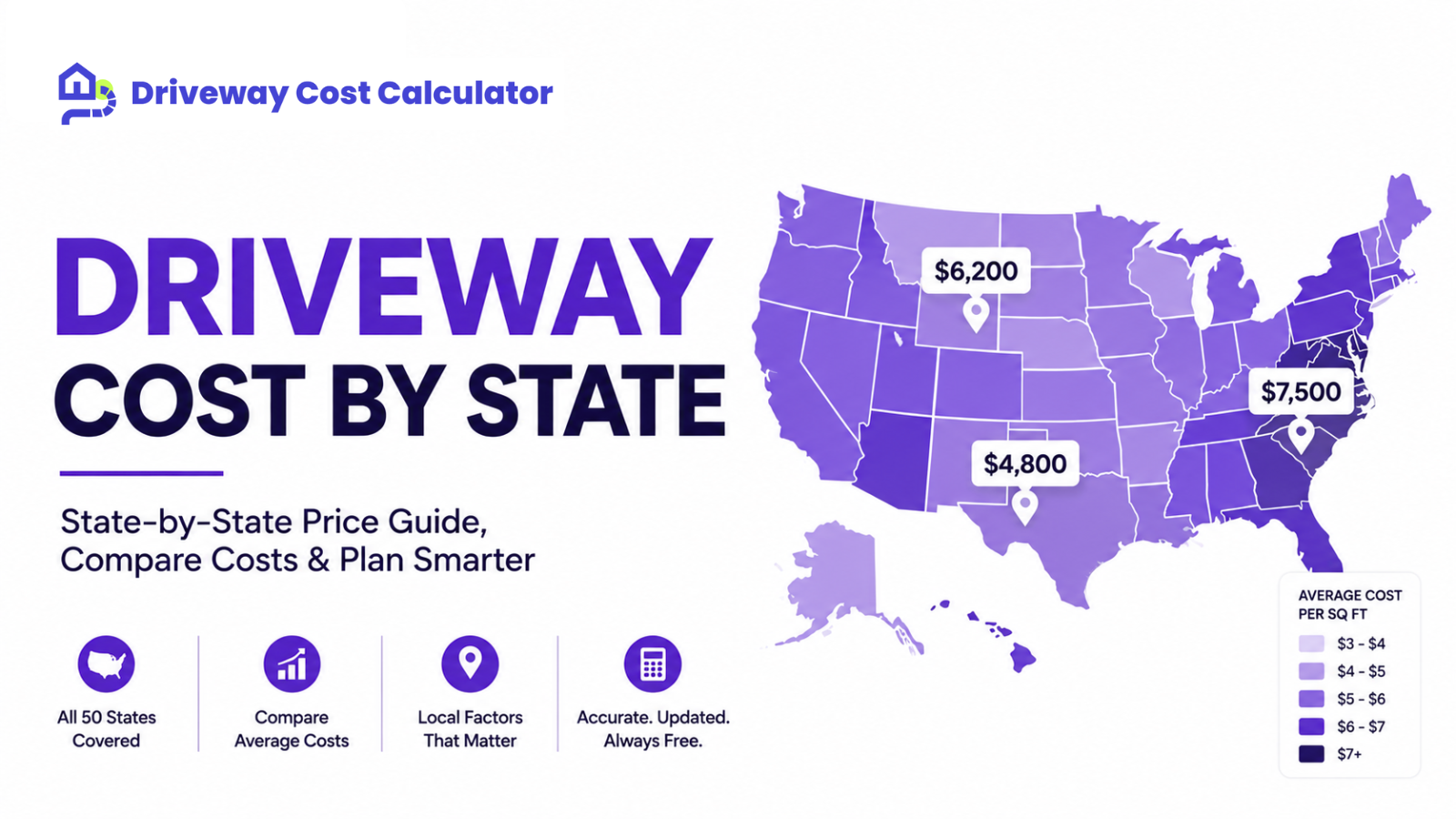
Complete Driveway Cost by State (2026)
The following table provides estimated installed driveway costs per square foot for the three most common driveway materials across all 50 U.S. states and the District of Columbia.
These estimates include typical residential installation costs for labor and materials. Actual prices may vary depending on project size, driveway thickness, excavation requirements, drainage improvements, decorative finishes, contractor availability, and local market conditions.
| State | Concrete ($/sq ft) | Asphalt ($/sq ft) | Gravel ($/sq ft) |
|---|---|---|---|
| Alabama | $7–11 | $4–8 | $1.5–3.5 |
| Alaska | $12–18 | $7–12 | $3–6 |
| Arizona | $8–13 | $5–9 | $2–4.5 |
| Arkansas | $7–11 | $4–8 | $1.5–3.5 |
| California | $10–18 | $6–11 | $2.5–5.5 |
| Colorado | $9–15 | $5–10 | $2–4.5 |
| Connecticut | $10–17 | $6–11 | $2.5–5 |
| Delaware | $9–15 | $5–10 | $2–4.5 |
| District of Columbia | $11–18 | $6–11 | $2.5–5 |
| Florida | $8–14 | $4–9 | $1.5–4 |
| Georgia | $8–13 | $4–9 | $1.5–4 |
| Hawaii | $13–22 | $8–14 | $4–8 |
| Idaho | $8–13 | $5–9 | $2–4.5 |
| Illinois | $9–15 | $5–10 | $2–4.5 |
| Indiana | $8–13 | $5–9 | $2–4 |
| Iowa | $8–13 | $5–9 | $2–4 |
| Kansas | $8–13 | $5–9 | $2–4 |
| Kentucky | $8–12 | $4–8 | $1.5–3.5 |
| Louisiana | $8–13 | $4–9 | $1.5–4 |
| Maine | $9–15 | $6–11 | $2.5–5 |
| Maryland | $10–16 | $6–11 | $2.5–5 |
| Massachusetts | $11–18 | $7–12 | $3–5.5 |
| Michigan | $9–15 | $5–10 | $2–4.5 |
| Minnesota | $9–15 | $5–10 | $2–4.5 |
| Mississippi | $7–11 | $4–8 | $1.5–3.5 |
| Missouri | $8–13 | $5–9 | $2–4 |
| Montana | $8–14 | $5–10 | $2–4.5 |
| Nebraska | $8–13 | $5–9 | $2–4 |
| Nevada | $9–15 | $5–10 | $2.5–5 |
| New Hampshire | $10–16 | $6–11 | $2.5–5 |
| New Jersey | $11–18 | $7–12 | $3–5.5 |
| New Mexico | $8–13 | $5–9 | $2–4.5 |
| New York | $11–18 | $7–12 | $3–5.5 |
| North Carolina | $8–14 | $5–9 | $2–4.5 |
| North Dakota | $8–14 | $5–10 | $2–4.5 |
| Ohio | $8–14 | $5–10 | $2–4.5 |
| Oklahoma | $7–12 | $4–8 | $1.5–4 |
| Oregon | $9–15 | $6–11 | $2.5–5 |
| Pennsylvania | $9–16 | $6–11 | $2.5–5 |
| Rhode Island | $10–17 | $6–11 | $3–5.5 |
| South Carolina | $8–13 | $4–9 | $1.5–4 |
| South Dakota | $8–13 | $5–9 | $2–4 |
| Tennessee | $8–13 | $5–9 | $2–4 |
| Texas | $8–14 | $5–9 | $2–4.5 |
| Utah | $8–14 | $5–10 | $2–4.5 |
| Vermont | $10–16 | $6–11 | $2.5–5 |
| Virginia | $9–15 | $6–10 | $2.5–5 |
| Washington | $10–17 | $6–11 | $3–5.5 |
| West Virginia | $8–13 | $5–9 | $2–4 |
| Wisconsin | $9–15 | $5–10 | $2–4.5 |
| Wyoming | $8–14 | $5–10 | $2–4.5 |
States with the Lowest Driveway Costs
While every project is unique, several states consistently offer some of the most affordable driveway installation costs in the country.
These include:
- Alabama.
- Arkansas.
- Mississippi.
- Oklahoma.
- Kentucky.
Several factors contribute to these lower prices, including lower labor costs, reduced operating expenses for contractors, and generally lower construction costs compared to many coastal states.
Homeowners in these regions can often install a new driveway for significantly less than homeowners living in high-cost markets, even when using the same materials.
States with the Highest Driveway Costs
At the opposite end of the pricing spectrum are states where labor, transportation, and material costs are considerably higher.
These typically include:
- Hawaii.
- Alaska.
- California.
- New York.
- Massachusetts.
- New Jersey.
In these states, contractors often face higher wages, increased transportation expenses, stricter regulations, and greater operating costs, all of which contribute to higher installation prices.
Remote locations, islands, and areas with limited material suppliers may also experience increased shipping costs that further affect driveway pricing.
How to Estimate Your Own Driveway Cost
Knowing your state's average price per square foot is an excellent starting point, but your total project cost depends on several additional factors.
You'll also need to consider:
- The total square footage of your driveway.
- The material you choose.
- Driveway thickness.
- Excavation requirements.
- Drainage improvements.
- Decorative finishes.
- Permit fees.
- Local contractor pricing.
For example, a 500-square-foot concrete driveway in Texas will typically cost much less than a 1,000-square-foot decorative concrete driveway in California, even though both use the same basic material.
The most accurate estimates combine state-specific pricing with your driveway's actual dimensions and project details.
Why National Averages Can Be Misleading
Many websites advertise a single "average driveway cost" for the entire United States.
While these figures may be useful for general comparisons, they rarely reflect what homeowners actually pay.
National averages ignore regional differences such as:
- Local labor markets.
- Material availability.
- Climate.
- Transportation costs.
- Building regulations.
- Seasonal contractor demand.
That's why two homeowners with nearly identical driveways can receive estimates that differ by thousands of dollars simply because they live in different states.
Using localized pricing provides a much more realistic starting point when budgeting your project.
Frequently Asked Questions
Which state has the cheapest driveway installation costs?
States such as Alabama, Arkansas, Mississippi, Oklahoma, and Kentucky generally have some of the lowest average driveway installation costs due to lower labor and construction expenses.
Which state has the most expensive driveway costs?
Hawaii consistently ranks among the most expensive states because of shipping costs, material availability, and higher labor expenses. Alaska, California, New York, Massachusetts, and New Jersey also tend to have above-average installation costs.
Why do driveway prices vary so much between states?
The biggest reasons include labor costs, material availability, transportation expenses, climate, local regulations, permit requirements, and contractor demand.
Are these prices for labor and materials?
Yes. The estimates shown in this guide represent typical installed residential costs that generally include both labor and materials. However, additional work such as excavation, drainage improvements, or decorative finishes may increase the total price.
How accurate are state averages?
State averages provide an excellent starting point for budgeting, but every driveway is unique. Factors such as driveway size, thickness, soil conditions, accessibility, and contractor pricing will affect your final estimate.
What's the best way to estimate my driveway cost?
The most accurate approach is to use a driveway cost calculator that combines your state, driveway dimensions, and preferred material to generate a personalized estimate before requesting contractor quotes.
Final Thoughts
Driveway installation costs can vary significantly from one state to another, making regional pricing one of the most important factors when planning your project. While national averages offer a general benchmark, state-specific estimates provide a far more realistic picture of what homeowners can expect to pay for concrete, asphalt, or gravel driveways.
Remember that the figures in this guide are intended as planning estimates rather than fixed contractor prices. Your final cost will depend on factors such as driveway size, site preparation, drainage requirements, material selection, and local labor rates.
If you're ready to begin planning your project, the best next step is to use a Driveway Cost Calculator. By combining your state, driveway dimensions, and preferred material, you can generate a personalized estimate that provides a more accurate budget and makes it easier to compare contractor quotes with confidence.