 Driveway Cost Calculator
Introduction
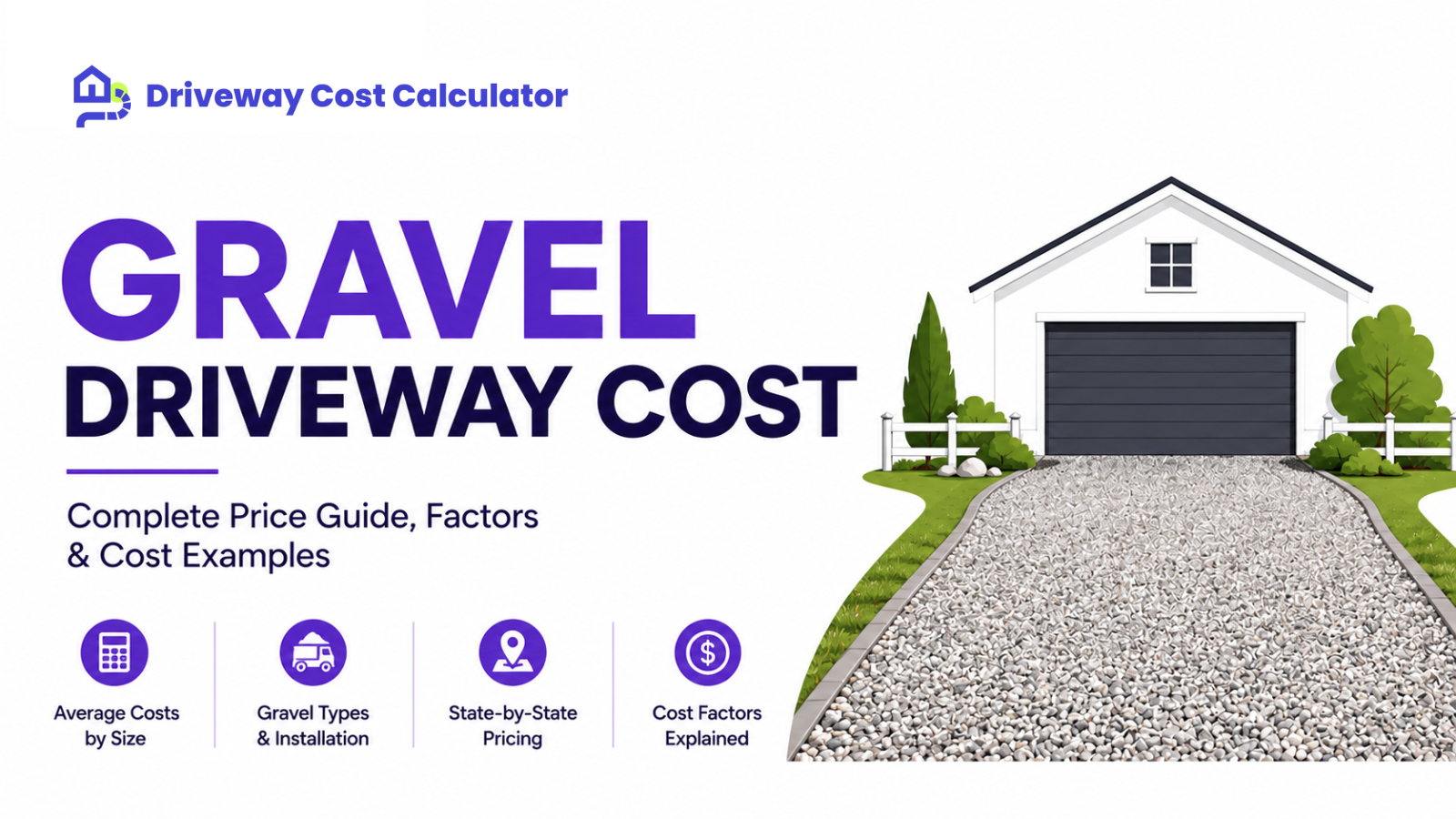
Gravel remains one of the most affordable and practical driveway materials available for homeowners. Whether you're installing a driveway for a new home, replacing an existing surface, or adding a long rural driveway, gravel offers an attractive balance between low installation costs, quick construction, and excellent drainage.
Unlike concrete or asphalt, gravel doesn't require specialized paving equipment or long curing times, making it one of the fastest driveway materials to install. It's also highly adaptable, allowing homeowners to expand, repair, or reshape their driveway with relative ease.
Naturally, one of the first questions homeowners ask is:
"How much does a gravel driveway cost in 2026?"
The answer depends on much more than simply measuring the driveway. Contractors consider several important factors, including driveway size, gravel type, excavation, base preparation, drainage, local material prices, hauling distance, labor costs, and the depth of gravel required for the project.
For this reason, two gravel driveways with identical dimensions may have noticeably different installation costs depending on the property's location and site conditions.
In this guide, we'll explain average gravel driveway costs, cost per square foot, the different types of gravel, the biggest pricing factors, hidden expenses homeowners often overlook, and practical ways to save money while still building a durable driveway.
Average Gravel Driveway Cost in 2026
Gravel is widely recognized as the least expensive driveway material for residential properties.
Although prices vary across the United States, most professionally installed gravel driveways fall within the following ranges.
| Project Type | Typical Cost |
|---|---|
| Small gravel driveway | $800–$2,000 |
| Standard two-car driveway | $2,000–$4,500 |
| Large residential driveway | $4,500–$8,000 |
| Long rural driveway | $8,000–$20,000+ |
These figures typically include site preparation, aggregate base (where required), gravel installation, grading, and final leveling.
Projects requiring significant excavation, poor soil stabilization, retaining walls, or extensive drainage improvements may cost considerably more.
Average Cost Per Square Foot
Most contractors estimate gravel driveway projects using a cost-per-square-foot pricing model.
For standard residential installations, homeowners can generally expect to pay:
$1 to $3 per square foot
The total price depends on:
- Gravel type.
- Driveway depth.
- Number of gravel layers.
- Local material prices.
- Delivery distance.
- Labor costs.
Decorative gravel, premium stone products, or unusually thick installations may increase costs beyond these averages.
Gravel Driveway Cost by Driveway Size
Because gravel driveways are priced primarily by square footage and material volume, driveway size has one of the biggest impacts on the total project cost.
Typical examples include:
| Driveway Size | Typical Cost |
|---|---|
| 250 sq. ft. | $300–$900 |
| 500 sq. ft. | $600–$1,800 |
| 700 sq. ft. | $900–$2,500 |
| 900 sq. ft. | $1,200–$3,200 |
| 1,500 sq. ft. | $2,000–$5,000+ |
Long rural driveways often require substantially larger quantities of gravel, making delivery costs an increasingly important part of the total budget.
Types of Gravel and Their Cost
Not all gravel is the same.
Different stone products vary in appearance, drainage performance, durability, and price.
Crushed Stone
Crushed stone remains one of the most common driveway materials.
Advantages include:
- Excellent compaction.
- Good stability.
- Affordable pricing.
- Long lifespan.
Because the angular edges lock together, crushed stone generally creates a more stable driving surface than rounded gravel.
Pea Gravel
Pea gravel consists of smooth, rounded stones.
It offers:
- Attractive appearance.
- Excellent drainage.
- Wide variety of natural colors.
However, because the stones don't interlock well, pea gravel may shift under vehicle traffic and often requires edging or stabilization.
Quarry Process (Crusher Run)
Crusher run combines crushed stone with fine stone dust.
This mixture compacts extremely well, creating a firm driving surface that's often used as both a base material and a finished driveway surface.
Many contractors consider crusher run one of the best choices for residential gravel driveways.
River Rock
River rock creates a decorative appearance but is generally less suitable for heavily used driveways because the smooth stones tend to move more easily under vehicle traffic.
It's more commonly used for landscaping or decorative borders than the main driving surface.
Recycled Gravel
Some regions offer recycled aggregate produced from crushed concrete or reclaimed construction materials.
Recycled gravel is often:
- Less expensive.
- Environmentally friendly.
- Readily available.
Quality varies depending on the supplier, so homeowners should verify that recycled products are suitable for driveway use.
What Affects Gravel Driveway Cost?
Although gravel is relatively inexpensive compared to paved driveways, several important factors still influence the final installation cost.
The most significant include:
- Driveway size.
- Gravel depth.
- Gravel type.
- Excavation.
- Base preparation.
- Drainage.
- Delivery distance.
- Local labor rates.
- Property accessibility.
Understanding these variables helps explain why contractor estimates can vary substantially.
Introduction
Gravel remains one of the most affordable and practical driveway materials available for homeowners. Whether you're installing a driveway for a new home, replacing an existing surface, or adding a long rural driveway, gravel offers an attractive balance between low installation costs, quick construction, and excellent drainage.
Unlike concrete or asphalt, gravel doesn't require specialized paving equipment or long curing times, making it one of the fastest driveway materials to install. It's also highly adaptable, allowing homeowners to expand, repair, or reshape their driveway with relative ease.
Naturally, one of the first questions homeowners ask is:
"How much does a gravel driveway cost in 2026?"
The answer depends on much more than simply measuring the driveway. Contractors consider several important factors, including driveway size, gravel type, excavation, base preparation, drainage, local material prices, hauling distance, labor costs, and the depth of gravel required for the project.
For this reason, two gravel driveways with identical dimensions may have noticeably different installation costs depending on the property's location and site conditions.
In this guide, we'll explain average gravel driveway costs, cost per square foot, the different types of gravel, the biggest pricing factors, hidden expenses homeowners often overlook, and practical ways to save money while still building a durable driveway.
Average Gravel Driveway Cost in 2026
Gravel is widely recognized as the least expensive driveway material for residential properties.
Although prices vary across the United States, most professionally installed gravel driveways fall within the following ranges.
| Project Type | Typical Cost |
|---|---|
| Small gravel driveway | $800–$2,000 |
| Standard two-car driveway | $2,000–$4,500 |
| Large residential driveway | $4,500–$8,000 |
| Long rural driveway | $8,000–$20,000+ |
These figures typically include site preparation, aggregate base (where required), gravel installation, grading, and final leveling.
Projects requiring significant excavation, poor soil stabilization, retaining walls, or extensive drainage improvements may cost considerably more.
Average Cost Per Square Foot
Most contractors estimate gravel driveway projects using a cost-per-square-foot pricing model.
For standard residential installations, homeowners can generally expect to pay:
$1 to $3 per square foot
The total price depends on:
- Gravel type.
- Driveway depth.
- Number of gravel layers.
- Local material prices.
- Delivery distance.
- Labor costs.
Decorative gravel, premium stone products, or unusually thick installations may increase costs beyond these averages.
Gravel Driveway Cost by Driveway Size
Because gravel driveways are priced primarily by square footage and material volume, driveway size has one of the biggest impacts on the total project cost.
Typical examples include:
| Driveway Size | Typical Cost |
|---|---|
| 250 sq. ft. | $300–$900 |
| 500 sq. ft. | $600–$1,800 |
| 700 sq. ft. | $900–$2,500 |
| 900 sq. ft. | $1,200–$3,200 |
| 1,500 sq. ft. | $2,000–$5,000+ |
Long rural driveways often require substantially larger quantities of gravel, making delivery costs an increasingly important part of the total budget.
Types of Gravel and Their Cost
Not all gravel is the same.
Different stone products vary in appearance, drainage performance, durability, and price.
Crushed Stone
Crushed stone remains one of the most common driveway materials.
Advantages include:
- Excellent compaction.
- Good stability.
- Affordable pricing.
- Long lifespan.
Because the angular edges lock together, crushed stone generally creates a more stable driving surface than rounded gravel.
Pea Gravel
Pea gravel consists of smooth, rounded stones.
It offers:
- Attractive appearance.
- Excellent drainage.
- Wide variety of natural colors.
However, because the stones don't interlock well, pea gravel may shift under vehicle traffic and often requires edging or stabilization.
Quarry Process (Crusher Run)
Crusher run combines crushed stone with fine stone dust.
This mixture compacts extremely well, creating a firm driving surface that's often used as both a base material and a finished driveway surface.
Many contractors consider crusher run one of the best choices for residential gravel driveways.
River Rock
River rock creates a decorative appearance but is generally less suitable for heavily used driveways because the smooth stones tend to move more easily under vehicle traffic.
It's more commonly used for landscaping or decorative borders than the main driving surface.
Recycled Gravel
Some regions offer recycled aggregate produced from crushed concrete or reclaimed construction materials.
Recycled gravel is often:
- Less expensive.
- Environmentally friendly.
- Readily available.
Quality varies depending on the supplier, so homeowners should verify that recycled products are suitable for driveway use.
What Affects Gravel Driveway Cost?
Although gravel is relatively inexpensive compared to paved driveways, several important factors still influence the final installation cost.
The most significant include:
- Driveway size.
- Gravel depth.
- Gravel type.
- Excavation.
- Base preparation.
- Drainage.
- Delivery distance.
- Local labor rates.
- Property accessibility.
Understanding these variables helps explain why contractor estimates can vary substantially.