 Driveway Cost Calculator
Introduction
Installing a new driveway is a significant investment that can improve your home's curb appeal, functionality, and long-term value. Whether you choose concrete, asphalt, gravel, or another material, a properly installed driveway should provide decades of reliable service with routine maintenance. Unfortunately, many homeowners encounter costly problems simply because avoidable mistakes were made during the planning or installation process.
Some issues become visible within weeks, while others may take several years before cracks, uneven surfaces, drainage problems, or premature deterioration begin to appear. In many cases, these problems require expensive repairs that could have been prevented with better planning and proper construction techniques.
Understanding the most common driveway installation mistakes allows homeowners to ask the right questions, compare contractor proposals more effectively, and make informed decisions before construction begins. A successful driveway project is about much more than choosing an attractive material—it also depends on proper site preparation, adequate drainage, correct thickness, quality materials, and professional workmanship.
In this guide, we'll explore the most frequent installation mistakes, explain why they happen, and provide practical advice to help you avoid unnecessary expenses while maximizing the lifespan of your new driveway.
1. Choosing the Cheapest Contractor
For many homeowners, price is the first factor considered when comparing quotes. While staying within budget is important, automatically selecting the lowest bid can become one of the most expensive decisions of the entire project.
A significantly lower estimate may indicate that a contractor is reducing costs by using thinner materials, skipping important preparation work, hiring inexperienced labor, or omitting essential services that later become costly change orders. Although not every low-priced contractor delivers poor quality, unusually low bids deserve careful examination.
Instead of focusing only on the total price, compare what each estimate actually includes. Ask questions about excavation depth, base material, drainage solutions, reinforcement methods, cleanup, warranty coverage, and the expected project timeline. A detailed written estimate often reveals far more about a contractor's professionalism than the final price alone.
Investing slightly more in experienced workmanship often reduces repair costs and extends the life of the driveway by many years.
2. Ignoring Proper Base Preparation
One of the most critical components of any driveway is the foundation beneath the visible surface. Regardless of whether the driveway is constructed from concrete, asphalt, or gravel, the stability of the finished project depends heavily on proper base preparation.
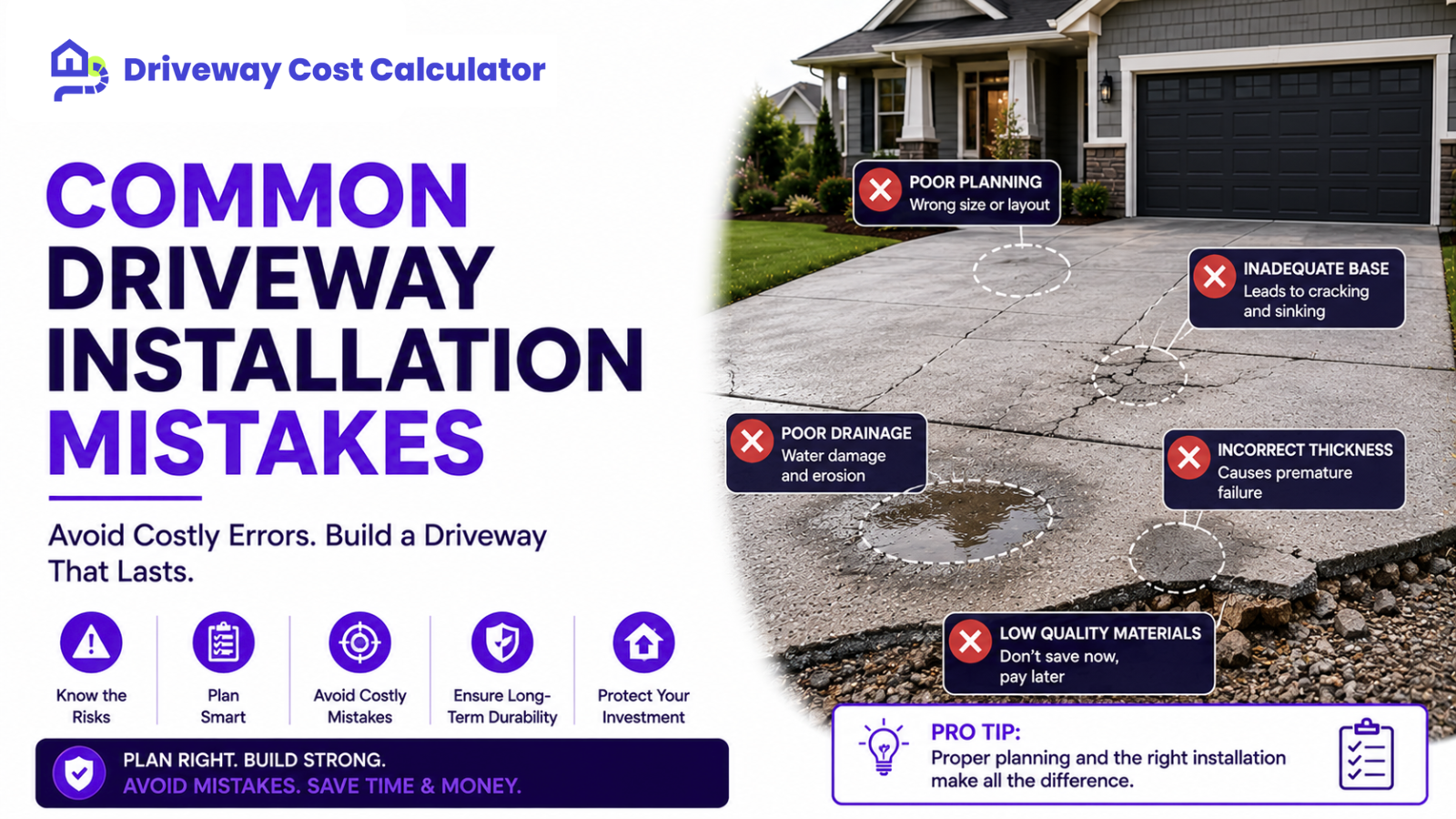
Unfortunately, some installations fail because contractors spend insufficient time excavating, grading, or compacting the underlying soil. If the base shifts after installation, the surface above may begin to crack, settle, or develop low spots that collect water.
A properly prepared base distributes the weight of vehicles evenly across the driveway while minimizing movement caused by seasonal temperature changes and soil expansion. The exact depth and composition of the base vary depending on local soil conditions, climate, and the intended vehicle load, but skipping this step almost always leads to premature problems.
Although homeowners rarely see the finished base once construction is complete, it is often the single most important factor determining how long the driveway will last.
3. Poor Drainage Planning
Water is one of the leading causes of driveway damage. Even the strongest materials will deteriorate more quickly if water is allowed to collect on or beneath the surface.
Many installation problems begin because drainage receives little attention during the design phase. A driveway that appears perfectly level may actually trap rainwater instead of directing it safely away from the house and surrounding landscape.
Standing water can gradually weaken the underlying base, increase freeze-thaw damage in colder climates, encourage erosion, and accelerate surface deterioration. Over time, these problems often lead to cracks, potholes, or uneven sections that require repair.
Effective drainage starts with proper grading. Most driveways include a slight slope that allows water to flow away naturally while maintaining a comfortable driving surface. Depending on the property, additional drainage solutions such as channels, swales, or edge drains may also be appropriate.
Before construction begins, homeowners should discuss drainage plans with their contractor and understand how water will move away from both the driveway and the home's foundation during heavy rainfall.
4. Choosing the Wrong Driveway Material
Every driveway material offers a unique combination of durability, appearance, maintenance requirements, and cost. One of the most common mistakes homeowners make is selecting a material based solely on price or appearance without considering how it will perform under local conditions.
For example, a gravel driveway may provide an affordable solution for rural properties with light traffic, but it requires periodic maintenance to keep the surface level. Concrete offers exceptional longevity and a clean appearance, but its higher installation cost may not suit every budget. Asphalt is often less expensive initially and performs well in colder climates, although it generally requires periodic sealing to maintain its condition.
Climate also plays an important role. Areas with frequent freeze-thaw cycles, heavy rainfall, or intense summer heat place different demands on driveway materials. Likewise, the expected vehicle load should be considered. A driveway used primarily for passenger vehicles has different requirements than one supporting large trucks, RVs, or commercial equipment.
Before making a final decision, homeowners should evaluate long-term maintenance, expected lifespan, local weather conditions, and overall value rather than focusing exclusively on the initial installation price.
5. Installing an Inadequate Driveway Thickness
Driveway thickness has a direct impact on long-term performance. A surface that is too thin may initially appear satisfactory, but repeated vehicle traffic can eventually cause cracking, rutting, and structural failure.
The required thickness depends on several factors, including the driveway material, the quality of the base, soil conditions, and the weight of the vehicles using the driveway. Passenger cars generally place far less stress on a driveway than delivery trucks, trailers, or recreational vehicles.
Some homeowners unintentionally reduce project costs by accepting thinner installations without fully understanding the long-term consequences. While reducing thickness may lower the initial price, future repair expenses often exceed any short-term savings.
Professional contractors determine appropriate thickness based on engineering principles, local building practices, and anticipated vehicle loads rather than using a single standard for every project.
6. Forgetting Expansion Joints
Concrete naturally expands and contracts as temperatures change throughout the year. Without properly placed expansion or control joints, this movement can create uncontrolled cracks across the surface.
Expansion joints allow sections of concrete to move slightly without placing excessive stress on the surrounding slab. Control joints, meanwhile, encourage any shrinkage cracks to occur in predetermined locations rather than randomly across the driveway.
Although these joints are intentionally visible, they are an important part of a well-designed concrete driveway. Eliminating them for aesthetic reasons often increases the likelihood of larger structural cracks developing later.
Homeowners should ask their contractor where joints will be installed and understand their purpose before construction begins.
7. Beginning Construction During Poor Weather
Weather conditions can significantly influence driveway installation quality. Extremely hot temperatures, freezing conditions, or heavy rainfall may interfere with proper curing, compaction, or material performance.
Concrete requires controlled curing to develop its intended strength. Excessive heat may cause moisture to evaporate too quickly, increasing the risk of surface cracking. Cold weather can delay curing or interfere with the chemical reactions necessary for proper strength development.
Similarly, asphalt installation depends on appropriate temperatures to ensure adequate compaction before the material cools. Rain during construction may also affect the prepared base, introducing excess moisture that reduces stability.
Experienced contractors carefully monitor weather forecasts and may postpone installation when conditions are unsuitable. Although project delays can be inconvenient, waiting for favorable weather often improves long-term results.
8. Overlooking Local Permit Requirements
Some homeowners assume that driveway installation never requires permits. However, local regulations vary considerably depending on the municipality, property location, and project scope.
Permits may be required when modifying driveway access to a public road, changing drainage patterns, increasing driveway size, or installing new curb cuts. Certain communities also regulate setback distances, stormwater management, and impervious surface coverage.
Beginning construction without obtaining required approvals may lead to project delays, fines, or costly modifications after installation has already been completed.
Before scheduling construction, homeowners should verify local requirements and ensure that all necessary approvals have been obtained. Professional contractors are often familiar with local regulations, but the property owner should also understand which permits may apply.
9. Using Low-Quality Materials
Even the best installation techniques cannot compensate for poor-quality materials. Choosing lower-grade concrete mixes, asphalt, aggregates, or base materials may reduce the initial project cost, but it often results in a shorter driveway lifespan and increased maintenance requirements.
For example, inferior aggregates may break down more quickly under repeated vehicle traffic, while low-quality asphalt mixtures may become more susceptible to rutting or surface deterioration during hot weather. Likewise, poor base materials can settle unevenly over time, causing cracks and depressions in the finished surface.
Homeowners should ask contractors about the materials they intend to use, including concrete strength, asphalt mix specifications, and the type of aggregate selected for the base. Reputable contractors are typically willing to explain their material choices and why they are appropriate for the project.
While premium materials may increase the installation cost slightly, they often provide better long-term value by reducing repair expenses and extending the driveway's service life.
10. Driving on the Driveway Too Soon
After installation, many homeowners are eager to begin using their new driveway. However, placing vehicles on the surface before it has fully cured or stabilized is a common mistake that can permanently damage the finished project.
Concrete continues to gain strength for several weeks after placement, even though it may appear dry within a day or two. Asphalt also requires time to cool and harden before supporting regular traffic.
Driving or parking on a newly installed driveway too early can leave tire marks, surface depressions, or structural damage that may never completely disappear.
Homeowners should always follow the contractor's recommendations regarding curing time before allowing pedestrian or vehicle traffic. Waiting a few extra days is a small inconvenience compared to the cost of repairing premature damage.
How to Avoid Installation Problems
Although driveway installation involves many technical details, homeowners can significantly improve the chances of a successful project by following a few simple best practices.
Before selecting a contractor, obtain multiple written estimates and compare more than just the final price. Review the scope of work carefully, including excavation depth, base preparation, drainage design, material specifications, project timeline, and warranty information.
Take time to understand the advantages and disadvantages of different driveway materials. A slightly higher initial investment may provide lower maintenance costs and a longer lifespan over the coming decades.
During construction, ask questions whenever something seems unclear. Professional contractors appreciate informed customers and are usually happy to explain the installation process. Maintaining open communication helps ensure that expectations remain aligned throughout the project.
Finally, be patient after installation. Following curing recommendations and performing routine maintenance will help protect your investment for many years.
Frequently Asked Questions
What is the most common driveway installation mistake?
Poor base preparation is widely considered one of the leading causes of driveway failure. Even high-quality surface materials cannot compensate for an unstable foundation beneath the driveway.
Can a poorly installed driveway be repaired?
Minor issues such as small cracks or localized settlement may often be repaired. However, severe structural problems caused by inadequate base preparation or drainage frequently require partial or complete replacement.
Does spending more always result in a better driveway?
Not necessarily. The goal is to hire an experienced contractor who uses quality materials and follows proper installation practices. Comparing detailed estimates is often more valuable than choosing either the highest or lowest price.
How long should a properly installed driveway last?
The lifespan depends on the material, local climate, traffic, and maintenance. With proper installation and regular maintenance, many driveways provide reliable service for several decades.
Conclusion
A driveway is much more than a place to park your vehicle—it is a long-term investment that contributes to your home's appearance, functionality, and value. While installation costs are an important consideration, avoiding common construction mistakes often has a greater impact on long-term performance than saving a small amount during the initial project.
By choosing appropriate materials, ensuring proper base preparation, planning for effective drainage, following local regulations, and working with an experienced contractor, homeowners can greatly reduce the risk of future problems. Taking the time to plan carefully before construction begins is one of the best ways to maximize the lifespan of your driveway and protect your investment.
Whether you are replacing an existing driveway or installing a new one for the first time, understanding these common mistakes will help you make informed decisions and achieve a durable, attractive result that serves your home for many years.