 Driveway Cost Calculator
Introduction
Installing a new driveway is one of the most significant exterior improvements a homeowner can make. Whether you're replacing an old, cracked surface or adding a driveway to a property for the first time, it's natural to ask one important question: Is a driveway really worth the investment?
The answer depends on several factors, including your home's location, your parking needs, your budget, and your long-term plans. A driveway can improve convenience, enhance curb appeal, provide safer parking, and even increase property value. However, it also requires an upfront financial investment and ongoing maintenance.
This guide explores the advantages and disadvantages of installing a driveway, helping you decide whether it's the right investment for your property.
Why Homeowners Install Driveways
For many homeowners, a driveway is much more than a parking space.
It provides convenient access to the home, keeps vehicles off busy streets, improves the appearance of the property, and creates a dedicated area for family members and visitors to park safely.
In neighborhoods where street parking is limited, having a private driveway can dramatically improve everyday life. Even in suburban communities where parking is readily available, many homeowners appreciate the convenience of pulling directly into their own property after work or during bad weather.
A driveway also creates a more organized appearance by defining parking areas and reducing wear on lawns or landscaping.
The Biggest Benefits of Installing a Driveway
Convenient Off-Street Parking
One of the most obvious benefits is having guaranteed parking whenever you return home.
Instead of searching for a street parking space, you can park directly on your own property. This is especially valuable for households with multiple vehicles or homes located on busy roads.
For families with children or elderly relatives, shorter walking distances between the vehicle and the home can also improve safety and convenience.
Improved Curb Appeal
A driveway occupies a significant portion of the front yard and often creates a visitor's first impression of the property.
Replacing an aging driveway with a new concrete, asphalt, or paver surface can dramatically improve the home's appearance.
A clean, professionally installed driveway also complements landscaping, walkways, and the home's exterior, giving the entire property a more polished look.
Better Functionality
Driveways make everyday tasks easier.
Simple activities such as unloading groceries, moving furniture, receiving deliveries, or washing your vehicle become much more convenient when you have a dedicated paved area.
Guests also benefit from having an obvious and accessible place to park.
Potential Increase in Property Value
Although a driveway should not be viewed solely as a financial investment, it can positively influence property value.
Many buyers consider off-street parking an attractive feature, particularly in urban and suburban neighborhoods.
A well-maintained driveway can improve marketability by making the property appear better cared for and more functional.
While every real estate market is different, many homeowners find that driveway improvements contribute to stronger buyer interest.
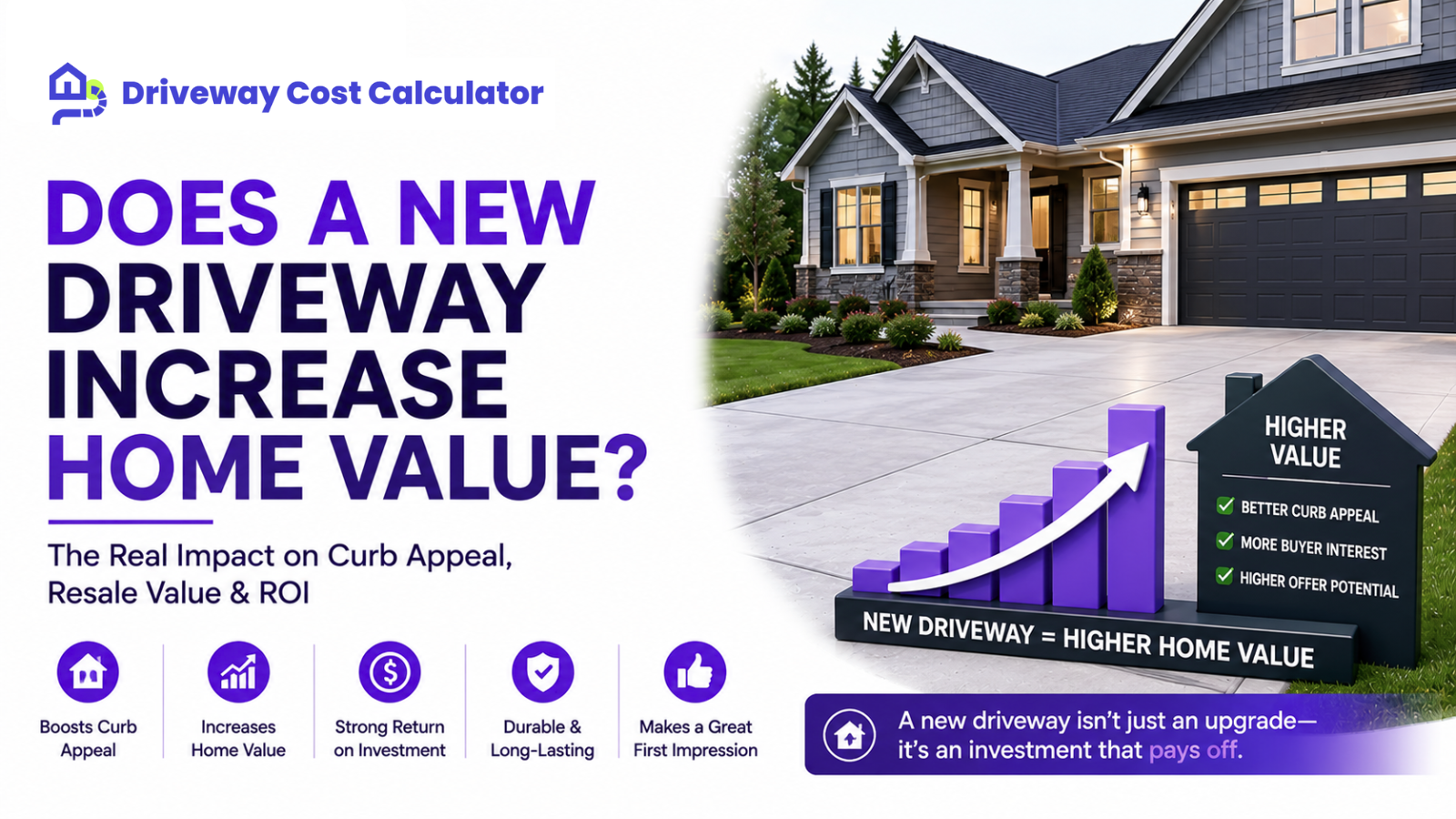
Does a Driveway Increase Home Value?
In many situations, yes.
Homes with attractive driveways often create a stronger first impression during viewings, helping buyers visualize themselves living there.
The greatest value is usually seen when:
- The property previously had no driveway.
- Street parking is limited.
- The neighborhood expects off-street parking.
- The existing driveway is severely deteriorated.
However, homeowners should remember that no improvement guarantees a full return on investment. A driveway should be viewed as both a lifestyle improvement and a property enhancement rather than a purely financial upgrade.
How Much Does the Investment Compare to the Benefits?
Driveway installation costs vary depending on several factors, including:
- Material selection
- Driveway size
- Site preparation
- Excavation requirements
- Drainage
- Local labor costs
Although installation can require a significant upfront investment, homeowners often enjoy the benefits for decades.
For example:
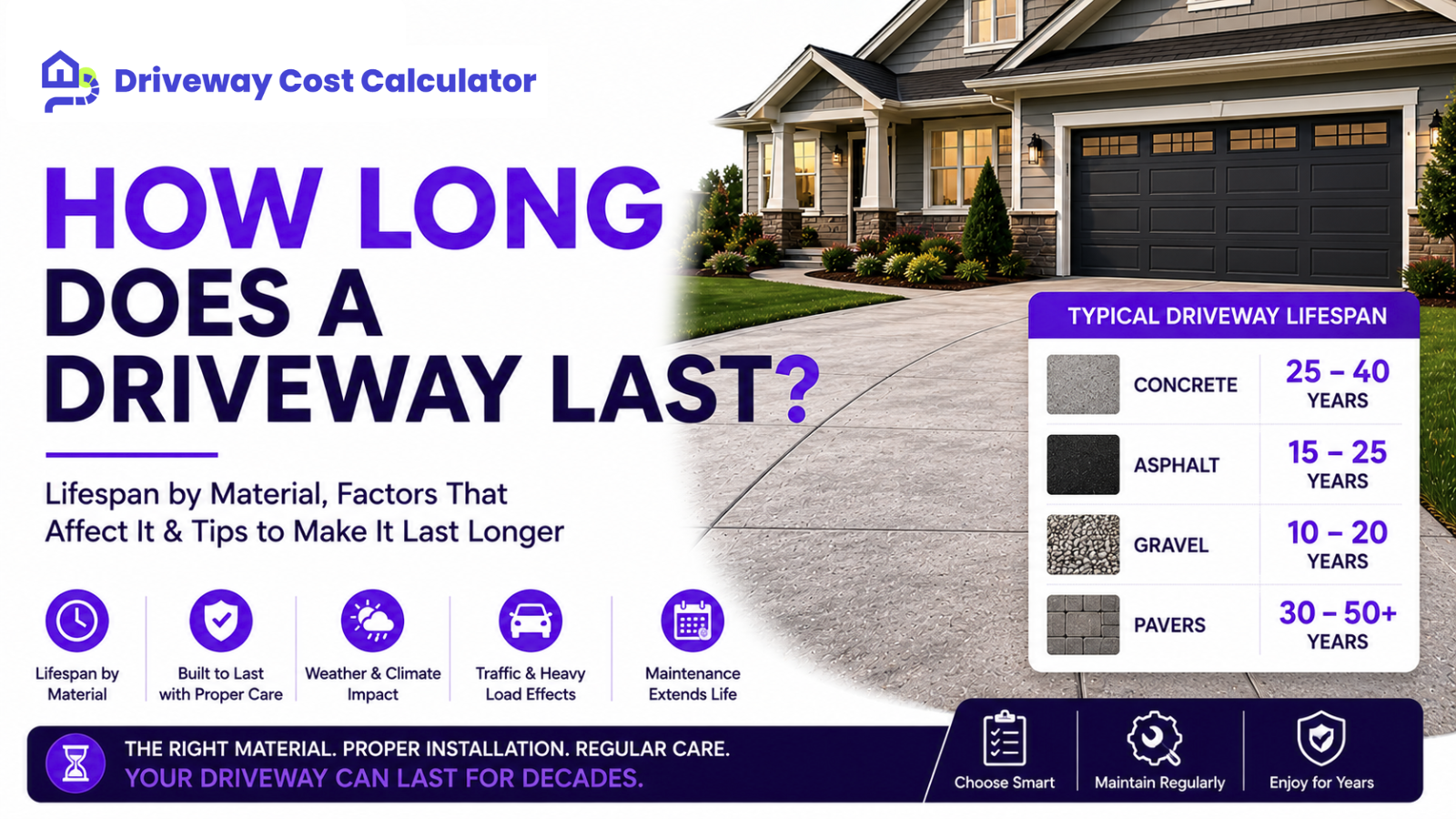
- Concrete driveways commonly last 30 years or more with proper maintenance.
- Asphalt driveways typically last around 20 years.
- Properly maintained gravel driveways can last indefinitely with periodic replenishment.
When spread over many years of daily use, the annual cost of ownership may be much lower than homeowners initially expect.
Potential Drawbacks
Every home improvement project has disadvantages.
Before installing a driveway, consider the following.
Upfront Cost
The largest disadvantage is the initial installation cost, which can range from a relatively affordable gravel driveway to premium decorative concrete or paver installations.
Additional expenses may include permits, excavation, grading, drainage improvements, or removing an existing driveway.
Maintenance
No driveway is completely maintenance-free.
Concrete may require occasional sealing and crack repairs.
Asphalt benefits from resealing every few years.
Gravel requires periodic leveling and adding fresh material.
Routine maintenance protects your investment and helps maximize its lifespan.
Construction Disruption
Installation often takes several days and may temporarily limit vehicle access to your property.
Some materials also require curing time before they can support vehicle traffic.
Planning the project during favorable weather can help minimize delays.
When Is Installing a Driveway Worth It?
A driveway is generally a worthwhile investment if:
- You currently rely on street parking.
- You own multiple vehicles.
- You plan to remain in your home for several years.
- Your current driveway is beyond economical repair.
- Improving curb appeal is important.
- You want a more functional property.
In these situations, the long-term benefits often outweigh the initial expense.
When It May Not Be Worth It
There are also situations where postponing or avoiding installation may make sense.
For example:
- Your existing driveway remains in excellent condition.
- Local regulations make construction difficult.
- You plan to sell the property very soon.
- Parking is already abundant and convenient.
- Other home repairs should take priority.
Evaluating your own circumstances is the best way to determine whether a driveway fits your budget and needs.
Pros and Cons at a Glance
| Advantages | Considerations |
|---|---|
| Convenient off-street parking | Upfront installation cost |
| Improves curb appeal | Requires periodic maintenance |
| May increase property value | Permit requirements vary |
| Better organization and accessibility | Construction may temporarily disrupt access |
| Long service life | Material choice affects maintenance |
| Safer parking for family and guests | Professional installation is recommended |
Frequently Asked Questions
Is installing a driveway a good investment?
For many homeowners, yes. A driveway improves convenience, enhances curb appeal, and may increase property value while providing long-term daily benefits.
Which driveway material provides the best value?
There is no single best choice. Concrete offers excellent durability, asphalt provides a lower initial cost, and gravel remains the most budget-friendly option. The ideal material depends on your climate, budget, and maintenance preferences.
How long does a driveway last?
With proper maintenance, concrete driveways commonly last 30 years or more, asphalt around 20 years, and gravel can last indefinitely with periodic maintenance.
Can I install a driveway myself?
Small gravel driveways may be suitable for experienced DIY homeowners, but concrete and asphalt installations typically require specialized equipment and professional expertise to ensure proper drainage, grading, and durability.
Will a driveway help sell my home?
While no improvement guarantees a higher sale price, many buyers appreciate off-street parking and an attractive driveway, making the property more appealing.
Final Thoughts
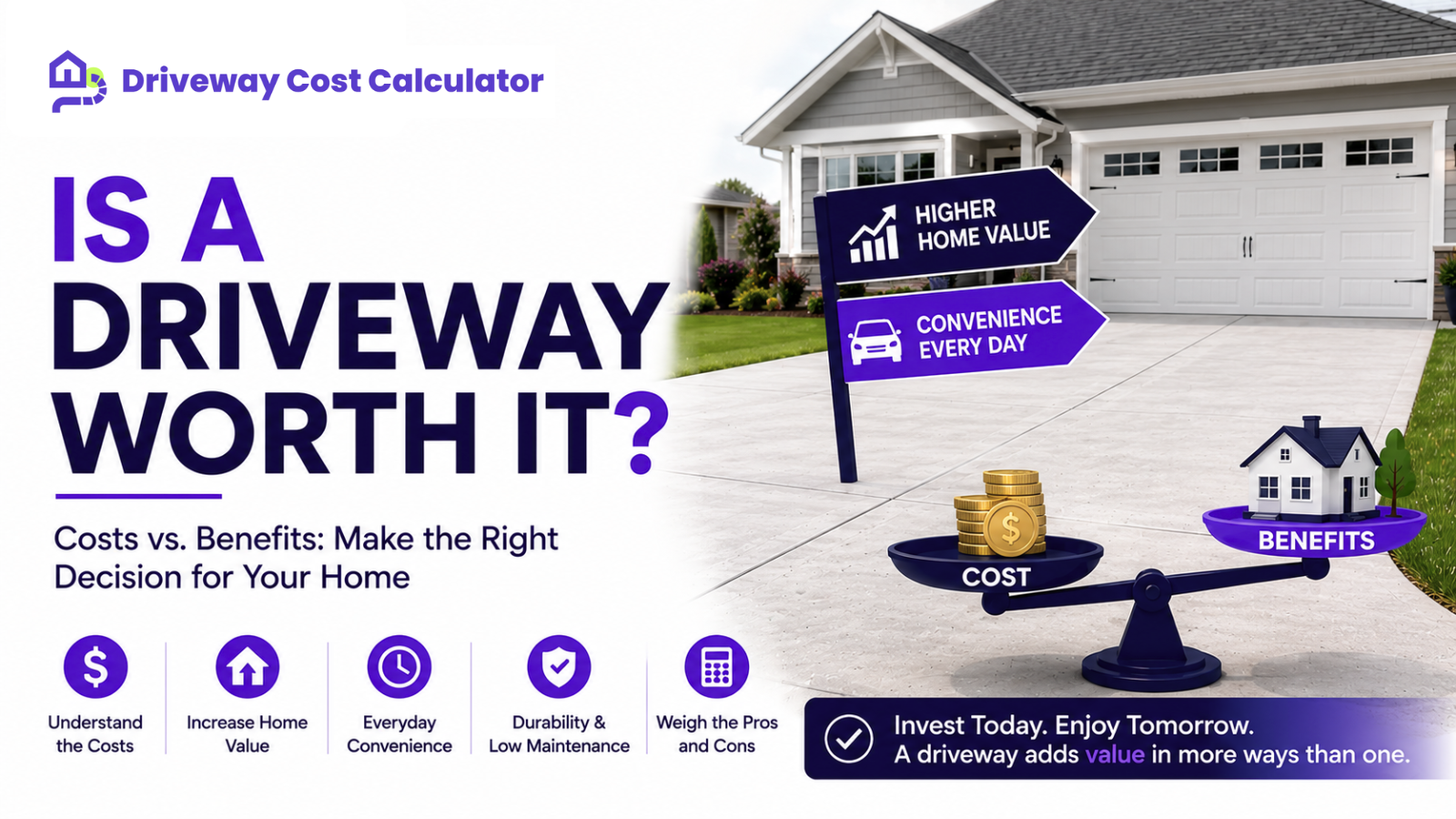
Whether a driveway is worth it ultimately depends on your individual circumstances. For many homeowners, the combination of improved convenience, enhanced curb appeal, safer parking, and potential property value makes it a worthwhile long-term investment.
Before beginning any project, compare multiple contractor estimates, understand local permit requirements, and choose a material that matches both your budget and expected maintenance level.
If you're planning a new driveway, using a reliable cost calculator is an excellent first step. It allows you to estimate project costs based on your location, driveway size, and preferred material, helping you establish a realistic budget before requesting contractor quotes.