 Driveway Cost Calculator
Introduction
When homeowners consider exterior improvements, kitchens and bathrooms often receive most of the attention. However, the condition of a property's exterior plays an equally important role in creating a positive first impression. A well-designed driveway not only provides convenient access and parking but also contributes significantly to the overall appearance of a home.
If your existing driveway is cracked, uneven, stained, or showing signs of age, you may wonder whether replacing it is simply an aesthetic improvement or an investment that can increase your home's value. While no renovation can guarantee a specific return, installing a new driveway often enhances curb appeal, improves functionality, and makes a property more attractive to potential buyers.
Today's buyers pay close attention to a home's exterior before they ever step inside. A clean, professionally installed driveway signals that the property has been maintained, while a deteriorated surface may create concerns about other hidden maintenance issues. In competitive real estate markets, these first impressions can influence both buyer interest and the perceived value of a property.
In this guide, we'll explore how a new driveway affects home value, which driveway materials offer the best return on investment, and when replacing an existing driveway makes financial sense.
Why First Impressions Matter
Real estate professionals often emphasize the importance of curb appeal because buyers frequently form opinions within the first few moments of arriving at a property. The driveway is one of the largest visible surfaces on most residential lots, making it a major contributor to that initial impression.
An old driveway with cracks, potholes, weeds growing through joints, or faded surfaces can make an otherwise attractive home appear neglected. Even if the interior has been beautifully renovated, buyers may immediately begin calculating repair costs after seeing a damaged driveway.
Conversely, a newly installed driveway creates an impression of cleanliness, organization, and ongoing maintenance. Smooth surfaces, attractive edging, and clearly defined parking areas help present the property as well cared for and move-in ready.
Although buyers ultimately evaluate many aspects of a home, curb appeal often determines whether they become excited about the property before entering the front door.
How a New Driveway Can Increase Property Value
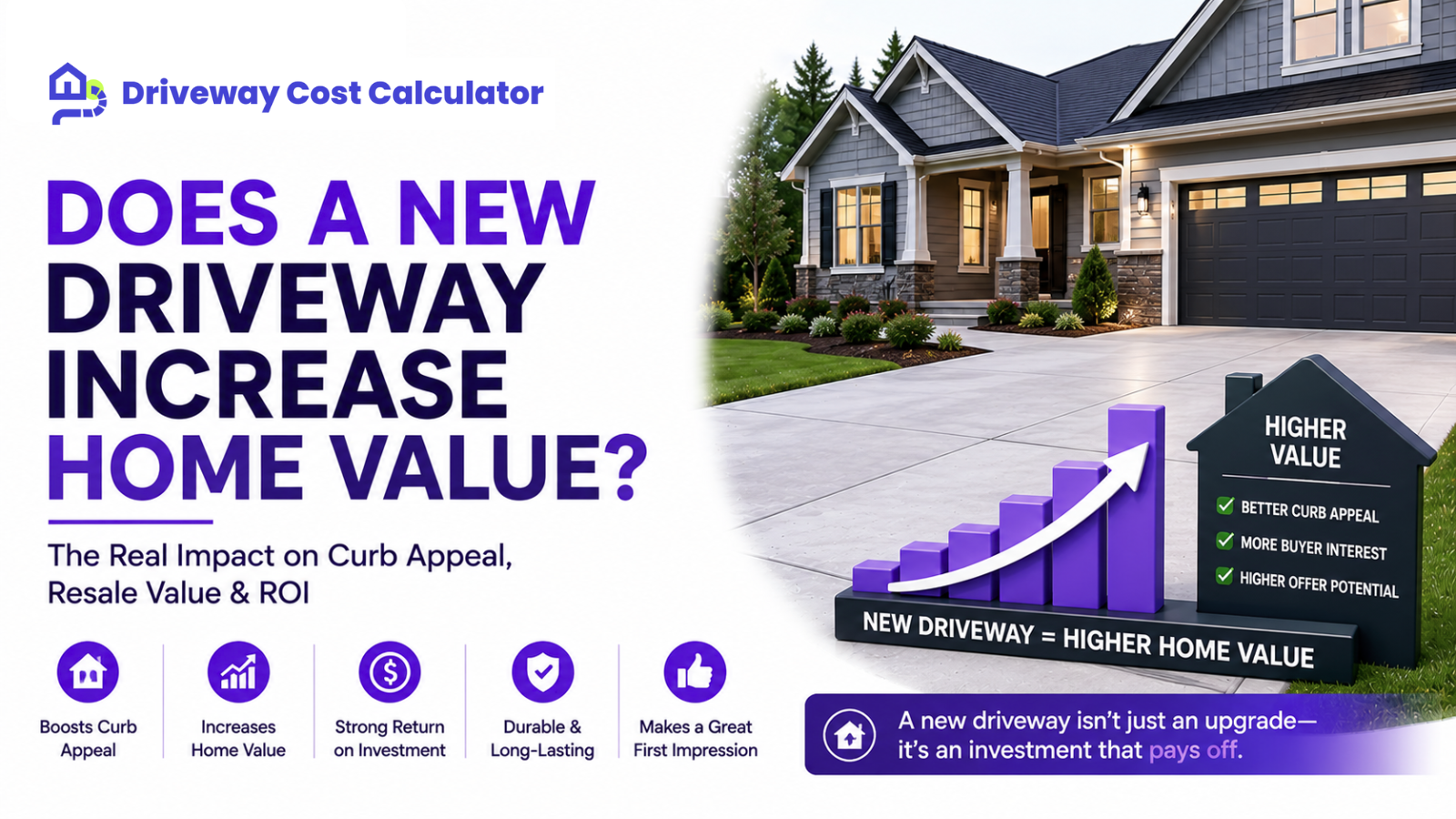
A new driveway contributes value in several ways beyond simple appearance. Rather than directly adding a fixed dollar amount to the home's appraisal, it increases overall marketability by improving features that buyers appreciate.
Improved Curb Appeal
The most immediate benefit is enhanced curb appeal. Fresh concrete, newly paved asphalt, decorative pavers, or neatly maintained gravel all contribute to a cleaner, more attractive exterior.
A visually appealing entrance complements landscaping, exterior paint, lighting, and architectural details, helping the entire property feel newer and better maintained.
Because the driveway occupies such a large portion of the front yard, replacing an aging surface can dramatically transform the overall appearance of the home without requiring extensive structural renovations.
Increased Buyer Confidence
Homebuyers often view visible maintenance as an indicator of how well the property has been cared for over time. A new driveway suggests that the homeowner has invested in maintaining important exterior features rather than postponing repairs.
This perception can reduce buyer concerns about deferred maintenance elsewhere on the property. While a driveway alone will not eliminate every inspection issue, it contributes to an overall impression of responsible homeownership.
Buyers frequently prefer properties that require fewer immediate repairs after purchase, making a newly installed driveway an attractive selling point.
Functional Benefits Buyers Appreciate
Beyond appearance, buyers also value practical improvements that simplify everyday living. A professionally designed driveway may provide:
- Smoother vehicle access.
- Additional parking space.
- Better drainage during heavy rain.
- Reduced maintenance requirements.
- Improved safety for pedestrians.
- Easier snow removal in colder climates.
These functional improvements make daily life more convenient while reducing future maintenance concerns.
For families with multiple vehicles, wider or redesigned driveways may significantly improve parking convenience. Likewise, correcting drainage issues during installation can help prevent standing water and reduce long-term maintenance costs.
Modern buyers increasingly appreciate improvements that combine aesthetics with functionality, making a well-designed driveway an important feature rather than simply a paved surface.
Does Every Driveway Replacement Increase Value?
Not necessarily.
The financial return depends on several factors, including the property's location, neighborhood expectations, driveway material, overall home value, and the condition of the previous driveway.
Replacing a severely damaged driveway usually provides greater value than replacing one that is already in acceptable condition. Similarly, installing a driveway that matches neighboring properties often produces a better return than selecting an unusually expensive option that exceeds the standards of the surrounding area.
Homeowners should view driveway replacement as part of an overall property improvement strategy rather than expecting a dollar-for-dollar increase in resale value. In many cases, the investment helps a home sell faster, attracts more interested buyers, and strengthens negotiating power rather than dramatically increasing the appraised value alone.
Which Driveway Material Offers the Best Return on Investment?
Not all driveway materials provide the same balance between installation cost, maintenance requirements, and long-term value. The best option often depends on your budget, local climate, neighborhood expectations, and how long you plan to remain in the home.
Rather than focusing solely on the lowest installation cost, homeowners should consider the total cost of ownership, including maintenance, expected lifespan, and the potential impact on resale value.
Concrete Driveways
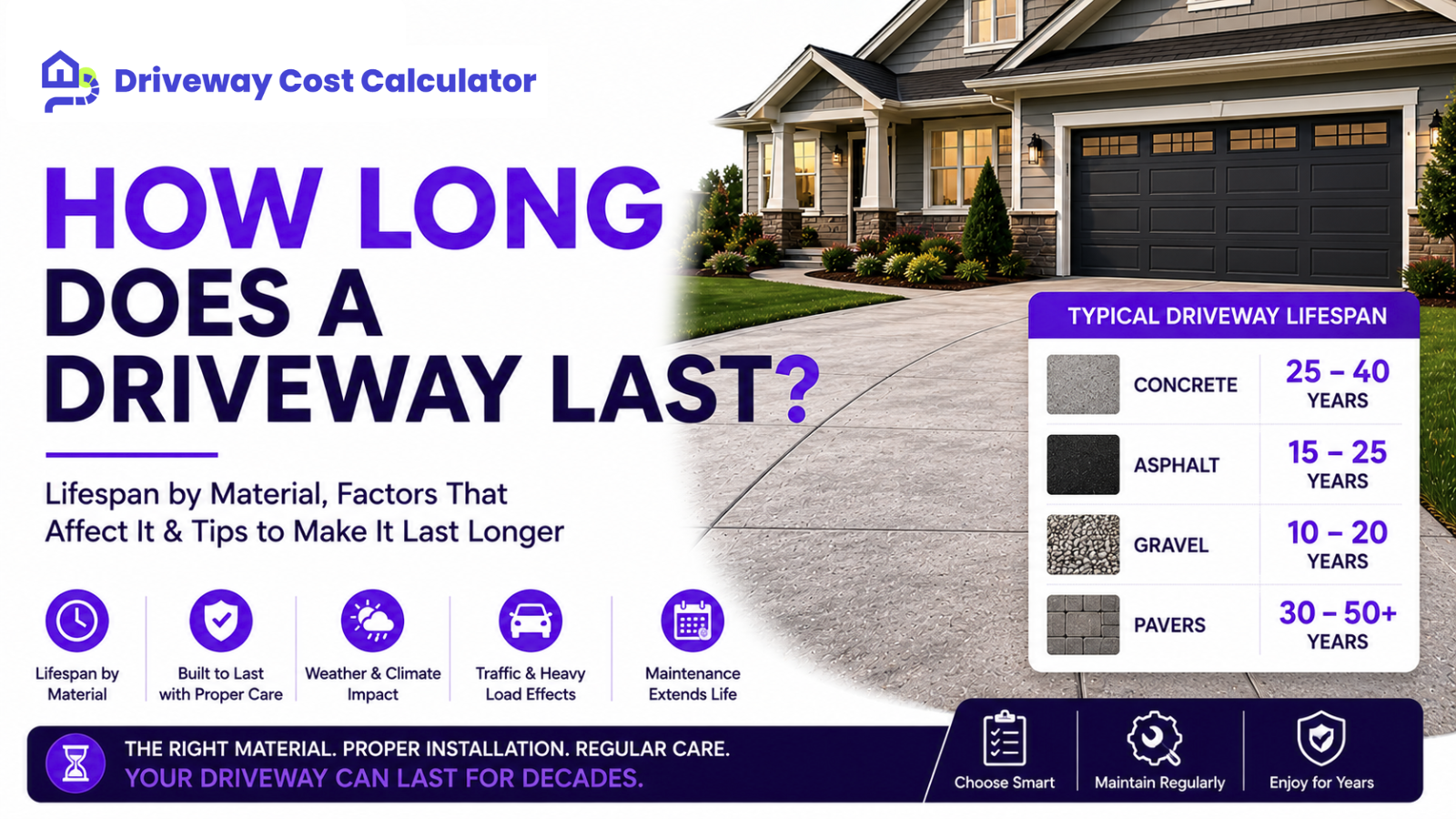
Concrete is widely regarded as one of the most desirable driveway materials for residential properties. Its clean appearance, excellent durability, and long service life make it attractive to many homebuyers.
Although concrete generally has a higher upfront installation cost than asphalt, it can last several decades when properly installed and maintained. Decorative finishes, exposed aggregate, or stamped concrete can further enhance curb appeal and distinguish a property in competitive real estate markets.
For homeowners planning to remain in their property for many years, concrete often provides excellent long-term value.
Asphalt Driveways
Asphalt remains one of the most popular driveway materials in the United States because it offers a good balance between affordability and performance.
A freshly paved asphalt driveway creates a smooth, clean appearance that significantly improves curb appeal compared to an aging or cracked surface. While asphalt requires periodic sealing to maintain its appearance and protect against weathering, many buyers appreciate its lower initial cost and practical performance.
In colder climates, asphalt also performs well because its flexibility allows it to better accommodate seasonal freeze-thaw cycles.
Gravel Driveways
Gravel driveways are often the most economical option, particularly for larger rural properties.
Although they typically require more regular maintenance than paved surfaces, properly maintained gravel driveways can still provide an attractive appearance and reliable access. Buyers looking for country homes or larger properties may actually expect gravel driveways, making them perfectly appropriate in certain locations.
However, in suburban neighborhoods where most homes feature concrete or asphalt driveways, upgrading from gravel to a paved surface may provide a stronger return on investment.
Repair or Replace?
One of the most common questions homeowners face is whether repairing an existing driveway makes more financial sense than replacing it entirely.
The answer depends largely on the condition of the current driveway.
Minor surface cracks, isolated potholes, small drainage issues, and cosmetic staining can often be repaired at a fraction of the cost of complete replacement. If the underlying foundation remains structurally sound, repairs may extend the driveway's life for several additional years.
However, widespread cracking, significant settlement, poor drainage, extensive surface deterioration, or repeated repair needs often indicate that replacement represents the more economical long-term solution.
A professional inspection can help determine whether repairs are likely to provide lasting results or whether complete replacement is the wiser investment.
Beyond Property Value: Everyday Benefits
Even if you are not planning to sell your home immediately, a new driveway offers several practical advantages that improve daily living.
Many homeowners choose replacement because they simply want a safer, more functional entrance to their property.
A new driveway can provide:
- Improved traction during wet weather.
- Smoother access for vehicles and pedestrians.
- Better drainage around the home.
- Reduced maintenance compared to an aging surface.
- Easier snow removal in colder regions.
- Lower risk of trip hazards caused by cracks or uneven pavement.
These improvements enhance everyday convenience while reducing future maintenance concerns.
For growing families, wider driveways or redesigned parking layouts can also improve vehicle access and reduce congestion.
Factors That Influence Return on Investment
Several variables determine whether a new driveway provides a meaningful return on investment when selling a property.
Neighborhood Standards
One of the most important considerations is whether the new driveway matches the expectations of the surrounding neighborhood.
Installing an expensive decorative driveway in an area where most homes have simple asphalt surfaces may not produce a proportional increase in resale value. Likewise, replacing a deteriorated gravel driveway with quality concrete in a neighborhood dominated by paved driveways may significantly improve buyer appeal.
Choosing improvements that complement neighboring properties generally provides the strongest financial return.
Overall Home Condition
A new driveway works best when it forms part of a well-maintained property.
Fresh landscaping, exterior paint, clean walkways, attractive lighting, and a maintained lawn all contribute to a positive first impression. Buyers evaluate the entire property rather than individual improvements, so combining several exterior upgrades often creates a stronger impact than replacing the driveway alone.
Local Real Estate Market
Market conditions also influence the value of exterior improvements.
In competitive housing markets, attractive curb appeal may encourage multiple offers and reduce the time a property remains on the market. In slower markets, improvements help distinguish a home from competing listings by presenting it as well maintained and move-in ready.
Although market conditions constantly change, homes with strong curb appeal generally attract greater buyer interest than similar properties requiring immediate exterior repairs.
Cost vs. Value: Is It Worth the Investment?
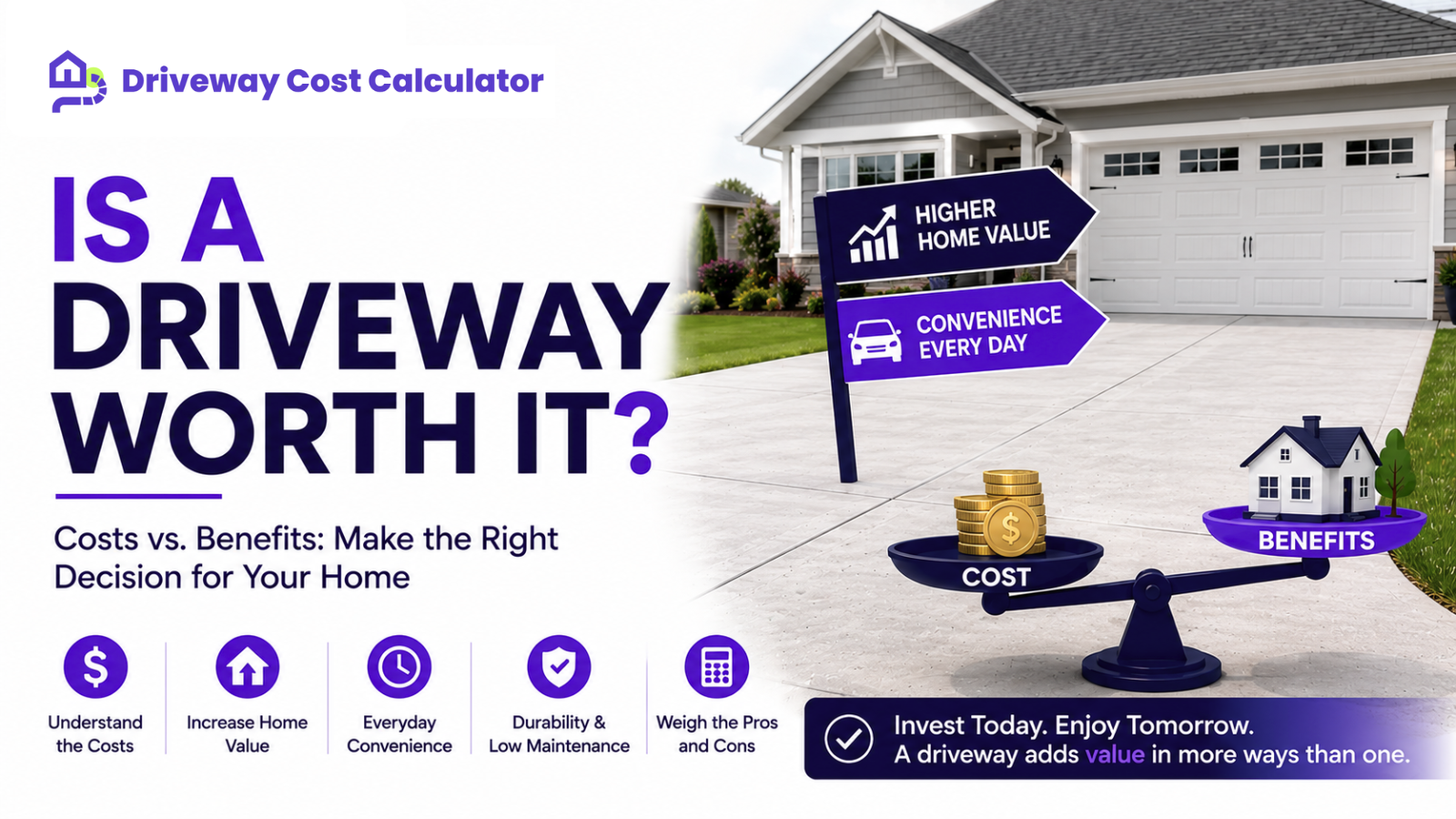
A new driveway should not be viewed solely as a way to increase your home's selling price. Instead, it should be considered a long-term investment that improves both the property's appearance and everyday functionality.
While every real estate market is different, homeowners often recover a meaningful portion of their investment through increased buyer interest, stronger curb appeal, and improved marketability. In many cases, a well-maintained exterior encourages buyers to view the property more favorably and may reduce negotiations over visible maintenance issues.
It's also important to remember that replacing a deteriorated driveway can help preserve value rather than simply increase it. If buyers see extensive cracks, potholes, drainage problems, or signs of neglect, they may reduce their offers to account for future repairs. Addressing these issues before listing the property can eliminate one of the first objections buyers notice during a viewing.
For homeowners planning to remain in their property for several years, the benefits extend well beyond resale. A safer, cleaner, and more attractive driveway improves everyday living while reducing ongoing maintenance and repair costs.
When Replacing a Driveway May Not Be Worth It
Although a new driveway offers many advantages, replacement is not always the best financial decision.
For example, if the existing driveway has only minor cosmetic imperfections, simple repairs or professional cleaning may provide a significant visual improvement at a much lower cost.
Similarly, homeowners planning to sell within a very short timeframe should consider the condition of the entire property before investing in a complete replacement. If other major maintenance issues remain unresolved, buyers may place greater importance on those concerns than on a new driveway.
Replacement may also provide limited financial benefit if the chosen material greatly exceeds neighborhood standards. While premium decorative finishes can be visually impressive, they do not always generate a proportional increase in resale value.
The most successful improvements are those that balance quality, durability, appearance, and neighborhood expectations.
Tips for Maximizing Your Return
If you decide to replace your driveway, a few practical steps can help maximize its long-term value.
- Choose materials that suit your climate. Local weather conditions influence durability, maintenance requirements, and long-term performance.
- Hire an experienced contractor. Proper excavation, grading, drainage, and installation techniques are just as important as the material itself.
- Maintain the driveway regularly. Cleaning the surface, sealing asphalt when appropriate, repairing small cracks early, and keeping drainage areas clear can significantly extend the driveway's lifespan.
- Coordinate with other exterior improvements. Fresh landscaping, exterior lighting, updated walkways, and a well-maintained lawn work together to create stronger curb appeal.
- Keep documentation. Save contracts, warranties, and maintenance records. Buyers often appreciate evidence that improvements were professionally completed and properly maintained.
Frequently Asked Questions
Does a new driveway automatically increase home value?
Not automatically. While a new driveway often improves curb appeal and buyer confidence, the actual increase in value depends on factors such as location, neighborhood standards, property condition, and the quality of the installation.
Which driveway material adds the most value?
Concrete is often viewed as one of the most desirable materials due to its durability, clean appearance, and long lifespan. However, asphalt can also provide excellent value, particularly in regions where it is commonly used and performs well in local weather conditions.
Can replacing an old driveway help a home sell faster?
In many cases, yes. A new driveway improves first impressions and signals that the property has been well maintained. Buyers are generally more attracted to homes that require fewer immediate repairs.
Should I repair or replace my driveway before selling?
Minor cracks and cosmetic issues can often be repaired successfully. However, if the driveway has widespread structural damage, severe settlement, or repeated maintenance problems, complete replacement may provide a stronger return and improve buyer confidence.
Final Thoughts
A new driveway can be much more than a cosmetic upgrade. It enhances curb appeal, improves functionality, increases buyer confidence, and contributes to a property's overall presentation. While no exterior improvement guarantees a specific return on investment, a professionally installed driveway often strengthens a home's appeal in competitive real estate markets.
The greatest value comes from viewing driveway replacement as part of a broader strategy to maintain and improve your property. Selecting the right material, hiring an experienced contractor, and performing regular maintenance all help protect your investment for years to come.
Whether you plan to sell your home soon or simply want to enjoy a safer and more attractive exterior, replacing an aging driveway is often a worthwhile improvement that delivers both immediate and long-term benefits.