 Driveway Cost Calculator
Introduction
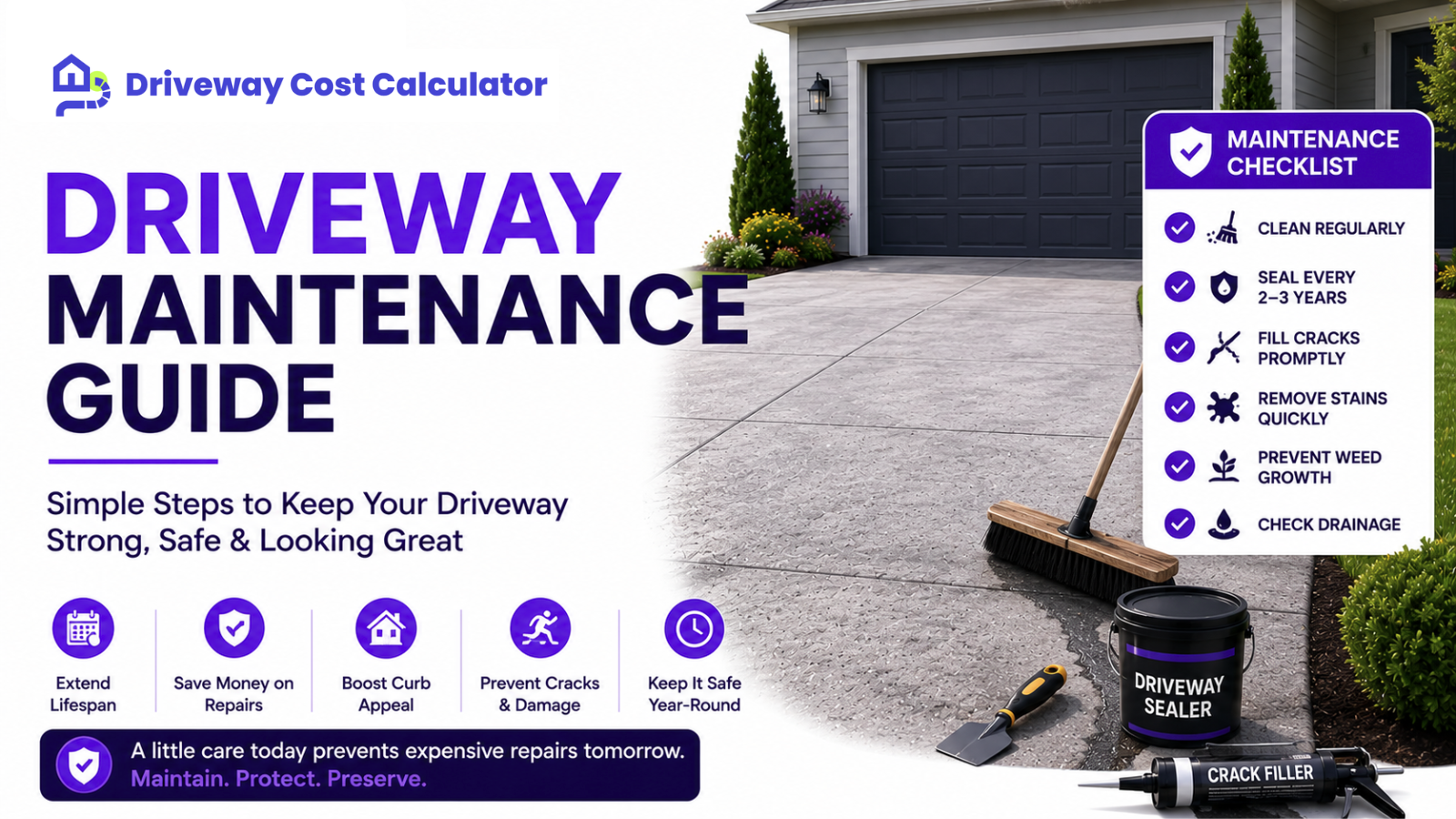
A well-built driveway can last for decades, but only if it's properly maintained. Whether your driveway is made of concrete, asphalt, or gravel, regular care helps prevent expensive repairs, improves curb appeal, and extends its lifespan.
Fortunately, driveway maintenance doesn't have to be difficult. Simple tasks such as cleaning debris, repairing small cracks early, and ensuring proper drainage can make a significant difference over time.
This guide explains the essential maintenance practices for every major driveway material, common mistakes to avoid, and practical tips to help protect your investment throughout the year.
Why Driveway Maintenance Matters
Many homeowners only think about their driveway when visible damage appears. Unfortunately, by that point, small issues may have already developed into costly repairs that require significantly more time and money to fix.
Routine maintenance helps:
- Extend the life of your driveway.
- Reduce long-term repair costs.
- Improve your home's curb appeal.
- Prevent water damage.
- Reduce cracking and potholes.
- Maintain a safe walking and driving surface.
Like a roof or heating system, a driveway lasts much longer when small problems are addressed before they become major ones. Spending a little time on routine maintenance each year can save homeowners thousands of dollars in future replacement costs.
General Maintenance Tips for Every Driveway
Regardless of the material, every driveway benefits from regular care. Following a few simple maintenance habits will help preserve both its appearance and structural integrity.
Keep the Surface Clean
Leaves, dirt, branches, and other debris trap moisture against the surface, creating conditions that may accelerate deterioration.
Sweep your driveway regularly and rinse away accumulated dirt several times each year. Removing organic material also helps prevent staining and weed growth.
Oil leaks should be cleaned as soon as possible. Some driveway materials absorb petroleum products, leaving permanent stains if they are allowed to sit for long periods.
Prevent Standing Water
Water is one of the leading causes of driveway damage.
After heavy rainfall, inspect your driveway for puddles or areas where water collects. Standing water can gradually weaken the surface and eventually damage the foundation beneath it.
If water does not drain properly, improving grading or installing additional drainage may prevent much larger problems in the future.
Remove Weeds Early
Small weeds growing along driveway edges or inside cracks may seem harmless, but their roots gradually widen openings and allow additional moisture to penetrate the surface.
Removing weeds while they are still small helps preserve the structural integrity of your driveway and keeps it looking well maintained.
Avoid Heavy Loads
Most residential driveways are designed for passenger vehicles rather than extremely heavy equipment.
Repeated parking of large trucks, RVs, dumpsters, or construction machinery can place excessive stress on the surface, increasing the likelihood of cracks, settlement, or deformation.
If heavy vehicles must use the driveway occasionally, try to vary their parking position rather than placing weight on the same location every time.
Concrete Driveway Maintenance
Concrete is one of the most durable driveway materials available, but it still benefits from regular maintenance to maximize its lifespan.
Clean Regularly
Wash dirt, leaves, and surface stains periodically using water and a mild detergent. Pressure washing may also be used carefully, provided that excessive pressure is avoided near joints and edges.
Seal Every Few Years
Applying a quality concrete sealer helps protect the surface against:
- Water penetration.
- Freeze-thaw damage.
- Road salt exposure.
- Oil and grease stains.
Depending on your local climate and traffic levels, many homeowners reseal their concrete driveway every three to five years.
Repair Small Cracks Promptly
Even tiny cracks should not be ignored. Water entering these openings may eventually reach the base underneath the concrete, leading to larger structural problems.
Repairing small cracks early is usually quick, inexpensive, and helps prevent much more costly repairs later.
Asphalt Driveway Maintenance
Asphalt driveways generally require more routine maintenance than concrete, but they are also relatively easy to repair when problems are addressed early.
Sealcoat Periodically
Sealcoating helps protect asphalt from:
- Ultraviolet (UV) sunlight.
- Moisture infiltration.
- Oil and fuel spills.
- Oxidation and weathering.
Many contractors recommend resealing an asphalt driveway every two to four years, depending on climate and usage.
Fill Cracks Quickly
Even narrow cracks allow moisture to penetrate beneath the surface, where freeze-thaw cycles may eventually create potholes.
Prompt crack repair significantly reduces the likelihood of larger and more expensive damage developing later.
Keep the Edges Supported
The edges of an asphalt driveway are often its weakest area.
Avoid driving along unsupported edges whenever possible, and maintain nearby soil or landscaping flush with the pavement to provide additional support.
Gravel Driveway Maintenance
Gravel remains one of the most affordable driveway materials available, although it requires more frequent maintenance than concrete or asphalt.
Rake the Surface
Vehicle traffic naturally creates ruts and uneven areas over time.
Periodic raking or grading redistributes gravel evenly across the driveway, helping maintain a smooth driving surface and improving appearance.
Add New Gravel When Needed
Over time, gravel gradually becomes compacted, displaced, or washed away.
Adding fresh gravel every few years helps restore both the appearance and performance of the driveway while preventing thin spots from developing.
Improve Drainage
Proper drainage is especially important for gravel driveways.
Water flowing across the surface can wash away gravel and create deep ruts. Maintaining proper grading and keeping drainage ditches clear helps preserve the driveway and reduces future maintenance requirements.
Seasonal Maintenance Checklist
Each season presents different challenges for your driveway. Following a simple seasonal maintenance routine can help prevent unnecessary wear and extend the life of your investment.
Spring
- Remove leaves, dirt, and winter debris.
- Inspect the surface for new cracks or potholes.
- Check that drainage systems are working properly.
- Repair any damage caused by freezing temperatures.
Summer
- Wash the driveway thoroughly.
- Seal concrete or asphalt if maintenance is due.
- Remove weeds growing along the edges or inside cracks.
- Inspect for oil stains and clean them promptly.
Fall
- Sweep leaves regularly to prevent moisture buildup.
- Trim nearby vegetation.
- Inspect the driveway before winter arrives.
- Complete any small repairs before freezing temperatures.
Winter
- Remove snow carefully using plastic shovels or snow blowers.
- Avoid excessive use of deicing chemicals, particularly on concrete.
- Do not allow standing ice to remain for extended periods.
- Inspect for winter damage once temperatures begin to rise.
Common Driveway Maintenance Mistakes
Many driveway problems develop because routine maintenance is delayed or overlooked. Fortunately, most of these mistakes are easy to avoid.
Ignoring Small Cracks
Small cracks rarely stay small. Moisture entering these openings gradually weakens the driveway and often leads to much larger repairs. Sealing cracks early is one of the simplest and most cost-effective maintenance tasks.
Allowing Water to Pool
Standing water accelerates deterioration regardless of driveway material. Poor drainage should always be corrected before it causes structural damage beneath the surface.
Parking Heavy Vehicles
Repeatedly parking heavy trucks, RVs, or construction equipment on a residential driveway places stress on the surface that it may not have been designed to support.
Skipping Regular Cleaning
Dirt, leaves, moss, and oil stains not only affect appearance but can also contribute to long-term deterioration if left untreated.
Waiting Too Long to Seal Asphalt
Protective sealcoating helps preserve asphalt from sunlight, moisture, and oxidation. Delaying maintenance may shorten the driveway's lifespan considerably.
Warning Signs Your Driveway Needs Attention
Routine inspections help identify small issues before they become expensive repairs. Watch for these common warning signs:
- New or expanding cracks.
- Potholes.
- Standing water after rainfall.
- Loose or displaced gravel.
- Surface discoloration.
- Uneven settling.
- Crumbling edges.
- Areas where the driveway feels soft or unstable.
Addressing these problems early often prevents more extensive repairs and helps maximize the driveway's lifespan.
Maintenance Schedule at a Glance
| Maintenance Task | Concrete | Asphalt | Gravel |
|---|---|---|---|
| Sweep debris | Monthly | Monthly | Monthly |
| Wash surface | 1–2 times per year | 1–2 times per year | As needed |
| Inspect for cracks | Twice per year | Twice per year | Twice per year |
| Seal surface | Every 3–5 years | Every 2–4 years | Not required |
| Add new material | No | No | Every few years |
| Remove weeds | As needed | As needed | As needed |
Frequently Asked Questions
How often should I clean my driveway?
Sweeping your driveway once a month and washing it once or twice each year is sufficient for most homeowners. Properties surrounded by trees may require more frequent cleaning.
Is pressure washing safe?
Yes. Pressure washing is generally safe when performed correctly. Avoid excessive pressure near joints, edges, and existing cracks, particularly on older concrete driveways.
Should every driveway be sealed?
Not necessarily. Asphalt driveways benefit greatly from periodic sealcoating, while concrete sealing depends on climate and surface condition. Gravel driveways do not require sealing.
When should cracks be repaired?
As soon as they appear. Small cracks are easier and much less expensive to repair than large structural failures or potholes.
What shortens a driveway's lifespan?
Poor drainage, neglected maintenance, freeze-thaw cycles, heavy vehicle traffic, weed growth, and ignoring small cracks are among the most common causes of premature driveway deterioration.
Final Thoughts
Routine driveway maintenance is one of the simplest ways to protect your investment and avoid expensive repairs. Whether your driveway is made of concrete, asphalt, or gravel, regular inspections and preventive maintenance can add many years to its useful life.
By cleaning the surface, repairing minor damage promptly, maintaining proper drainage, and following a seasonal maintenance routine, homeowners can keep their driveways looking attractive while reducing long-term maintenance costs.
If your driveway has reached the point where repairs are no longer practical, using a Driveway Cost Calculator can help estimate the cost of replacing it before requesting quotes from local contractors. Understanding potential costs in advance makes it easier to budget and compare professional estimates with confidence.