 Driveway Cost Calculator
Introduction
Choosing the best driveway material is one of the most important decisions you'll make when planning a new driveway. While cost is certainly a major consideration, it shouldn't be the only factor influencing your choice. Durability, maintenance requirements, appearance, climate, and long-term value all play an important role in determining which material is right for your home.
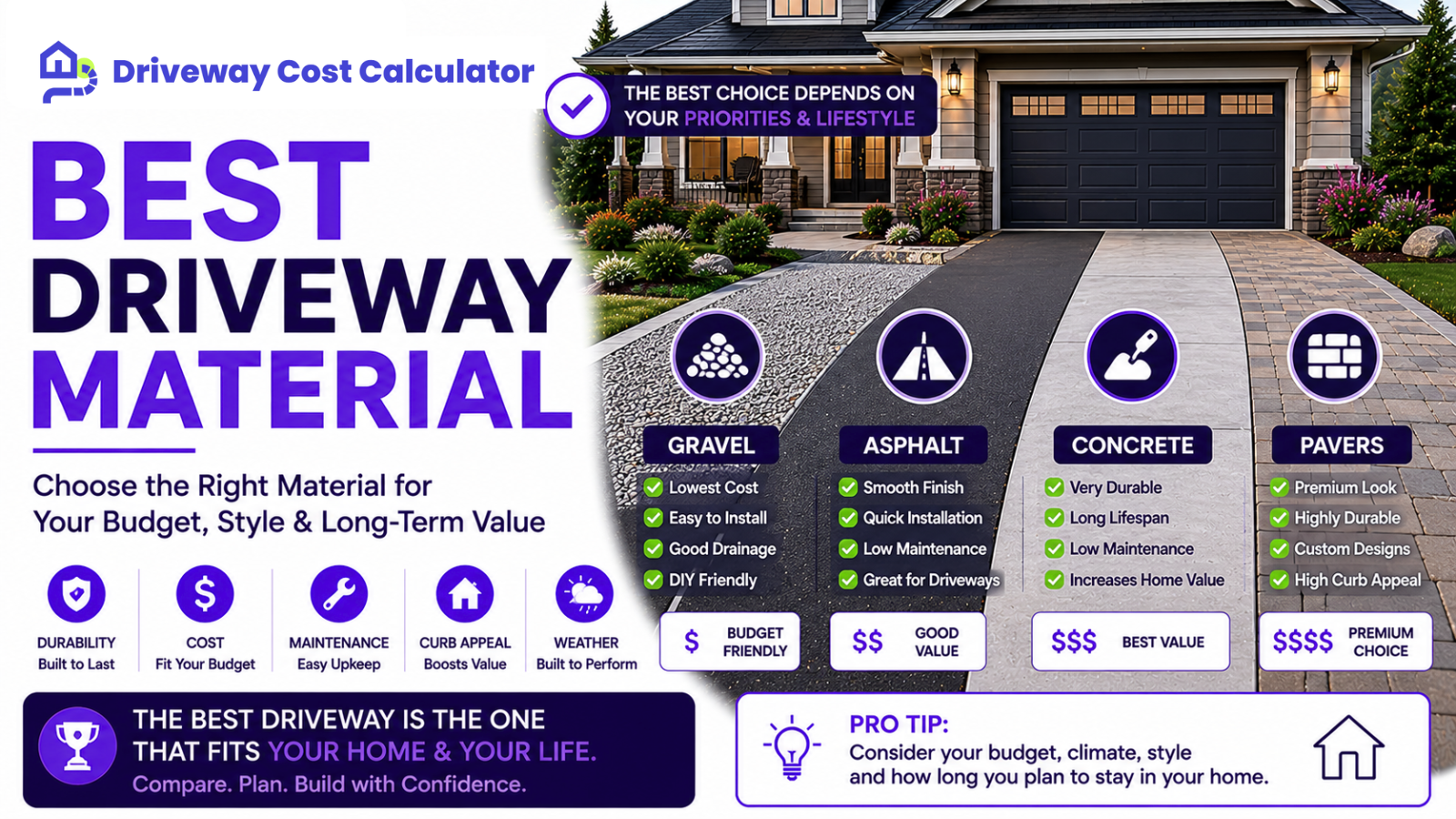
Today's homeowners can choose from several popular driveway materials, each offering unique advantages and disadvantages. Concrete provides exceptional durability, asphalt is often more affordable, gravel offers a low-cost solution, while pavers create an attractive, premium appearance.
The "best" driveway material isn't necessarily the most expensive one. Instead, it's the material that best matches your property's needs, local climate, expected traffic, and available budget.
In this guide, we'll compare the most common driveway materials, explain their strengths and weaknesses, and help you decide which option provides the greatest long-term value.
Factors to Consider Before Choosing a Material
Every driveway project is different, and the ideal material depends on several important factors. Before making your decision, take some time to evaluate your property's needs and your long-term expectations.
Consider the following:
- Your overall budget.
- Local climate and weather conditions.
- Expected vehicle traffic.
- Your preferred appearance.
- Maintenance requirements.
- Expected lifespan.
- Long-term value.
- Availability of experienced local contractors.
Balancing these factors usually leads to a better long-term decision than focusing on installation cost alone.
Concrete Driveways
Concrete is one of the most popular driveway materials in the United States because it offers an excellent combination of durability, appearance, and longevity.
A properly installed concrete driveway can often last thirty years or longer with routine maintenance, making it an attractive option for homeowners planning to remain in their property for many years.
Advantages
- Extremely durable.
- Long service life.
- Low maintenance requirements.
- Clean, modern appearance.
- Excellent curb appeal.
- Available in decorative finishes, textures, and colors.
Considerations
- Higher upfront cost than asphalt or gravel.
- Repairs may be more visible than other materials.
- Improper installation may lead to cracking.
- Requires adequate curing time before vehicles can use it.
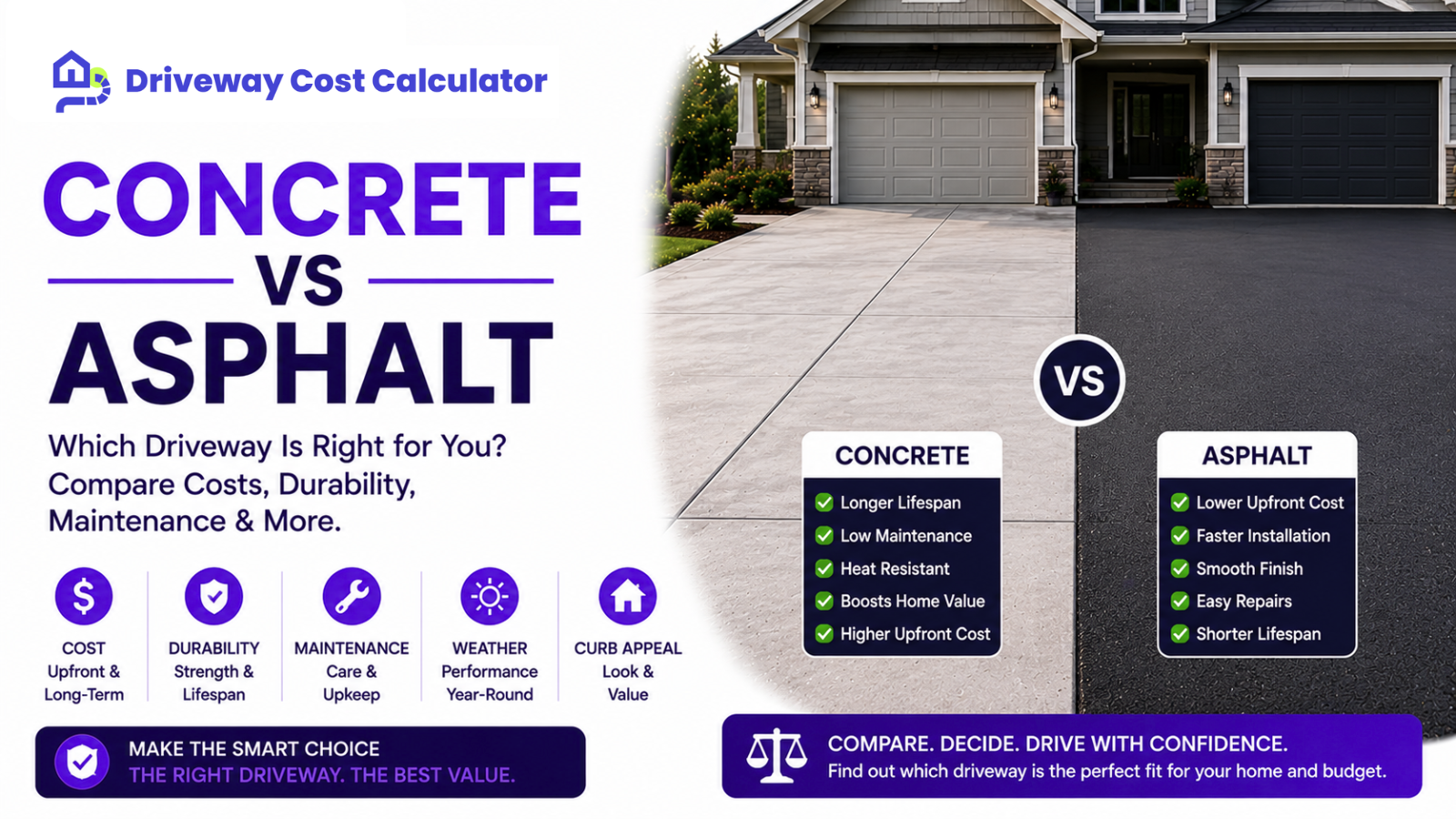
For homeowners seeking a durable, attractive driveway with minimal maintenance, concrete remains one of the best overall choices.
Asphalt Driveways
Asphalt is another highly popular driveway material because it provides an excellent balance between affordability and performance.
Its flexibility allows it to perform particularly well in colder climates where seasonal freeze-thaw cycles place additional stress on paved surfaces.
Advantages
- Lower installation cost than concrete.
- Faster installation process.
- Easier and less expensive repairs.
- Performs well in colder climates.
- Smooth, comfortable driving surface.
Considerations
- Requires periodic sealcoating.
- Generally has a shorter lifespan than concrete.
- May soften slightly during extreme heat.
- Requires more routine maintenance over time.
For homeowners looking to reduce initial installation costs without sacrificing quality, asphalt often provides excellent overall value.
Gravel Driveways
Gravel is usually the most affordable driveway material available and remains especially popular in rural areas, farms, and larger residential properties.
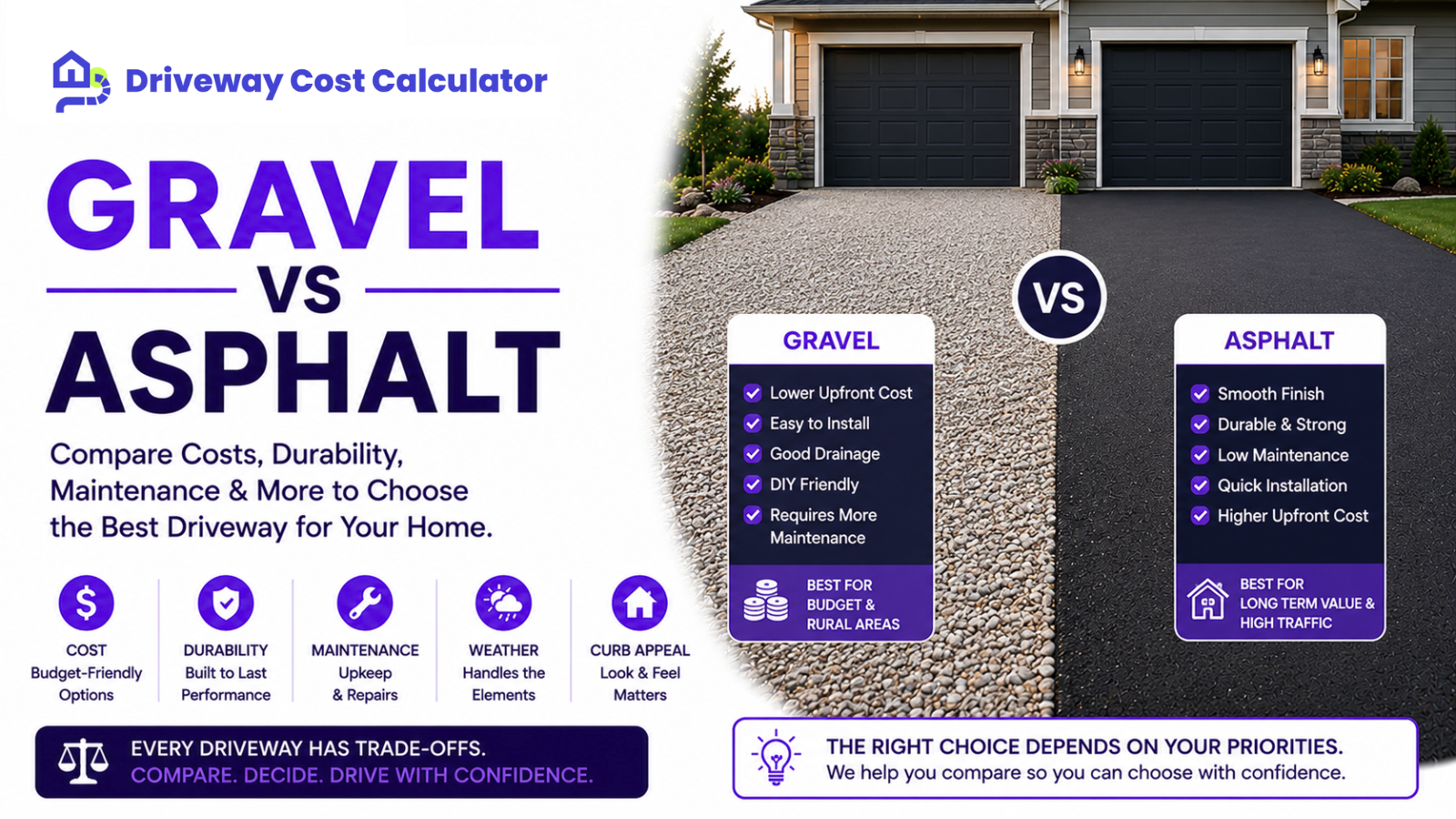
Although it requires more routine maintenance than paved surfaces, gravel offers flexibility, excellent drainage, and low installation costs.
Advantages
- Lowest installation cost.
- Excellent natural drainage.
- Easy to repair and replenish.
- Quick installation.
- Natural appearance that complements rural landscapes.
Considerations
- Requires periodic grading.
- Loose stones may scatter beyond the driveway.
- Weeds require occasional maintenance.
- Snow removal may be more challenging.
- Less formal appearance than paved materials.
Gravel is an excellent choice for homeowners seeking an economical driveway solution while accepting the need for ongoing maintenance.
Paver Driveways
Pavers are often considered the premium driveway option. Individual concrete, brick, or natural stone pavers create an elegant appearance while allowing damaged sections to be replaced without rebuilding the entire driveway.
Advantages
- Outstanding appearance.
- Excellent curb appeal.
- Individual pavers can be replaced if damaged.
- Large variety of colors, patterns, and designs.
- Very long lifespan when properly installed.
Considerations
- Highest installation cost.
- More labor-intensive installation.
- Weeds may grow between joints if not maintained.
- Longer construction time than asphalt or gravel.
For homeowners who place a high priority on appearance and long-term curb appeal, pavers often provide the most visually impressive result despite their higher upfront investment.
Comparing the Most Popular Materials
Each driveway material offers different advantages depending on your priorities. Some homeowners value durability above all else, while others focus on appearance, maintenance, or affordability.
The table below provides a quick comparison of the four most popular driveway materials.
| Material | Typical Cost | Expected Lifespan | Maintenance | Appearance |
|---|---|---|---|---|
| Concrete | Medium-High | 30+ Years | Low | Excellent |
| Asphalt | Medium | 20+ Years | Moderate | Very Good |
| Gravel | Low | Indefinite with Maintenance | High | Good |
| Pavers | High | 30+ Years | Moderate | Outstanding |
Which Material Is Best for Your Climate?
Climate is one of the most important factors when selecting a driveway material. Choosing a surface that performs well in your local weather conditions can significantly extend its lifespan and reduce maintenance costs.
Cold Climates
Asphalt performs particularly well in colder regions because its flexibility helps it accommodate freeze-thaw cycles that can damage more rigid surfaces. Properly installed concrete also performs well when expansion joints and drainage are carefully designed.
Hot Climates
Concrete generally performs better than asphalt during extended periods of high temperatures. Asphalt may soften slightly during extreme heat, particularly under heavy vehicle loads.
Wet Regions
Regardless of the material you choose, proper drainage is essential. Gravel naturally allows water to drain through the surface, while concrete and asphalt rely on proper grading to move water away from the driveway.
Which Material Requires the Least Maintenance?
Maintenance requirements vary considerably between materials.
Concrete generally requires the least routine maintenance. Occasional cleaning and sealing every few years are usually sufficient to maintain its appearance and durability.
Asphalt requires periodic sealcoating to protect the surface from moisture, sunlight, and oxidation.
Gravel requires the most regular attention. Homeowners should expect to periodically rake the surface, replenish displaced gravel, and control weeds.
Pavers require moderate maintenance. While individual pavers can be replaced if damaged, homeowners should occasionally remove weeds between joints and replenish joint sand when necessary.
Which Material Offers the Best Value?
The least expensive driveway isn't always the most economical over its lifetime. Long-term maintenance, repairs, and expected lifespan should all be considered alongside the initial installation cost.
For example, gravel has the lowest upfront cost but requires continuous maintenance throughout its life.
Concrete costs more initially but often provides decades of reliable service with relatively little maintenance.
Asphalt strikes a balance between installation cost and long-term performance, while pavers offer exceptional longevity and curb appeal for homeowners willing to invest more upfront.
When viewed over several decades, many homeowners find that concrete provides one of the best overall values.
Matching the Material to Your Home
Every home has its own architectural style, landscaping, and functional requirements. Selecting a driveway material that complements your property improves both appearance and long-term value.
- Concrete works well with modern, contemporary, and suburban homes.
- Asphalt complements a wide variety of residential properties and neighborhoods.
- Gravel is especially popular for rural homes, farms, and large country properties.
- Pavers create a premium appearance that complements luxury homes and decorative landscaping.
Matching your driveway to your home's architecture helps create a cohesive and attractive exterior.
Questions to Ask Before Deciding
Before choosing your driveway material, ask yourself the following questions:
- How long do I plan to live in this home?
- What is my available budget?
- How much maintenance am I willing to perform?
- What weather conditions are common in my area?
- Do I prioritize appearance or affordability?
- How many vehicles will regularly use the driveway?
Answering these questions helps narrow your options and makes selecting the right material much easier.
Material Comparison Checklist
| Feature | Concrete | Asphalt | Gravel | Pavers |
|---|---|---|---|---|
| Initial Cost | ★★★☆☆ | ★★★★☆ | ★★★★★ | ★★☆☆☆ |
| Durability | ★★★★★ | ★★★★☆ | ★★★☆☆ | ★★★★★ |
| Maintenance | ★★★★★ | ★★★☆☆ | ★★☆☆☆ | ★★★★☆ |
| Appearance | ★★★★★ | ★★★★☆ | ★★★☆☆ | ★★★★★ |
| Longevity | ★★★★★ | ★★★★☆ | ★★★☆☆ | ★★★★★ |
Frequently Asked Questions
Which driveway material lasts the longest?
Concrete and paver driveways generally provide the longest service life, often lasting thirty years or more when properly installed and maintained.
What is the cheapest driveway material?
Gravel is usually the least expensive driveway material to install. However, homeowners should expect ongoing maintenance such as grading and replenishing gravel over time.
Which driveway requires the least maintenance?
Concrete typically requires the least routine maintenance, making it one of the most popular long-term choices for homeowners seeking durability and convenience.
Which material is best for snowy climates?
Both asphalt and properly installed concrete perform well in snowy regions. Asphalt's flexibility often makes it particularly suitable for areas experiencing frequent freeze-thaw cycles.
Are pavers worth the additional cost?
For homeowners who prioritize appearance, premium curb appeal, and the ability to replace individual sections rather than an entire driveway, pavers can provide excellent long-term value despite their higher installation cost.
Final Thoughts
There is no single "best" driveway material for every homeowner. The ideal choice depends on your budget, climate, maintenance preferences, and the appearance you want to achieve.
Concrete remains one of the best all-around options thanks to its durability, low maintenance, and long lifespan. Asphalt offers excellent value at a lower upfront cost, gravel provides the most affordable installation, and pavers deliver premium aesthetics for homeowners seeking a high-end finish.
Before making your final decision, compare several contractor estimates and consider using a Driveway Cost Calculator to estimate project costs based on your preferred material, driveway size, and location. Understanding your expected budget before requesting quotes makes it much easier to compare options and confidently choose the driveway material that best fits your home and long-term needs.