 Driveway Cost Calculator
Introduction
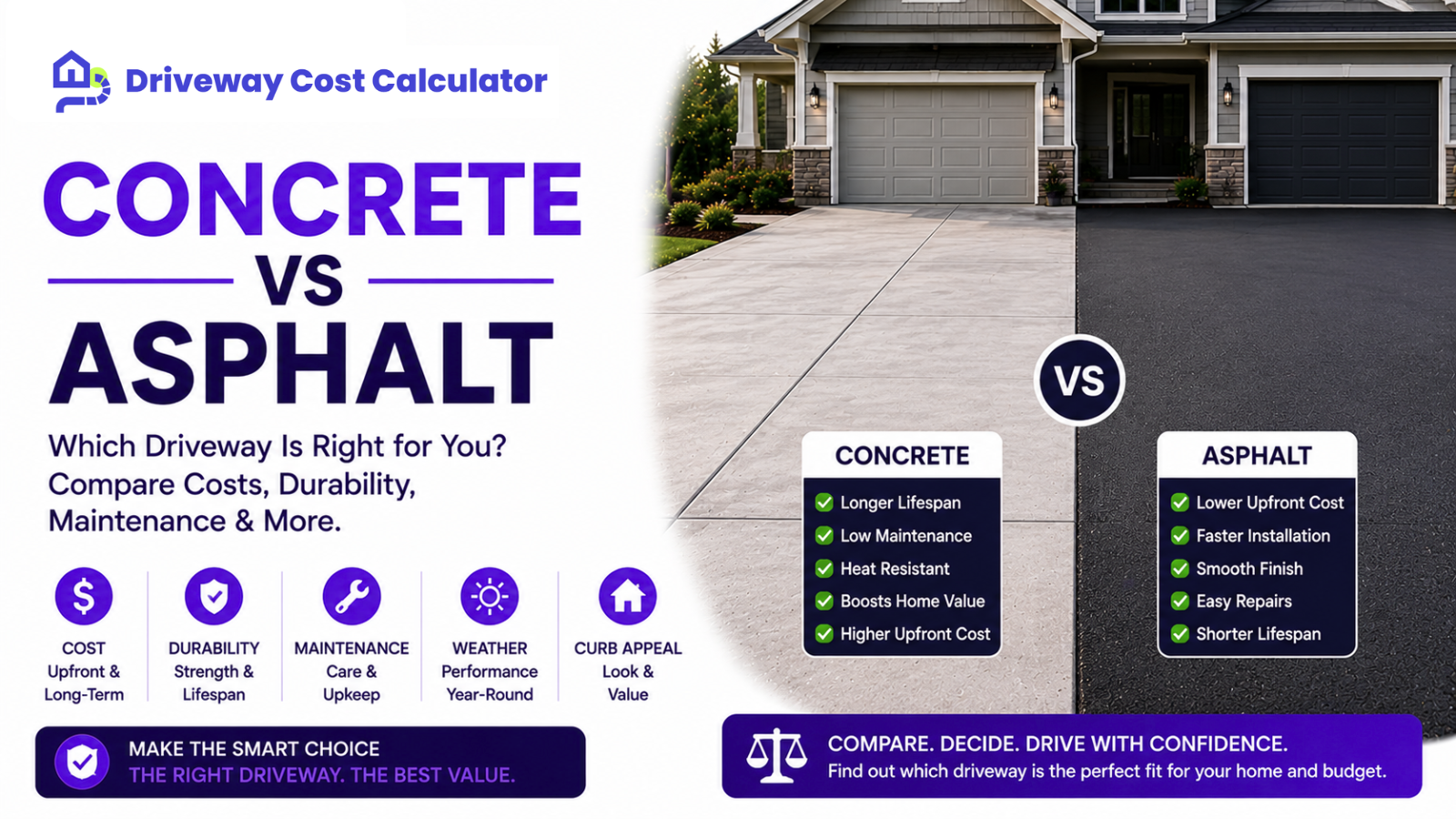
If you're planning a new driveway, one of the biggest decisions you'll face is choosing between concrete and asphalt. Both materials are widely used throughout the United States and have been trusted by homeowners for decades. However, they differ significantly in terms of cost, appearance, maintenance, durability, and long-term performance.
There is no universal winner. The right choice depends on your budget, local climate, how you use your driveway, and how much maintenance you're willing to perform over the years.
Concrete is often praised for its long lifespan and clean appearance, while asphalt is known for its affordability and flexibility in colder climates. Understanding the strengths and weaknesses of each material will help you make a confident decision before investing thousands of dollars in your new driveway.
This guide compares concrete and asphalt across every major category so you can determine which material is the best fit for your home.
Understanding the Two Materials
Although both materials create durable paved surfaces, they are manufactured differently and perform differently over time.
Concrete
Concrete is made by mixing cement, sand, gravel, and water into a rigid surface that hardens through a curing process. Once properly cured, concrete creates a strong, durable slab capable of supporting residential vehicles for decades.
Modern concrete driveways are available in numerous finishes, colors, textures, and decorative patterns, allowing homeowners to customize their appearance.
Asphalt
Asphalt consists of stone aggregate combined with a petroleum-based binder. Unlike concrete, asphalt remains slightly flexible after installation, allowing it to expand and contract more easily as temperatures change.
This flexibility makes asphalt particularly popular in regions with frequent freeze-thaw cycles.
Installation Cost
For many homeowners, cost is the first factor they consider when comparing driveway materials.
In general, asphalt typically costs less to install, while concrete usually requires a larger upfront investment. The exact price depends on several factors, including:
- Driveway size.
- Thickness.
- Excavation requirements.
- Drainage improvements.
- Local labor rates.
- Decorative finishes or custom designs.
Although concrete costs more initially, its longer lifespan may offset part of the additional expense over time, making it a strong long-term investment for many homeowners.
Winner
🏆 Asphalt offers the lower initial installation cost.
Lifespan
Both materials can provide decades of reliable service when installed correctly and maintained properly.
Typical lifespans include:
- Concrete: 30–40 years.
- Asphalt: 20–30 years.
Proper drainage, routine maintenance, timely repairs, and avoiding excessive vehicle loads all contribute to maximizing the lifespan of either material.
Poor installation or neglected maintenance can significantly reduce these estimates.
Winner
🏆 Concrete generally lasts longer than asphalt.
Maintenance Requirements
Maintenance is one of the biggest differences between concrete and asphalt driveways.
Concrete typically requires:
- Occasional cleaning.
- Repairing cracks if they develop.
- Optional sealing every few years depending on climate.
Asphalt generally requires:
- Regular sealcoating.
- Crack filling.
- Occasional resurfacing.
- More frequent inspections to prevent water damage.
Although asphalt maintenance isn't particularly difficult, it usually requires more attention throughout the driveway's lifetime than concrete.
Winner
🏆 Concrete requires less routine maintenance.
Appearance
Appearance is largely a matter of personal preference, but the two materials offer very different visual styles.
Concrete offers:
- Light, clean appearance.
- Modern aesthetic.
- Stamped decorative finishes.
- Exposed aggregate options.
- Colored concrete designs.
Asphalt offers:
- Smooth black finish.
- Uniform appearance.
- Simple, functional design.
Homeowners focused on maximizing curb appeal often appreciate the greater design flexibility that concrete provides.
Winner
🏆 Concrete offers significantly more decorative and customization options.
Performance in Different Climates
Local climate should always influence your driveway material selection because temperature changes directly affect long-term performance.
Cold Climates
Asphalt's flexibility helps it expand and contract during repeated freeze-thaw cycles, making it particularly well suited for colder regions.
Properly installed concrete also performs well in cold climates when expansion joints and drainage are designed correctly.
Hot Climates
Concrete generally performs better during prolonged periods of extreme heat because it maintains its structural strength more effectively than asphalt.
Asphalt may soften slightly during exceptionally hot summer days, especially under heavy vehicle loads.
Wet Climates
Both materials perform well when proper drainage is incorporated into the installation. Standing water poses a greater risk than rainfall itself and should always be minimized through proper grading.
Winner
- 🏆 Cold climates: Asphalt
- 🏆 Hot climates: Concrete
Repair and Maintenance Costs
Even the best driveway materials eventually develop signs of wear. Understanding how each material is repaired can help homeowners estimate long-term maintenance costs.
Concrete repairs typically include:
- Filling small cracks.
- Repairing expansion joints.
- Replacing damaged slabs when necessary.
One challenge with concrete is that repaired sections may not perfectly match the color of the surrounding driveway, especially as the original surface ages.
Asphalt repairs usually involve:
- Crack sealing.
- Patching damaged areas.
- Resurfacing older driveways.
Because asphalt has a consistent dark color, repairs often blend more naturally with the existing surface, making them less noticeable.
Winner
🏆 Asphalt is generally easier and less expensive to repair.
Installation Time
If completing the project quickly is important, installation time may influence your decision.
Asphalt driveways can usually be installed faster and often become usable within just a few days, depending on weather conditions.
Concrete requires additional curing time before vehicles can safely drive or park on the surface. Although the installation process itself is similar, the waiting period before full use is generally longer.
Winner
🏆 Asphalt offers quicker installation and earlier use.
Environmental Considerations
Many homeowners also consider the environmental impact of their driveway material.
Concrete generally lasts longer, reducing the frequency of replacement over the life of the property.
Asphalt is one of the most widely recycled construction materials and often contains recycled pavement from previous road or driveway projects.
Both industries continue improving sustainability through new manufacturing methods and recycling technologies.
Winner
🤝 This category is generally considered a tie, as both materials offer environmental advantages depending on local recycling practices and installation methods.
Side-by-Side Comparison
| Feature | Concrete | Asphalt |
|---|---|---|
| Initial Cost | Higher | Lower |
| Expected Lifespan | 30–40 Years | 20–30 Years |
| Maintenance | Low | Moderate |
| Repair Difficulty | Moderate | Easy |
| Appearance | Excellent | Very Good |
| Decorative Options | Extensive | Limited |
| Cold Climate Performance | Good | Excellent |
| Hot Climate Performance | Excellent | Good |
| Installation Speed | Slower | Faster |
Which Homeowners Should Choose Concrete?
Concrete is often the better choice if you:
- Plan to stay in your home for many years.
- Want the longest possible lifespan.
- Prefer minimal maintenance.
- Value curb appeal.
- Want decorative finishes or custom colors.
- Live in a warmer climate.
Although the initial investment is higher, many homeowners appreciate concrete's durability and long-term value.
Which Homeowners Should Choose Asphalt?
Asphalt may be the better option if you:
- Have a limited installation budget.
- Need the driveway completed quickly.
- Live in a colder climate.
- Don't mind performing periodic maintenance.
- Prefer a lower upfront cost.
For many families, asphalt provides an excellent balance between affordability, performance, and ease of repair.
Frequently Asked Questions
Which driveway lasts longer?
Concrete generally lasts longer than asphalt, often providing thirty to forty years of service when properly installed and maintained.
Which material is cheaper?
Asphalt usually has a lower initial installation cost, making it one of the most affordable paved driveway options.
Which requires less maintenance?
Concrete typically requires less routine maintenance, while asphalt benefits from periodic sealcoating and more frequent inspections.
Which performs better in snowy climates?
Asphalt's flexibility often makes it better suited to areas experiencing repeated freeze-thaw cycles, although properly installed concrete also performs well.
Which looks better?
Appearance is subjective, but concrete offers significantly more decorative possibilities, including stamped patterns, colored finishes, and exposed aggregate surfaces.
Final Verdict
Both concrete and asphalt are excellent driveway materials, and neither is the perfect choice for every homeowner.
If your priorities are long-term durability, minimal maintenance, and maximum curb appeal, concrete is often the better investment despite its higher upfront cost.
If you're looking for lower installation costs, faster construction, and excellent performance in colder climates, asphalt may be the smarter choice.
Before making your final decision, compare estimates from several contractors and consider using a Driveway Cost Calculator to estimate installation costs for both materials. Understanding the expected price difference helps you choose the option that best fits your budget, climate, and long-term plans.