 Driveway Cost Calculator
Introduction
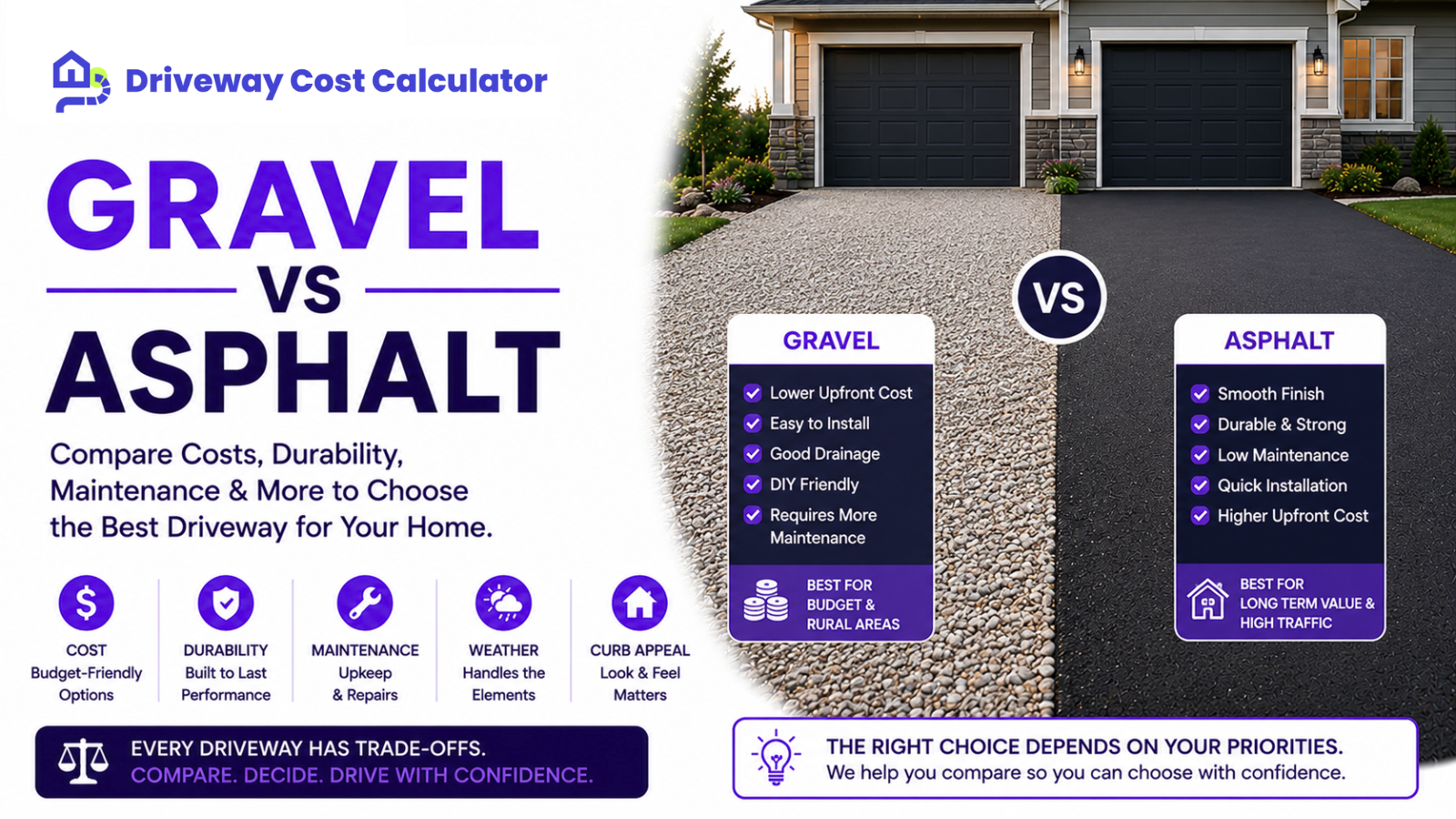
When planning a new driveway, many homeowners eventually narrow their options to gravel or asphalt. Both materials are popular across the United States, but they serve different purposes and appeal to different types of properties.
Gravel is known for its affordability, natural appearance, and excellent drainage, making it a favorite for rural homes and large properties. Asphalt, on the other hand, provides a smooth, durable paved surface that offers greater convenience, easier snow removal, and a more polished appearance.
Choosing between gravel and asphalt involves much more than comparing installation costs. Long-term maintenance, expected lifespan, local climate, traffic levels, and your property's overall style should all influence your decision.
This guide compares gravel and asphalt across every major category to help you determine which material offers the best value for your specific needs.
Understanding the Two Materials
Although both materials are used to build driveways, they perform very differently over time.
Gravel
Gravel driveways are constructed using crushed stone or small rock aggregates spread over a prepared base. Because the surface remains loose rather than bonded together, gravel provides excellent drainage and can be repaired easily by adding additional material.
Gravel is commonly used on rural properties, farms, cabins, and homes with long driveways where keeping installation costs low is a priority.
Asphalt
Asphalt is produced by combining crushed stone with a petroleum-based binder that creates a smooth, paved surface once compacted.
Unlike gravel, asphalt forms a continuous driving surface that provides a more finished appearance while requiring less day-to-day maintenance.
Installation Cost
For many homeowners, installation cost is the deciding factor when comparing gravel and asphalt.
Generally speaking, gravel has the lowest installation cost, while asphalt requires a larger upfront investment. Total project costs depend on several factors, including:
- Driveway length.
- Driveway width.
- Site preparation.
- Excavation requirements.
- Drainage improvements.
- Local labor rates.
Although asphalt costs considerably more initially, many homeowners appreciate its smoother surface, cleaner appearance, and reduced maintenance requirements over time.
Winner
🏆 Gravel is the most affordable driveway material to install.
Lifespan
Both materials can provide many years of reliable service when properly maintained, although they age differently.
Typical lifespans include:
- Gravel: Indefinite with regular maintenance.
- Asphalt: Approximately 20–30 years.
Unlike asphalt, gravel doesn't technically wear out. Instead, homeowners periodically replenish displaced gravel and regrade the surface to maintain a smooth driving area.
Asphalt eventually requires resurfacing or replacement as it ages, although routine maintenance can significantly extend its service life.
Winner
🤝 Tie. Gravel can last indefinitely with regular maintenance, while asphalt provides decades of reliable service with less frequent upkeep.
Maintenance Requirements
Maintenance is one of the biggest differences between gravel and asphalt driveways.
Gravel typically requires:
- Periodic grading.
- Adding fresh gravel.
- Removing weeds.
- Filling ruts.
- Maintaining driveway edges.
Asphalt generally requires:
- Sealcoating every few years.
- Crack repair.
- Occasional patching.
- Routine inspections.
Although asphalt maintenance occurs less frequently, gravel maintenance is often simpler and less expensive because it usually requires only basic tools and additional stone.
Winner
🏆 Asphalt requires less routine maintenance.
Appearance
Appearance is often one of the biggest deciding factors when choosing between these two materials.
Gravel offers:
- A natural, rustic appearance.
- Excellent compatibility with rural landscapes.
- A variety of stone colors and sizes.
- An informal country style.
Asphalt provides:
- A smooth black finish.
- A clean, uniform appearance.
- Well-defined driveway edges.
- A more finished residential look.
Homeowners in suburban neighborhoods often prefer asphalt because of its polished appearance, while gravel remains a popular choice for rural homes and larger properties.
Winner
🏆 Asphalt offers a cleaner and more polished appearance.
Performance in Different Climates
Climate influences how both driveway materials perform throughout the year.
Cold Climates
Gravel performs well because freezing temperatures rarely damage the surface itself. Asphalt also performs well in colder regions thanks to its flexibility during repeated freeze-thaw cycles.
Hot Climates
Both materials generally perform well in warmer regions. However, extremely high temperatures may soften asphalt slightly, while gravel remains largely unaffected by heat.
Wet Climates
Gravel naturally allows rainwater to drain through the surface, reducing standing water. Asphalt depends on proper grading and drainage design to move water away efficiently.
Winner
🏆 Gravel provides superior natural drainage, making it an excellent choice for areas with frequent rainfall.
Repair and Maintenance Costs
Both gravel and asphalt are relatively affordable to repair compared to other driveway materials. However, the repair methods differ considerably.
Gravel repairs typically involve:
- Adding fresh gravel.
- Regrading the surface.
- Filling ruts and low spots.
- Replacing displaced stone.
Most gravel repairs are straightforward and can often be completed by homeowners using basic landscaping equipment.
Asphalt repairs generally include:
- Crack sealing.
- Patching damaged sections.
- Sealcoating.
- Resurfacing older driveways.
Although asphalt repairs typically require professional equipment, they often restore the driveway's appearance and extend its lifespan for many additional years.
Winner
🏆 Gravel is generally easier and less expensive to repair.
Installation Time
Both driveway materials can usually be installed quickly, but gravel has a clear advantage.
Because gravel requires no curing time, homeowners can often begin using the driveway immediately after installation is complete.
Asphalt installations are also relatively fast, but the surface requires time to cool, compact properly, and cure before supporting regular vehicle traffic.
Winner
🏆 Gravel offers the fastest installation and immediate usability.
Environmental Considerations
Environmental impact is becoming an increasingly important factor for many homeowners.
Gravel naturally allows rainwater to infiltrate into the ground, reducing stormwater runoff and helping replenish groundwater supplies.
Asphalt is one of the most recycled construction materials in the world and often incorporates reclaimed pavement into new installations.
Both materials provide environmental benefits, although they do so in different ways.
Winner
🤝 Tie. Gravel promotes natural drainage, while asphalt benefits from extensive recycling programs.
Side-by-Side Comparison
| Feature | Gravel | Asphalt |
|---|---|---|
| Initial Cost | Lowest | Medium |
| Expected Lifespan | Indefinite with Maintenance | 20–30 Years |
| Maintenance | High | Moderate |
| Repair Difficulty | Very Easy | Easy |
| Appearance | Natural | Modern |
| Drainage | Excellent | Good |
| Installation Speed | Very Fast | Fast |
| Snow Removal | Moderate | Excellent |
Which Homeowners Should Choose Gravel?
Gravel is often the better choice if you:
- Have a limited installation budget.
- Own a rural property.
- Have a long driveway where paving would be expensive.
- Need excellent natural drainage.
- Don't mind performing occasional maintenance.
- Prefer a natural, rustic appearance.
For many country homes and farms, gravel remains one of the most practical and economical driveway materials available.
Which Homeowners Should Choose Asphalt?
Asphalt may be the better option if you:
- Prefer a smooth paved surface.
- Want lower routine maintenance.
- Value curb appeal.
- Live in a suburban neighborhood.
- Need easier snow removal.
- Want a cleaner, more finished appearance.
For many suburban homeowners, asphalt offers an excellent combination of affordability, appearance, and long-term performance.
Frequently Asked Questions
Which driveway is cheaper?
Gravel is almost always the least expensive driveway material to install, making it an attractive option for homeowners working with a limited budget.
Which driveway lasts longer?
Gravel can technically last indefinitely when regularly maintained, while asphalt generally provides twenty to thirty years of service before replacement becomes necessary.
Which requires less maintenance?
Asphalt requires less frequent routine maintenance, although gravel maintenance is usually simpler and less expensive to perform.
Which is better for snowy climates?
Both materials perform well in cold climates, but asphalt's smooth surface makes snow plowing and snow removal considerably easier.
Which provides better curb appeal?
Asphalt generally offers greater curb appeal, particularly in suburban neighborhoods where paved driveways are more common.
Final Verdict
Both gravel and asphalt are excellent driveway materials, but they are designed for different priorities and property types.
If your goals are keeping installation costs low, maximizing natural drainage, and maintaining a long rural driveway, gravel is often the smartest choice.
If you prefer a smooth driving surface, easier maintenance, improved curb appeal, and a more traditional residential appearance, asphalt is usually the better long-term investment.
Before making your final decision, compare estimates from several contractors and consider using a Driveway Cost Calculator to estimate installation costs for both materials. Understanding the expected price difference can help you confidently choose the driveway material that best fits your budget, property, and long-term needs.