 Driveway Cost Calculator
Introduction
Installing a new driveway is a significant investment, but it doesn't always require spending tens of thousands of dollars. Many homeowners are simply looking for the most affordable solution that provides reliable performance without exceeding their budget.
Fortunately, several driveway materials offer low installation costs while still providing years of dependable service. However, the cheapest option upfront isn't always the least expensive over the life of the driveway. Some materials require frequent maintenance, while others cost more initially but last much longer.
When comparing driveway materials, it's important to balance installation cost, maintenance requirements, expected lifespan, appearance, and long-term value rather than focusing only on the initial price.
In this guide, we'll compare the most affordable driveway materials and explain which options provide the best overall value for different homeowners and property types.
What Makes a Driveway Affordable?
A low installation price is only one part of the equation.
The true cost of owning a driveway includes:
- Initial installation.
- Routine maintenance.
- Repairs.
- Replacement costs.
- Expected lifespan.
For example, a driveway that costs half as much today but requires frequent repairs and maintenance may ultimately cost more over several decades than a more durable material with a higher upfront price.
That's why experienced homeowners evaluate the total cost of ownership instead of simply choosing the lowest estimate.
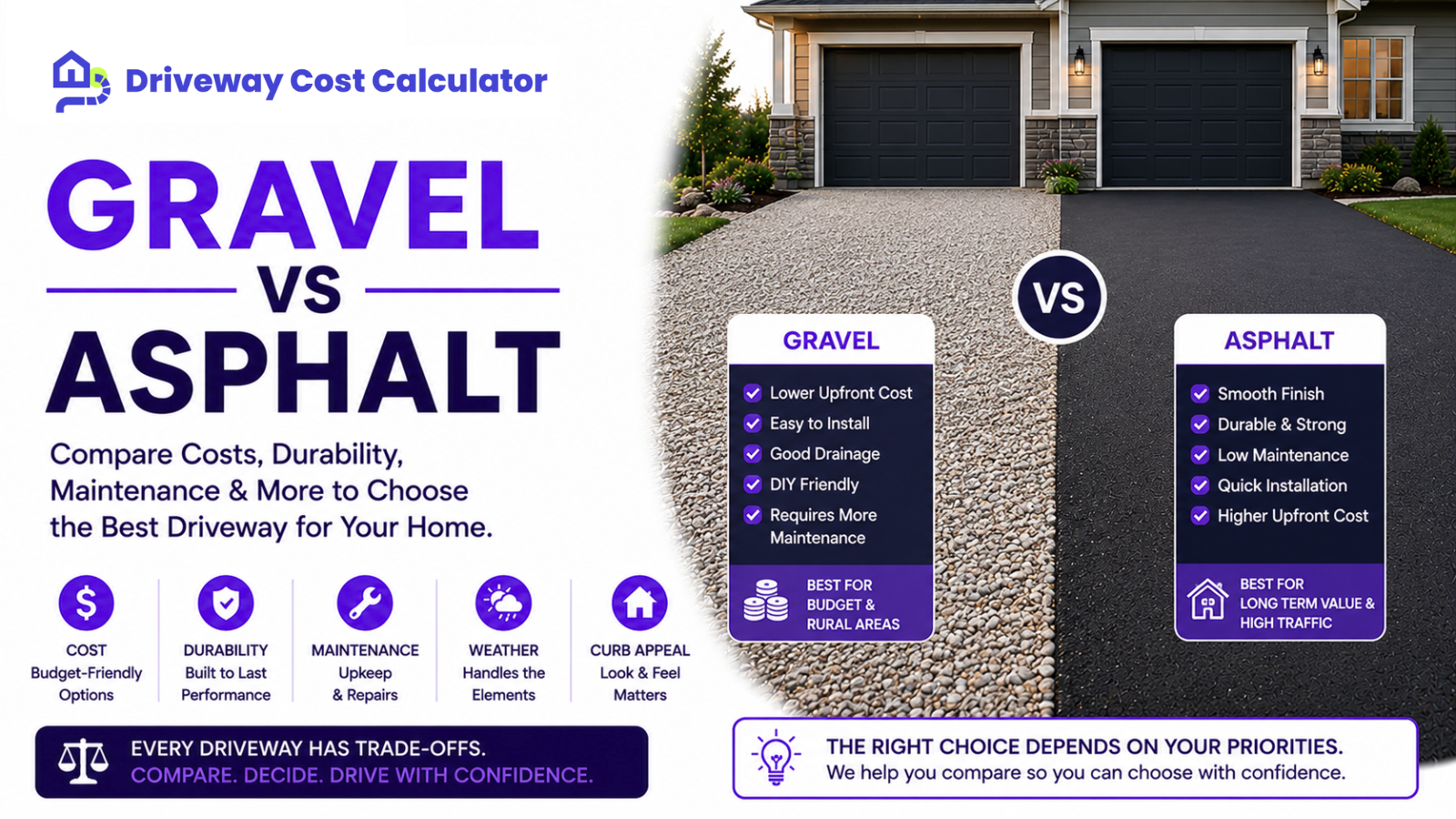
Gravel: The Lowest-Cost Option
Gravel is almost always the least expensive driveway material available.
Because installation requires relatively little equipment and inexpensive materials, gravel remains extremely popular for rural properties, farms, cabins, and homes with long driveways.
Advantages
- Lowest installation cost.
- Fast installation.
- Excellent natural drainage.
- Easy and inexpensive repairs.
- Natural appearance that blends with rural landscapes.
Considerations
- Requires periodic grading.
- Loose stones may scatter beyond the driveway.
- Weed growth requires occasional maintenance.
- Snow removal can be more challenging.
For homeowners with limited budgets, gravel often provides the greatest immediate savings while remaining a practical long-term solution.
Asphalt: An Affordable Paved Surface
For homeowners who want a paved driveway without paying premium prices, asphalt is often the next most affordable option.
It provides a smooth driving surface while costing considerably less than decorative concrete or paver driveways.
Advantages
- Lower installation cost than concrete.
- Smooth, comfortable driving surface.
- Faster installation.
- Easier snow removal.
- Performs well in colder climates.
Considerations
- Requires periodic sealcoating.
- Generally has a shorter lifespan than concrete.
- Needs more routine maintenance over time.
Many homeowners find asphalt offers an excellent balance between affordability, convenience, and long-term performance.
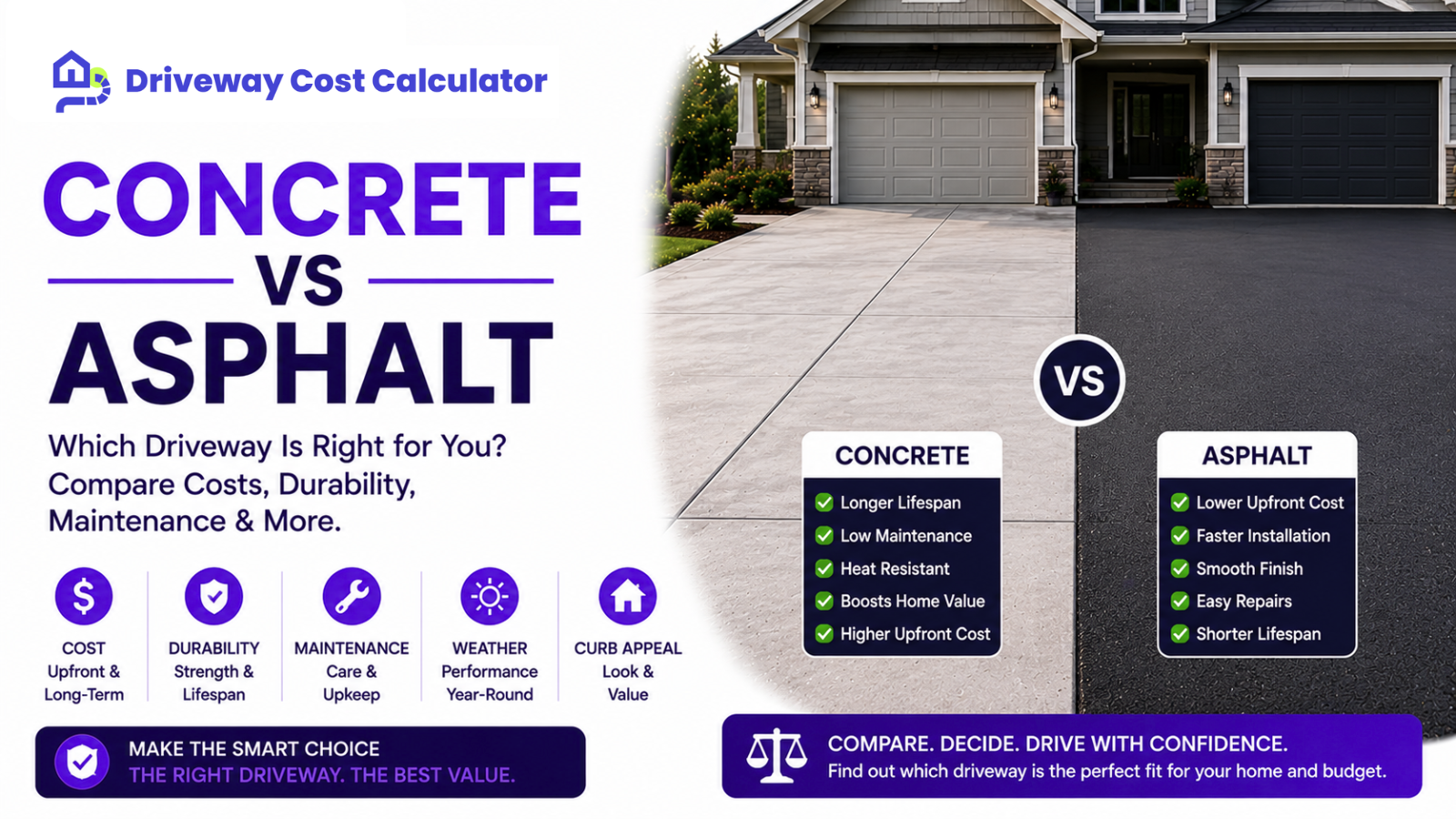
Concrete: Higher Upfront Cost, Lower Long-Term Cost
Concrete generally costs more to install than gravel or asphalt, but it often lasts much longer while requiring relatively little maintenance.
For homeowners planning to remain in their property for many years, concrete may actually provide one of the lowest long-term ownership costs.
Advantages
- Long service life.
- Minimal routine maintenance.
- Excellent curb appeal.
- Highly durable surface.
- Strong resale appeal.
Considerations
- Higher initial investment.
- Repairs may be more noticeable.
- Requires additional curing time before use.
Concrete isn't the cheapest driveway initially, but its durability often makes it one of the best long-term investments for homeowners.
Recycled Asphalt
Recycled asphalt has become an increasingly popular budget-friendly alternative to traditional paving materials.
It consists of reclaimed asphalt pavement that has been crushed and compacted to create a durable driving surface.
Advantages
- Lower cost than new asphalt.
- Environmentally friendly.
- Dark appearance similar to traditional asphalt.
- Better dust control than gravel.
Considerations
- Availability varies by location.
- Surface appearance may be less uniform.
- May require occasional additional compaction.
Where available, recycled asphalt can offer excellent value by combining affordability with the benefits of a paved surface.
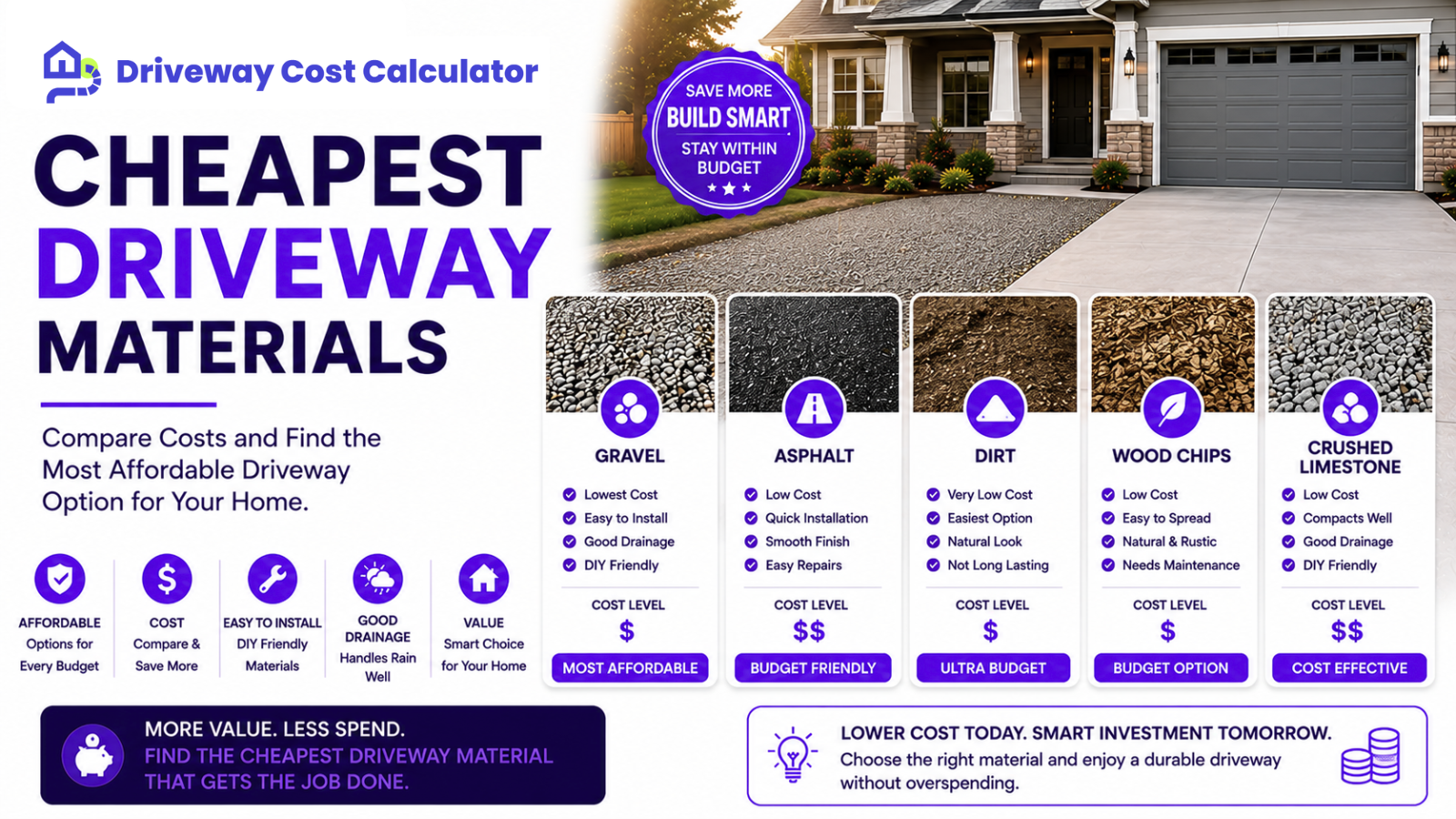
Which Material Is Cheapest?
When comparing only the initial installation cost, the materials generally rank as follows:
| Material | Typical Initial Cost |
|---|---|
| Gravel | ★★★★★ (Lowest) |
| Recycled Asphalt | ★★★★☆ |
| Asphalt | ★★★☆☆ |
| Concrete | ★★☆☆☆ |
| Pavers | ★☆☆☆☆ (Highest) |
Keep in mind that actual pricing varies depending on your location, driveway dimensions, site preparation requirements, excavation, and local labor costs.
Cheapest Doesn't Always Mean Best Value
Many homeowners naturally assume that the lowest-priced driveway will save the most money. However, long-term ownership costs often tell a different story.
For example:
- Gravel requires periodic grading and adding fresh material.
- Asphalt benefits from regular sealcoating and occasional repairs.
- Concrete generally requires the least routine maintenance while offering one of the longest service lives.
When maintenance costs and expected lifespan are considered together, a material with a higher upfront cost may actually become the better financial investment over several decades.
Other Ways to Reduce Driveway Costs
Choosing a less expensive material isn't the only way to reduce the overall cost of a driveway project.
Homeowners may also save money by:
- Comparing estimates from multiple contractors.
- Choosing a simple rectangular driveway layout.
- Avoiding unnecessary decorative finishes.
- Scheduling installation during slower seasons.
- Repairing an existing driveway instead of replacing it when practical.
- Preparing the site in advance if appropriate.
Small savings in several areas can significantly reduce the total project cost without sacrificing quality.
Choosing the Right Material for Your Budget
Choose Gravel If:
- Keeping installation costs as low as possible is your highest priority.
- You own a rural property.
- You have a long driveway.
- You don't mind performing periodic maintenance.
Choose Asphalt If:
- You want an affordable paved surface.
- Your budget is moderate.
- You prefer easier snow removal.
- You want a balance between affordability and convenience.
Choose Concrete If:
- You plan to stay in your home for many years.
- You prefer minimal maintenance.
- You value curb appeal.
- You can invest more upfront for long-term durability.
Cost vs. Value Comparison
| Material | Upfront Cost | Maintenance | Expected Lifespan | Overall Value |
|---|---|---|---|---|
| Gravel | Lowest | High | Indefinite with Maintenance | Good |
| Recycled Asphalt | Low | Moderate | Good | Very Good |
| Asphalt | Medium | Moderate | 20–30 Years | Very Good |
| Concrete | Higher | Low | 30–40 Years | Excellent |
Frequently Asked Questions
What is the cheapest driveway material?
Gravel is almost always the least expensive driveway material to install, making it one of the most popular choices for homeowners working with a limited budget.
Is recycled asphalt cheaper than new asphalt?
In many regions, yes. Recycled asphalt often costs less than new asphalt while still providing a durable, attractive driving surface.
Which inexpensive driveway lasts the longest?
Concrete generally offers the longest service life, while gravel can technically last indefinitely when regularly maintained and replenished.
Is gravel worth it?
For many rural properties and homeowners with limited budgets, gravel provides outstanding value despite requiring more frequent maintenance than paved driveways.
Can a cheap driveway still look attractive?
Absolutely. Proper grading, clean edges, attractive landscaping, and regular maintenance can make even budget-friendly driveway materials look neat, functional, and welcoming.
Final Thoughts
Choosing the cheapest driveway material isn't simply about finding the lowest installation price—it's about selecting the option that provides the best balance between affordability, durability, maintenance, and long-term value.
Gravel remains the most economical solution for homeowners seeking the lowest upfront cost, while recycled asphalt and traditional asphalt offer affordable paved alternatives. Concrete requires a larger initial investment but often becomes one of the most cost-effective choices over several decades thanks to its exceptional durability and low maintenance requirements.
Before making your final decision, compare estimates from several contractors and consider using a Driveway Cost Calculator to estimate project costs based on your preferred material, driveway size, and location. Having a realistic budget before requesting quotes makes it much easier to choose the driveway material that best fits both your finances and your long-term needs.