 Driveway Cost Calculator
Introduction
Choosing the right driveway material is one of the most important decisions homeowners make during a new driveway project. Two popular options are gravel and concrete, but these materials serve very different purposes and offer unique advantages depending on your property, budget, and long-term expectations.
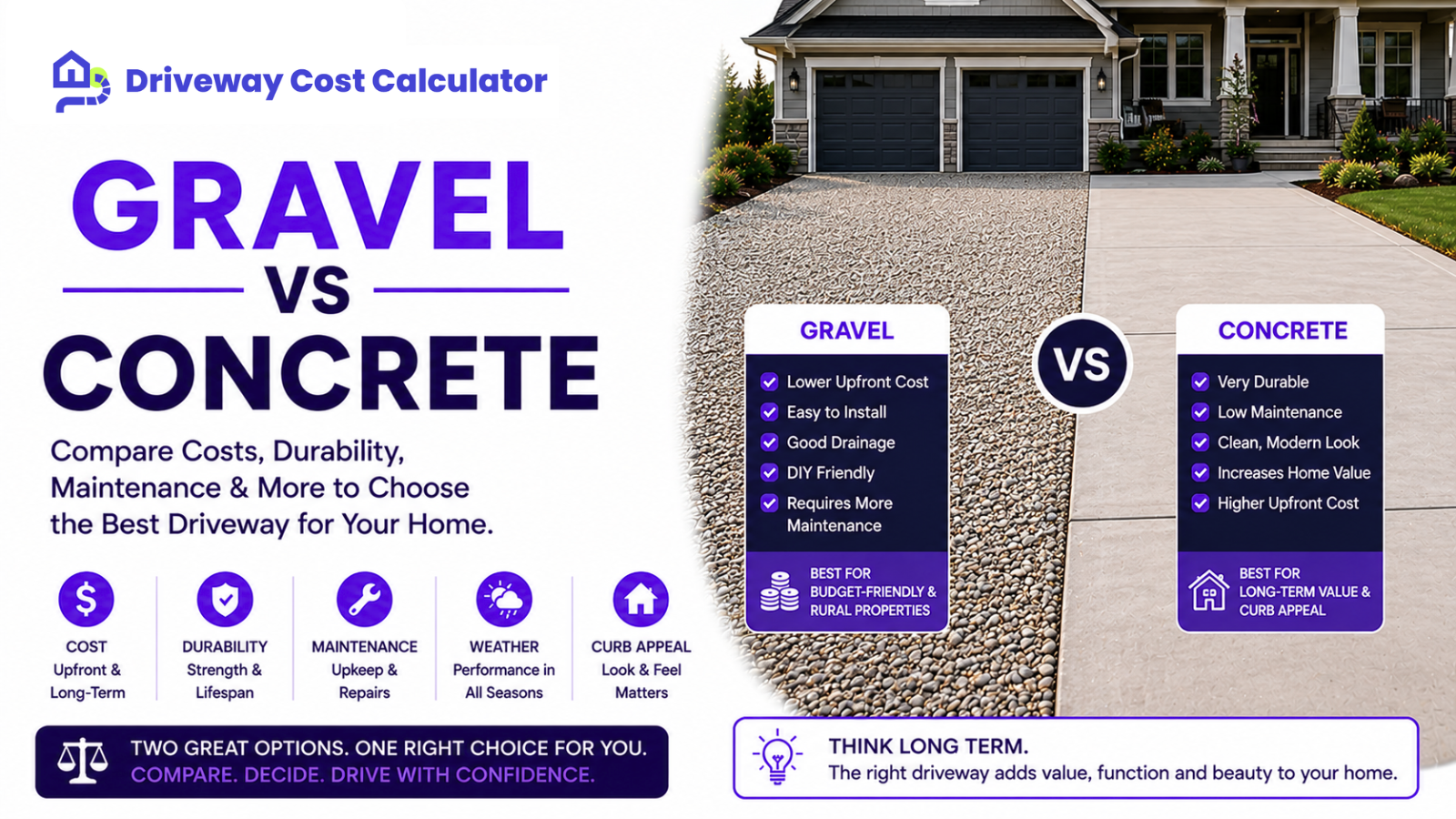
Gravel has remained a popular choice for decades because it offers one of the lowest installation costs, excellent drainage, and a natural appearance that blends well with rural landscapes. Concrete, on the other hand, provides a durable, low-maintenance surface that enhances curb appeal and can last for decades when properly installed.
The best choice isn't simply the cheapest or the strongest material. Instead, it depends on how you plan to use your driveway, the local climate, the amount of maintenance you're willing to perform, and your available budget.
In this guide, we'll compare gravel and concrete across every major category to help you decide which material is the better investment for your home.
Understanding the Two Materials
Although both materials provide reliable driveways, they are built differently and perform very differently over time.
Gravel
Gravel driveways are created by spreading crushed stone or rock over a properly prepared base. Because the surface remains loose rather than permanently bonded together, gravel naturally drains rainwater while allowing damaged areas to be repaired simply by adding additional gravel.
Gravel is especially popular for rural homes, farms, cabins, and properties with long driveways where keeping installation costs low is a priority.
Concrete
Concrete is produced by combining cement, sand, gravel, and water into a rigid slab that hardens through a curing process.
Once fully cured, concrete provides one of the strongest and longest-lasting driveway surfaces available for residential properties.
Modern concrete can also be stamped, colored, or textured to create decorative finishes that significantly improve curb appeal.
Installation Cost
Installation cost is often the first factor homeowners consider when comparing gravel and concrete driveways.
In general:
- Gravel has the lowest installation cost.
- Concrete requires a significantly higher upfront investment.
The total cost of either driveway depends on several factors, including:
- Driveway size.
- Excavation requirements.
- Base preparation.
- Drainage improvements.
- Local labor rates.
- Decorative finishes or custom designs.
Although concrete costs considerably more at the beginning, its longer lifespan often helps offset part of the additional investment over time.
Winner
🏆 Gravel is the most affordable driveway material to install.
Lifespan
Both driveway materials can provide many years of reliable service, although they reach that longevity in different ways.
Typical lifespans include:
- Gravel: Indefinite with regular maintenance.
- Concrete: 30–40 years.
Unlike concrete, gravel never truly reaches the end of its service life. Homeowners simply replenish displaced gravel, fill low areas, and periodically regrade the surface.
Concrete eventually develops wear from age and weather exposure, but a properly installed driveway commonly provides several decades of dependable performance before replacement becomes necessary.
Winner
🤝 Tie. Gravel can last indefinitely with routine maintenance, while concrete delivers exceptional longevity with relatively little upkeep.
Maintenance Requirements
One of the biggest differences between gravel and concrete is the amount of routine maintenance each material requires.
Gravel typically requires:
- Periodic grading.
- Adding fresh gravel.
- Removing weeds.
- Filling ruts and low spots.
- Maintaining driveway edges.
Concrete generally requires:
- Occasional cleaning.
- Repairing cracks if they develop.
- Optional sealing every few years depending on climate.
Although gravel maintenance is relatively simple, it must usually be performed more frequently than concrete maintenance.
Winner
🏆 Concrete requires significantly less routine maintenance.
Appearance
Appearance is another major factor homeowners consider when choosing between these two driveway materials.
Gravel offers:
- A natural appearance.
- Rustic charm.
- A variety of stone colors.
- An informal landscape style.
Concrete provides:
- A clean, modern appearance.
- Stamped decorative finishes.
- Colored concrete options.
- Exposed aggregate textures.
- Excellent curb appeal.
Homeowners seeking a premium appearance generally prefer concrete because it offers much greater design flexibility.
Winner
🏆 Concrete provides greater design flexibility and stronger curb appeal.
Performance in Different Climates
Weather conditions affect gravel and concrete differently, making climate an important consideration when selecting a driveway material.
Cold Climates
Gravel is largely unaffected by freezing temperatures because its loose surface naturally accommodates seasonal movement. Concrete also performs well in cold climates when installed correctly with proper expansion joints and adequate drainage.
Hot Climates
Both materials perform well during hot weather. Concrete maintains its structural strength while gravel is generally unaffected by prolonged high temperatures.
Wet Climates
Gravel naturally allows rainwater to drain into the ground, reducing standing water. Concrete relies on proper grading and drainage design to move water away from the surface efficiently.
Winner
🏆 Gravel offers superior natural drainage, making it an excellent option for areas that receive frequent rainfall.
Repair and Maintenance Costs
Eventually, every driveway requires some level of repair. Understanding how gravel and concrete are maintained over the years can help homeowners estimate their long-term ownership costs.
Gravel repairs typically involve:
- Adding fresh gravel.
- Regrading the surface.
- Filling ruts and low spots.
- Replacing displaced stone.
Most gravel repairs are simple, inexpensive, and can often be completed without hiring a professional contractor.
Concrete repairs generally include:
- Filling small cracks.
- Repairing expansion joints.
- Replacing damaged slabs when necessary.
Although concrete requires repairs less frequently, they are usually more expensive and may be more noticeable because repaired sections often differ slightly in color from the surrounding driveway.
Winner
🏆 Gravel is generally easier and less expensive to repair.
Installation Time
Installation speed is another factor homeowners may wish to consider, especially if they need access to their driveway as quickly as possible.
Gravel driveways can usually be completed in a relatively short time and are often ready for immediate use once installation is finished.
Concrete requires a curing period before vehicles can safely drive or park on the surface. Although installation itself is straightforward, homeowners should expect to wait several days before regular use.
Winner
🏆 Gravel offers faster installation and immediate usability.
Environmental Considerations
Both driveway materials offer environmental advantages depending on the project's priorities.
Gravel naturally allows rainwater to infiltrate into the soil, reducing stormwater runoff and helping replenish groundwater supplies.
Concrete generally lasts much longer than many other driveway materials, reducing the frequency of replacement and minimizing long-term material consumption.
Each material can be an environmentally responsible choice when properly installed and maintained.
Winner
🤝 Tie. Gravel promotes natural drainage, while concrete's long lifespan reduces replacement frequency.
Side-by-Side Comparison
| Feature | Gravel | Concrete |
|---|---|---|
| Initial Cost | Lowest | Higher |
| Expected Lifespan | Indefinite with Maintenance | 30–40 Years |
| Maintenance | High | Low |
| Repair Difficulty | Very Easy | Moderate |
| Appearance | Natural | Excellent |
| Decorative Options | Limited | Extensive |
| Drainage | Excellent | Good |
| Installation Speed | Very Fast | Slower |
Which Homeowners Should Choose Gravel?
Gravel is often the better choice if you:
- Have a limited installation budget.
- Own a rural property.
- Have a long driveway.
- Prefer excellent natural drainage.
- Don't mind performing periodic maintenance.
- Like a natural, rustic appearance.
For many country homes, farms, and cabins, gravel remains one of the most practical and cost-effective driveway materials available.
Which Homeowners Should Choose Concrete?
Concrete may be the better option if you:
- Want maximum durability.
- Prefer minimal maintenance.
- Value curb appeal.
- Plan to stay in your home for many years.
- Want decorative finishes or custom colors.
- Prefer a smooth, paved driving surface.
Although the initial investment is higher, concrete often delivers exceptional long-term value through its durability and attractive appearance.
Frequently Asked Questions
Which driveway is cheaper?
Gravel is almost always the least expensive driveway material to install, making it an excellent option for homeowners working within a limited budget.
Which driveway lasts longer?
Gravel can technically last indefinitely with routine maintenance, while a properly installed concrete driveway commonly provides thirty years or more of reliable service.
Which requires less maintenance?
Concrete requires considerably less routine maintenance than gravel, although repairs tend to be more expensive if they become necessary.
Which performs better in rainy climates?
Gravel naturally provides excellent drainage because water passes through the surface rather than collecting on top, making it particularly suitable for regions with frequent rainfall.
Which adds more value to a home?
Concrete generally contributes more to curb appeal and may have a greater positive impact on property value due to its finished appearance and long service life.
Final Verdict
Both gravel and concrete offer excellent long-term value, but they are designed for different priorities.
If your primary goals are keeping installation costs low, maintaining a long rural driveway, and maximizing natural drainage, gravel is often the better choice.
If you prefer maximum durability, minimal maintenance, a premium appearance, and long-term curb appeal, concrete is usually the stronger investment despite its higher upfront cost.
Before making your final decision, compare estimates from several contractors and consider using a Driveway Cost Calculator to estimate installation costs for both materials. Understanding the expected price difference can help you confidently choose the driveway material that best fits your budget, property, and long-term goals.