 Driveway Cost Calculator
Introduction
Installing a new driveway is a significant investment, and choosing the right time of year can make a noticeable difference in the quality, cost, and longevity of the finished project. While many homeowners focus primarily on selecting the right material or finding the best contractor, the season in which the work is completed is just as important.
Temperature, rainfall, humidity, and even contractor availability all influence how smoothly a driveway installation progresses. Certain materials perform better under specific weather conditions, while poor timing may increase the risk of delays or affect the quality of the finished surface.
In this guide, we'll explain the advantages and disadvantages of installing a driveway during each season, discuss how weather affects different materials, and help you determine the best time to begin your project.
Why Timing Matters
Many homeowners assume a driveway can be installed at any time of year. While installation is technically possible during much of the year in many regions, weather conditions directly influence both construction and long-term performance.
Proper temperatures allow concrete to cure correctly and asphalt to compact properly. Heavy rainfall may delay excavation, while freezing temperatures can interfere with curing and surface stability.
Planning your installation during favorable weather improves the chances of a smoother project and a longer-lasting driveway.
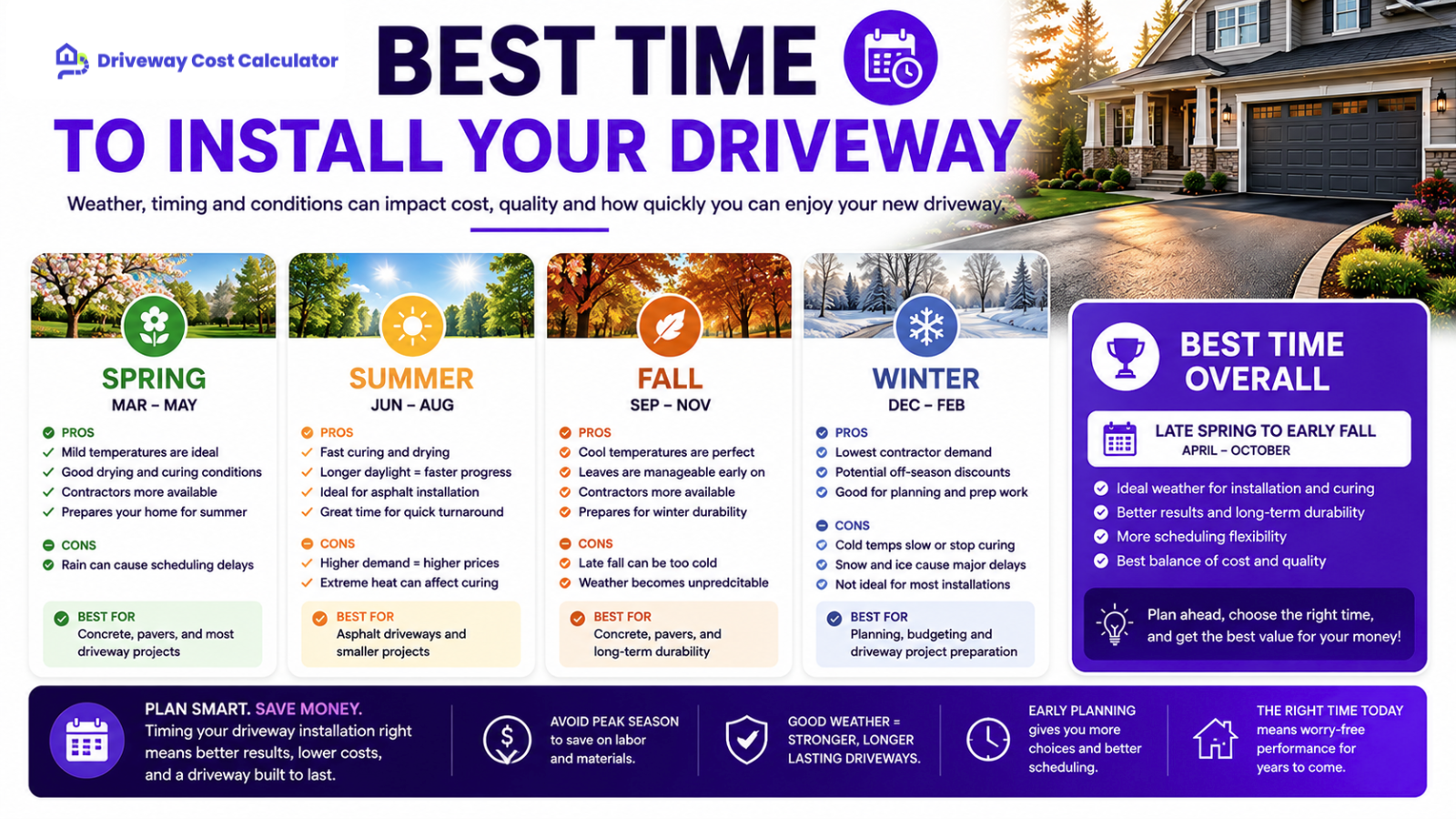
Spring: One of the Most Popular Choices
Spring is often considered an excellent season for driveway installation.
As temperatures become warmer and the ground dries following winter, conditions are generally suitable for excavation and paving.
Advantages
- Moderate temperatures help materials cure properly.
- Contractors begin their busy season.
- Completing the project before summer provides immediate use.
- Landscaping damaged during installation can recover quickly.
Potential Drawbacks
Spring weather can also be unpredictable. Frequent rain may delay excavation, grading, or paving work.
Because demand increases rapidly during spring, scheduling several weeks in advance is usually recommended.
Summer: Ideal Weather for Most Projects
Summer is generally regarded as the best season for installing both asphalt and concrete driveways.
Warm temperatures help asphalt remain workable during installation while allowing concrete to cure consistently.
Advantages
- Stable weather conditions.
- Fewer weather-related delays.
- Excellent curing conditions.
- Longer daylight hours allow contractors to complete projects efficiently.
Potential Drawbacks
Extremely hot temperatures can cause concrete to cure too quickly if proper precautions are not taken.
Summer is also the busiest season for many contractors, meaning homeowners may need to book several months in advance.
Prices may also be slightly higher due to increased demand.
Fall: An Excellent Balance
Many contractors consider early fall one of the best times to install a driveway.
Temperatures remain comfortable while avoiding the extreme heat of midsummer.
Advantages
- Comfortable working temperatures.
- Lower humidity in many regions.
- Stable curing conditions.
- Contractors may have greater scheduling flexibility than during peak summer months.
Potential Drawbacks
Projects should ideally be completed before freezing temperatures arrive.
Late autumn installations may become more difficult in colder climates.
Winter: Usually the Least Favorable Season
Winter presents the greatest challenges for driveway installation.
Frozen ground, snow, and consistently low temperatures often delay projects or reduce installation quality.
Concrete is particularly sensitive to freezing during the curing process.
Asphalt also becomes more difficult to compact properly when temperatures are too low.
Are Winter Installations Ever Possible?
In warmer climates, winter installation may still be practical.
Professional contractors may also use specialized techniques to protect freshly poured concrete under certain conditions.
However, whenever possible, most homeowners benefit from postponing installation until temperatures improve.
Best Season by Driveway Material
Different driveway materials respond differently to weather conditions.
Concrete
Concrete performs best during moderate temperatures.
Extremely hot weather may accelerate curing, while freezing conditions can permanently damage freshly poured concrete.
Spring and early fall generally provide ideal conditions.
Asphalt
Asphalt requires warmth to remain flexible during installation and compaction.
Late spring, summer, and early fall typically produce the best results.
Cold temperatures may prevent proper compaction, reducing long-term durability.
Gravel
Gravel is the least weather-sensitive driveway material.
Installation can often occur throughout much of the year, although heavy rainfall may complicate grading and compaction.
How Weather Affects Driveway Installation
Weather conditions play a major role in determining the success of any driveway installation project. Temperature, rainfall, humidity, and freezing conditions all influence how materials are installed, cured, and perform over the long term.
Rain
Heavy rainfall can delay excavation, soften the ground, and interfere with proper grading. Wet conditions may also prevent contractors from installing asphalt or pouring concrete safely.
Although experienced contractors carefully monitor weather forecasts, unexpected rain can occasionally postpone a project by several days.
Temperature
Every driveway material has recommended temperature ranges for installation.
Moderate temperatures generally provide the best conditions for curing concrete and compacting asphalt, helping create a stronger and longer-lasting surface.
Humidity
Humidity also affects driveway installation. High humidity may slow the curing process in some situations, while extremely dry conditions may require additional curing precautions for concrete to prevent premature drying.
Freezing Conditions
Freeze-thaw cycles create significant challenges for newly installed driveways. Water trapped inside the surface can freeze and expand, increasing the risk of cracking before the driveway has fully cured.
Avoiding installation immediately before freezing weather generally produces better long-term results.
Should You Wait for Better Weather?
Sometimes delaying your project by a few weeks is the smartest decision.
Although homeowners are often eager to begin construction as soon as possible, waiting for favorable weather conditions may improve installation quality and reduce the likelihood of unexpected delays.
A properly installed driveway can last for decades, making a short scheduling delay worthwhile if it results in a stronger, more durable surface.
Other Factors to Consider
Weather is only one part of the planning process. Before scheduling installation, homeowners should also consider several practical factors that may affect both cost and convenience.
- Contractor availability during peak seasons.
- Local permit approval times.
- Material availability.
- Upcoming landscaping or home improvement projects.
- Your own work schedule and family commitments.
- Temporary parking arrangements during construction.
Planning these details in advance helps minimize disruptions while allowing the contractor to complete the project efficiently.
Tips Before Scheduling Installation
Before signing a contract, take time to compare several contractors and understand exactly what is included in each proposal.
Helpful questions to ask include:
- How will weather delays be handled?
- How long will the driveway need to cure before use?
- Is drainage included in the project?
- Are permits required?
- What type of warranty is provided?
- Will the contractor prepare the base properly before installation?
Asking these questions before construction begins helps avoid misunderstandings and ensures you understand exactly what to expect throughout the project.
Seasonal Comparison
| Season | Overall Rating | Advantages | Considerations |
|---|---|---|---|
| Spring | ★★★★☆ | Mild temperatures, excellent curing conditions. | Rain may occasionally delay projects. |
| Summer | ★★★★★ | Ideal weather for most driveway materials. | High contractor demand and hotter temperatures. |
| Fall | ★★★★★ | Comfortable temperatures and stable weather. | Projects should finish before freezing weather. |
| Winter | ★★☆☆☆ | Possible in warmer climates. | Cold weather, snow, and frozen ground may delay installation. |
Frequently Asked Questions
What is the best month to install a driveway?
In many parts of the United States, late spring through early fall provides the most favorable weather conditions. The ideal month depends on your local climate and the driveway material you choose.
Can a driveway be installed during winter?
Yes, in some warmer regions winter installation may still be possible. However, freezing temperatures generally make installation more challenging and may affect long-term durability.
Does weather affect driveway quality?
Absolutely. Temperature, rainfall, humidity, and freezing conditions all influence curing, compaction, and the overall quality of the finished driveway.
Is summer always the best time?
Summer offers excellent conditions in many locations, but extremely hot weather can also create challenges. In many regions, late spring and early fall provide an ideal balance of comfortable temperatures and stable weather.
Should I schedule my contractor early?
Yes. Reputable contractors often book several weeks or even months in advance during the busiest installation seasons. Scheduling early gives you more flexibility and a better chance of securing your preferred installation date.
Final Thoughts
Choosing the right time to install your driveway is just as important as selecting the right material. Favorable weather conditions help ensure proper curing, fewer construction delays, and a longer-lasting finished surface.
For most homeowners, late spring, summer, and early fall offer the best combination of moderate temperatures, predictable weather, and contractor availability. Planning ahead also gives you time to compare estimates, obtain permits if necessary, and prepare your property before construction begins.
Before scheduling your project, consider using a Driveway Cost Calculator to estimate your expected installation costs based on your location, driveway size, and preferred material. Having a realistic budget makes it much easier to compare contractor quotes and confidently plan your investment.