 Driveway Cost Calculator
Introduction
If you're planning to install a new driveway, one of the first questions you'll probably ask is: "How much will it cost?" Whether you're replacing an old driveway or building one for a new home, understanding how contractors calculate pricing can help you create a realistic budget and avoid unexpected expenses.
Many homeowners assume that driveway cost is based only on square footage. While size certainly plays an important role, professional estimates also account for the driveway material, excavation, labor costs, site conditions, drainage, permits, and several other variables.
Learning how driveway costs are calculated allows you to compare contractor quotes more confidently and determine whether an estimate is reasonable. Even if you ultimately use an online cost calculator or hire a contractor, understanding the estimating process helps you make better decisions throughout your project.
In this guide, we'll walk through the main factors that influence driveway pricing and explain how to estimate your project's cost step by step.
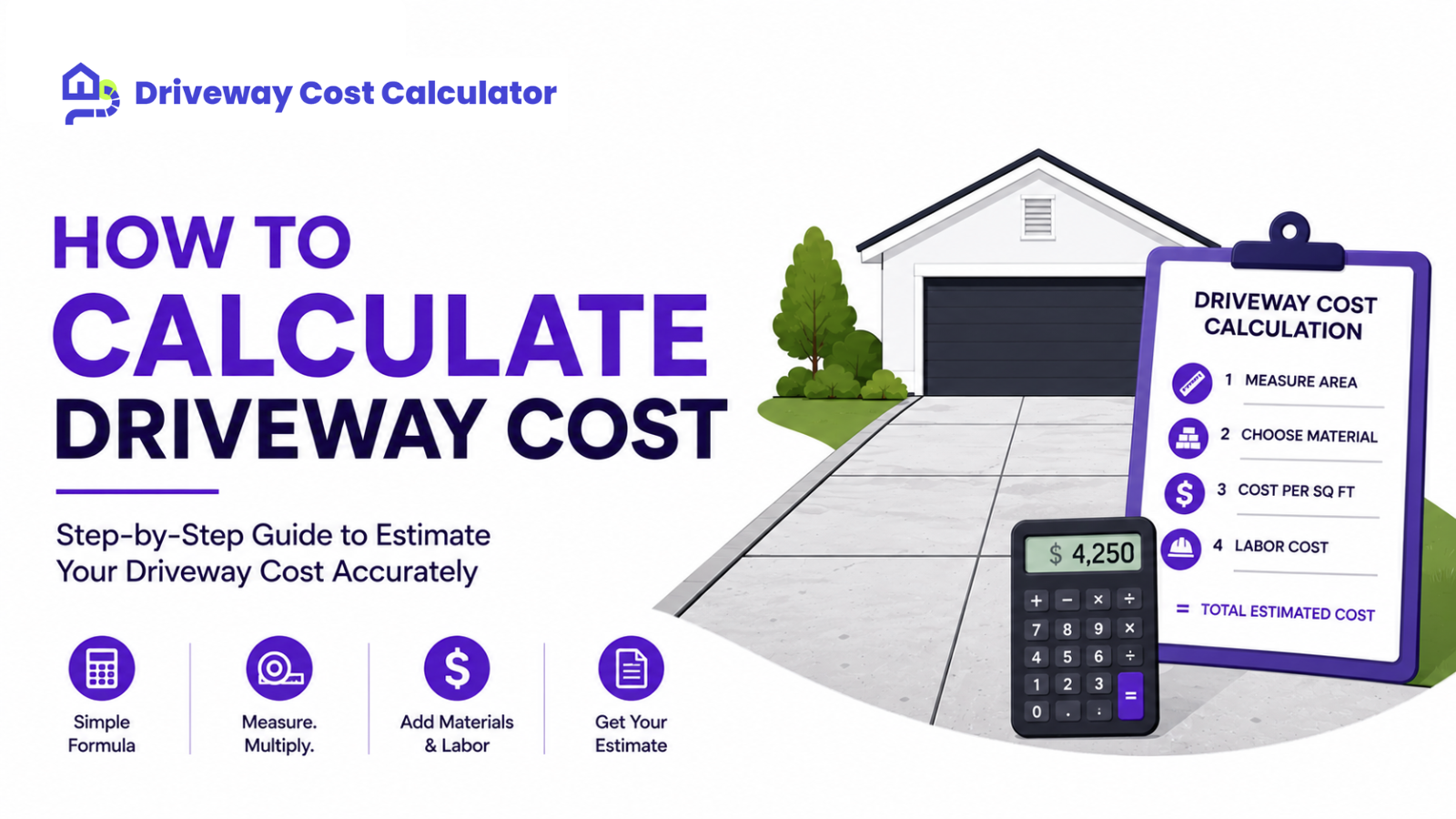
Step 1: Measure Your Driveway
The first step in estimating driveway cost is determining the total surface area of the driveway.
For a simple rectangular driveway, the calculation is straightforward:
Length × Width = Square Feet
For example:
- Length: 40 feet
- Width: 20 feet
40 × 20 = 800 square feet
If your driveway has curves, multiple parking areas, or irregular shapes, divide it into several smaller rectangles or squares, calculate the area of each section individually, and then add the totals together.
Accurate measurements are important because nearly every contractor bases pricing on the total square footage of the project.
Step 2: Select Your Driveway Material
The material you choose has one of the biggest impacts on the total installation cost.
The most common residential driveway materials include:
- Concrete.
- Asphalt.
- Gravel.
- Pavers.
Each material differs in:
- Installation cost.
- Maintenance requirements.
- Expected lifespan.
- Appearance.
- Long-term value.
For example, gravel usually has the lowest upfront cost, while concrete generally requires a larger initial investment but often lasts much longer with less maintenance.
Before estimating your project, choose the material that best fits both your budget and your long-term expectations.
Step 3: Estimate the Cost Per Square Foot
Once you know your driveway size and preferred material, the next step is estimating the cost per square foot.
This price is influenced by several factors, including:
- Your state or region.
- Local labor costs.
- Current material prices.
- Contractor availability.
- Project complexity.
Because labor and material prices vary considerably across the United States, homeowners in different states may receive very different estimates for identical driveway sizes.
Using state-specific pricing generally produces a much more accurate estimate than relying solely on national averages.
Step 4: Account for Site Preparation
One of the biggest mistakes homeowners make is overlooking site preparation costs.
Before the new driveway can be installed, contractors often need to prepare the site by performing work such as:
- Removing an existing driveway.
- Excavating soil.
- Grading the site.
- Compacting the sub-base.
- Installing aggregate base material.
- Improving drainage.
These preparation costs can represent a significant portion of the overall project budget, particularly if the existing site requires extensive excavation or grading.
Step 5: Include Additional Features
Not every driveway consists of a simple rectangular paved surface. Many homeowners choose upgrades that improve both functionality and curb appeal.
Optional features may include:
- Decorative borders.
- Stamped concrete.
- Colored finishes.
- Curved driveway layouts.
- Additional parking pads.
- Walkways.
- Drainage channels.
- Retaining walls.
- Heated driveway systems.
Although optional, these additions should be included in your budget from the beginning to avoid unexpected costs once construction begins.
Other Factors That Affect Driveway Cost
Even after calculating square footage, several additional factors can significantly influence the final contractor estimate.
Some of the most common cost factors include:
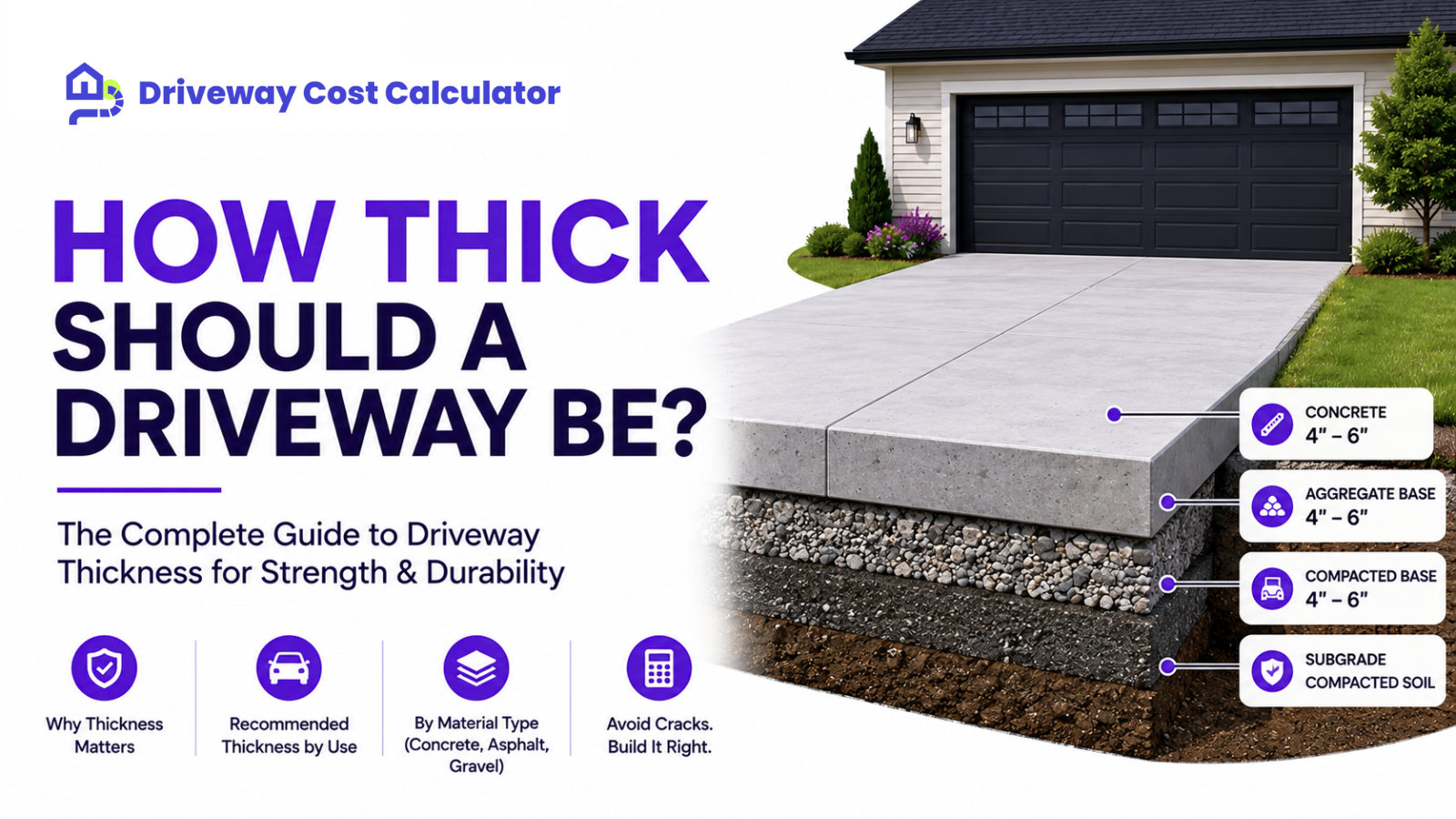
- Driveway thickness.
- Soil conditions.
- Accessibility for construction equipment.
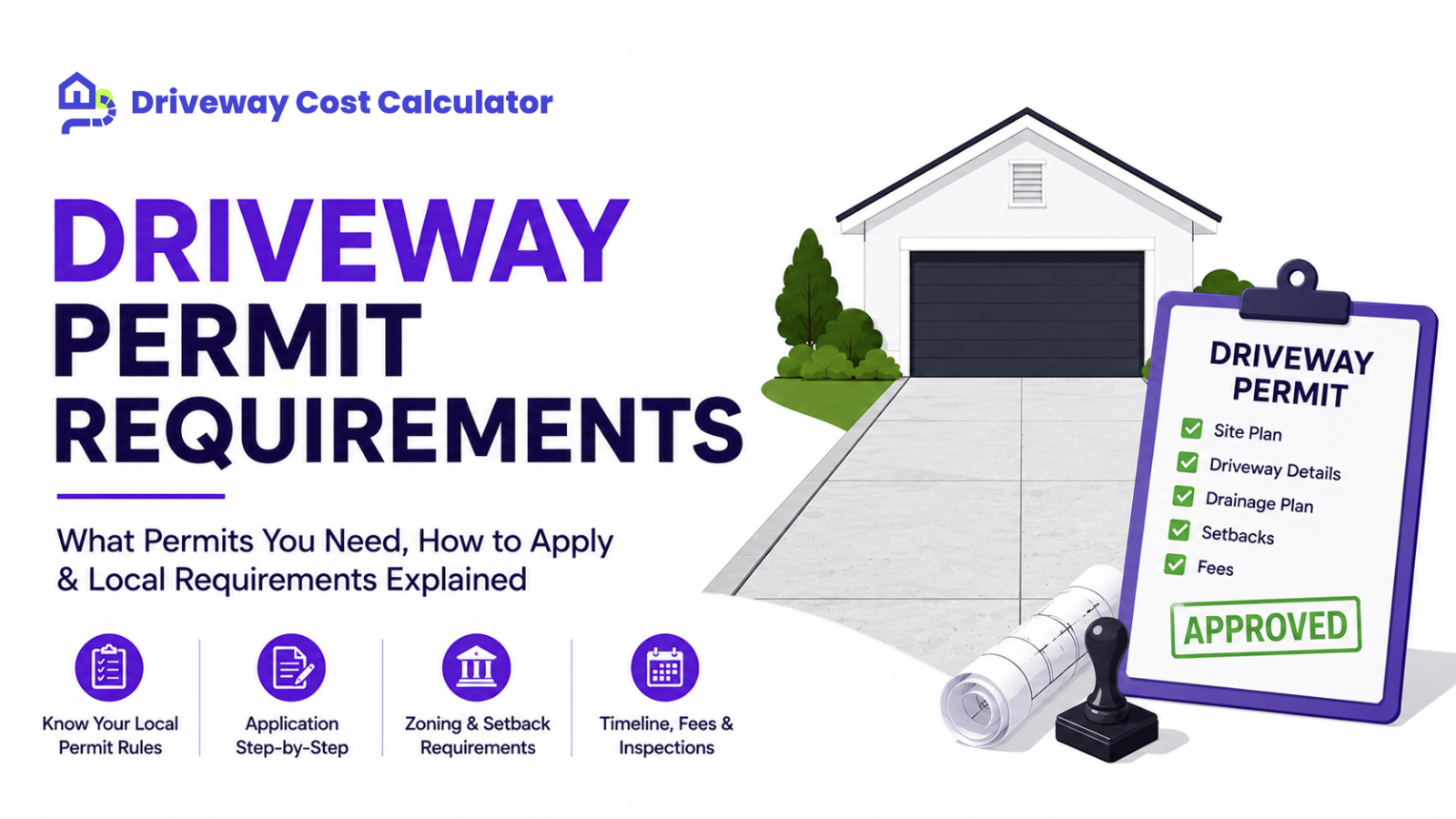
- Permit requirements.
- Local building regulations.
- Drainage improvements.
- Demolition of an existing driveway.
- Decorative finishes and custom features.
Every property is unique, which is why contractor estimates often vary even for driveways with identical dimensions.
Why Location Makes Such a Big Difference
Driveway installation costs vary considerably across the United States.
Regional differences affect:
- Labor wages.
- Material availability.
- Transportation costs.
- Climate conditions.
- Local building codes and permit requirements.
For example, a homeowner in Texas may receive a very different estimate than someone installing the same driveway in California or New York.
Using state-specific pricing generally produces a much more realistic estimate than relying on a single nationwide average.
Example Driveway Cost Calculation
Imagine you plan to install a concrete driveway with the following dimensions:
- Length: 40 feet.
- Width: 20 feet.
The total driveway area would be:
40 × 20 = 800 square feet
If the estimated installation cost is $12 per square foot, your estimated project cost would be:
800 × $12 = $9,600
Remember that this calculation provides only a starting estimate. Additional work such as excavation, demolition, drainage improvements, permits, or decorative finishes can increase the final contractor quote.
Why Online Driveway Cost Calculators Are Useful
Although manual calculations help homeowners understand how pricing works, online driveway cost calculators simplify the entire process.
A quality driveway cost calculator can automatically consider:
- Driveway dimensions.
- Material selection.
- State-specific pricing.
- Estimated square footage.
- Current installation cost ranges.
Instead of researching multiple price estimates yourself, the calculator combines these factors to produce a realistic estimate within seconds.
This provides an excellent starting point before requesting professional contractor quotes.
Tips for More Accurate Estimates
If you want a more reliable driveway budget, consider the following recommendations:
- Measure your driveway carefully.
- Choose the correct driveway material.
- Include demolition costs if replacing an existing driveway.
- Consider drainage improvements.
- Research local permit requirements.
- Request estimates from multiple contractors.
- Compare proposals carefully instead of automatically choosing the lowest price.
The more complete your estimate is, the fewer unexpected costs you'll encounter once construction begins.
Common Cost Estimating Mistakes
Many homeowners unintentionally underestimate the true cost of a driveway project.
Common mistakes include:
- Forgetting excavation costs.
- Ignoring site preparation.
- Using outdated pricing information.
- Measuring the driveway incorrectly.
- Leaving permit fees out of the estimate.
- Forgetting demolition of an existing driveway.
- Ignoring local labor costs.
Avoiding these common mistakes helps create a much more realistic project budget and reduces the likelihood of unexpected expenses.
Frequently Asked Questions
Is square footage the only thing that determines driveway cost?
No. Square footage is only the starting point. Material choice, labor costs, site preparation, excavation, drainage, permits, demolition, and local pricing all contribute to the final installation cost.
Why do driveway prices vary by state?
Labor rates, material availability, transportation costs, climate, and local regulations differ from one state to another, which directly affects installation pricing.
Can I estimate my driveway cost before contacting contractors?
Yes. Measuring your driveway, selecting a material, and using current local pricing provides a useful preliminary estimate before requesting professional quotes.
Are online driveway cost calculators accurate?
A calculator that uses state-specific pricing and regularly updated cost data generally provides a much more reliable planning estimate than national averages alone. Final pricing should always be confirmed by local contractors.
Should I get multiple contractor quotes?
Absolutely. Comparing several detailed estimates helps you understand local market pricing and allows you to choose a contractor based on both value and quality rather than price alone.
Final Thoughts
Calculating driveway cost involves much more than measuring the driveway and multiplying by a price per square foot. Material selection, labor rates, excavation, drainage, permits, soil conditions, demolition, and project complexity all contribute to the final installation cost.
Understanding these factors helps homeowners build a realistic budget, compare contractor estimates with greater confidence, and avoid unexpected expenses during construction.
For the quickest and most accurate estimate, use a Driveway Cost Calculator that combines your driveway dimensions, preferred material, and state-specific pricing. It provides a reliable starting point for planning your project and helps you make informed decisions before requesting professional contractor quotes.