 Driveway Cost Calculator
Introduction
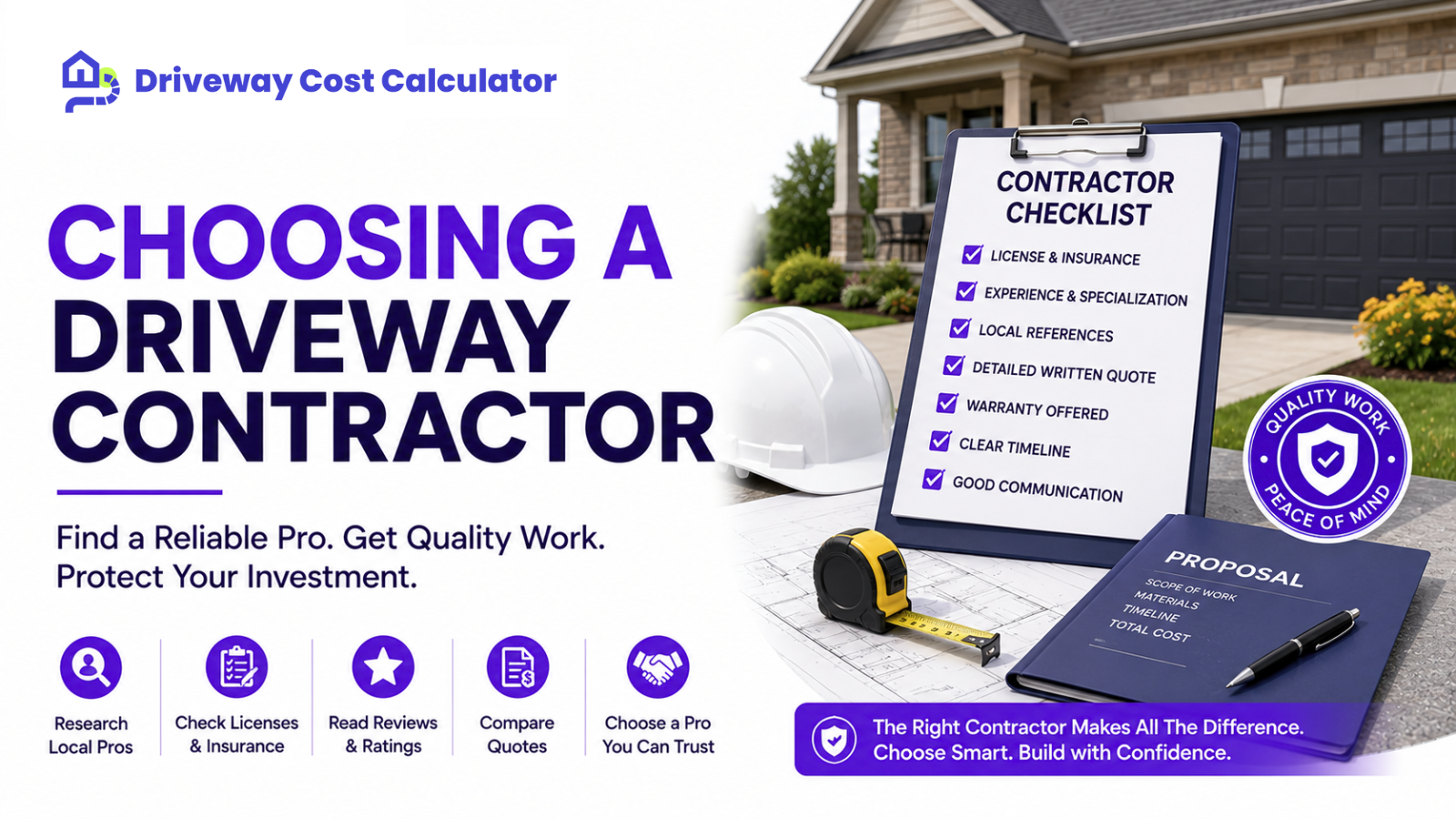
Choosing the right driveway contractor is one of the most important decisions you'll make during your driveway project. Even the highest-quality materials can fail prematurely if they're installed incorrectly, while an experienced contractor can help ensure your investment lasts for decades.
Unfortunately, not every contractor provides the same level of workmanship or customer service. Prices, installation methods, warranties, and experience can vary significantly from one company to another.
The good news is that selecting the right contractor doesn't have to be overwhelming. By asking the right questions, comparing multiple estimates, and understanding what separates a professional installer from an inexperienced one, you can confidently choose a contractor who delivers quality work at a fair price.
Why Choosing the Right Contractor Matters
A driveway is more than just a paved surface. It requires proper planning, excavation, grading, drainage, base preparation, material installation, and finishing.
If any of these steps are performed incorrectly, problems may appear within just a few years.
Poor workmanship can lead to:
- Cracks.
- Uneven settling.
- Standing water.
- Drainage problems.
- Premature deterioration.
- Expensive repairs.
Hiring an experienced contractor greatly reduces these risks and increases the likelihood that your driveway will perform well for many years.
Start by Researching Local Contractors
Begin your search by identifying several contractors who regularly install driveways in your local area.
Local companies are generally more familiar with:
- Regional weather conditions.
- Soil types.
- Local building regulations.
- Permit requirements.
- Common driveway materials.
Working with an established local contractor may also make future warranty support easier if problems arise.
Whenever possible, create a shortlist of at least three reputable contractors before requesting estimates.
Verify Experience
Experience matters.
A contractor who installs driveways every week is likely to have encountered a wide variety of site conditions and construction challenges.
Ask questions such as:
- How many years have you been installing driveways?
- How many similar projects have you completed?
- Do you specialize in residential driveways?
- Have you worked with this material before?
Experience doesn't guarantee quality, but it is often a good indicator of professionalism.
Ask for References
A reputable contractor should have no hesitation in providing references from previous customers.
Speaking with past clients allows you to learn about:
- Communication.
- Reliability.
- Project cleanliness.
- Timeliness.
- Overall satisfaction.
If possible, visit completed projects to see the quality of workmanship firsthand.
Review Previous Work
Most experienced contractors maintain a portfolio of completed projects.
Look for:
- Straight, clean edges.
- Smooth finishes.
- Consistent coloring.
- Proper drainage.
- Attractive appearance.
Photos alone shouldn't determine your decision, but they provide valuable insight into the contractor's attention to detail.
Compare Multiple Estimates
Never hire the first contractor you contact.
Obtaining multiple written estimates allows you to compare:
- Material costs.
- Labor.
- Excavation.
- Drainage work.
- Cleanup.
- Project timeline.
- Warranty coverage.
The cheapest estimate is not always the best value.
A slightly higher price may include better materials, thicker base preparation, or a longer workmanship warranty.
Understand Exactly What's Included
Before signing any contract, carefully review what is included.
A professional estimate should clearly describe:
- Driveway dimensions.
- Material type.
- Thickness.
- Base preparation.
- Excavation.
- Drainage improvements.
- Cleanup.
- Estimated completion time.
The more detailed the proposal, the fewer surprises you'll encounter later.
Ask About Permits
Permit requirements vary depending on your location.
An experienced contractor should know:
- Whether permits are required.
- Who is responsible for obtaining them.
- Whether inspections will be required.
Never assume permits are automatically included in the project price. Clarifying responsibilities before work begins helps avoid delays and unexpected costs.
Discuss the Warranty
Quality contractors typically provide workmanship warranties in addition to any manufacturer warranties covering the materials used during installation.
Before signing a contract, ask questions such as:
- What does the warranty cover?
- How long does it remain valid?
- What situations are excluded?
- Is the warranty transferable if the home is sold?
A written warranty provides valuable peace of mind and demonstrates that the contractor stands behind their work.
Watch for Warning Signs
While most driveway contractors are honest professionals, homeowners should remain alert for warning signs that could indicate poor workmanship or unreliable service.
Be cautious if a contractor:
- Demands full payment before work begins.
- Refuses to provide a written estimate.
- Cannot provide references from previous customers.
- Pressures you to make an immediate decision.
- Avoids answering technical questions.
- Offers prices that seem unusually low compared to other estimates.
Professional contractors are generally transparent throughout the entire process and are happy to explain how they plan to complete the project.
Questions Every Homeowner Should Ask
Before hiring a driveway contractor, consider asking the following questions:
- Are you licensed where required?
- Do you carry liability insurance?
- How long will the project take?
- How will weather delays affect the schedule?
- Who will supervise the installation?
- How should the driveway be maintained after installation?
- When can vehicles safely use the new driveway?
The answers to these questions provide valuable insight into the contractor's experience, professionalism, and communication style.
Why the Lowest Price Isn't Always the Best
Many homeowners naturally focus on finding the lowest quote. However, choosing the cheapest estimate isn't always the best long-term decision.
Lower prices sometimes result from:
- Thinner base layers.
- Lower-quality materials.
- Less excavation.
- Reduced drainage work.
- Shorter workmanship warranties.
Comparing overall value—including experience, workmanship, materials, and warranty coverage—is usually far more important than comparing price alone.
Preparing for Installation
Once you've selected a contractor, preparing your property before construction begins helps the project proceed more efficiently.
Before installation:
- Remove all vehicles from the driveway.
- Clear nearby obstacles.
- Inform neighbors if construction may affect access.
- Protect landscaping and outdoor furniture.
- Confirm utility locations if required.
Good preparation minimizes delays and allows the contractor to complete the installation safely and efficiently.
Contractor Comparison Checklist
| Item | Contractor A | Contractor B | Contractor C |
|---|---|---|---|
| Years of experience | |||
| Written estimate provided | |||
| References available | |||
| Warranty included | |||
| Licensed (where applicable) | |||
| Liability insurance | |||
| Drainage included | |||
| Estimated completion time |
Frequently Asked Questions
How many estimates should I get?
Most homeowners benefit from obtaining at least three written estimates before making a decision. Comparing multiple contractors helps you better understand pricing, services, and workmanship.
Should I always choose the lowest price?
No. Consider the contractor's experience, materials, warranty, communication, and reputation rather than focusing solely on price.
Is insurance important?
Yes. Contractors carrying appropriate liability insurance help protect both themselves and the homeowner if unexpected accidents or property damage occur during construction.
How long does driveway installation usually take?
Most residential driveway installations take several days, although weather conditions, driveway size, material selection, and curing time can affect the overall schedule.
Should everything be included in writing?
Absolutely. A detailed written contract helps prevent misunderstandings and clearly defines the work to be completed, materials used, project timeline, payment schedule, and warranty coverage.
Final Thoughts
Choosing the right driveway contractor is one of the best ways to protect your investment. By researching local companies, comparing detailed estimates, checking references, and asking thoughtful questions, homeowners can significantly reduce the risk of costly mistakes and enjoy a driveway built to last.
Rather than selecting a contractor based solely on the lowest price, focus on experience, workmanship, communication, and overall value. A professionally installed driveway can provide decades of reliable service while improving your home's appearance, functionality, and long-term value.
Before requesting contractor estimates, consider using a Driveway Cost Calculator to establish a realistic budget based on your location, driveway size, and preferred material. Knowing the approximate cost of your project makes it much easier to compare proposals and choose the contractor that offers the best overall value.