 Driveway Cost Calculator
Introduction
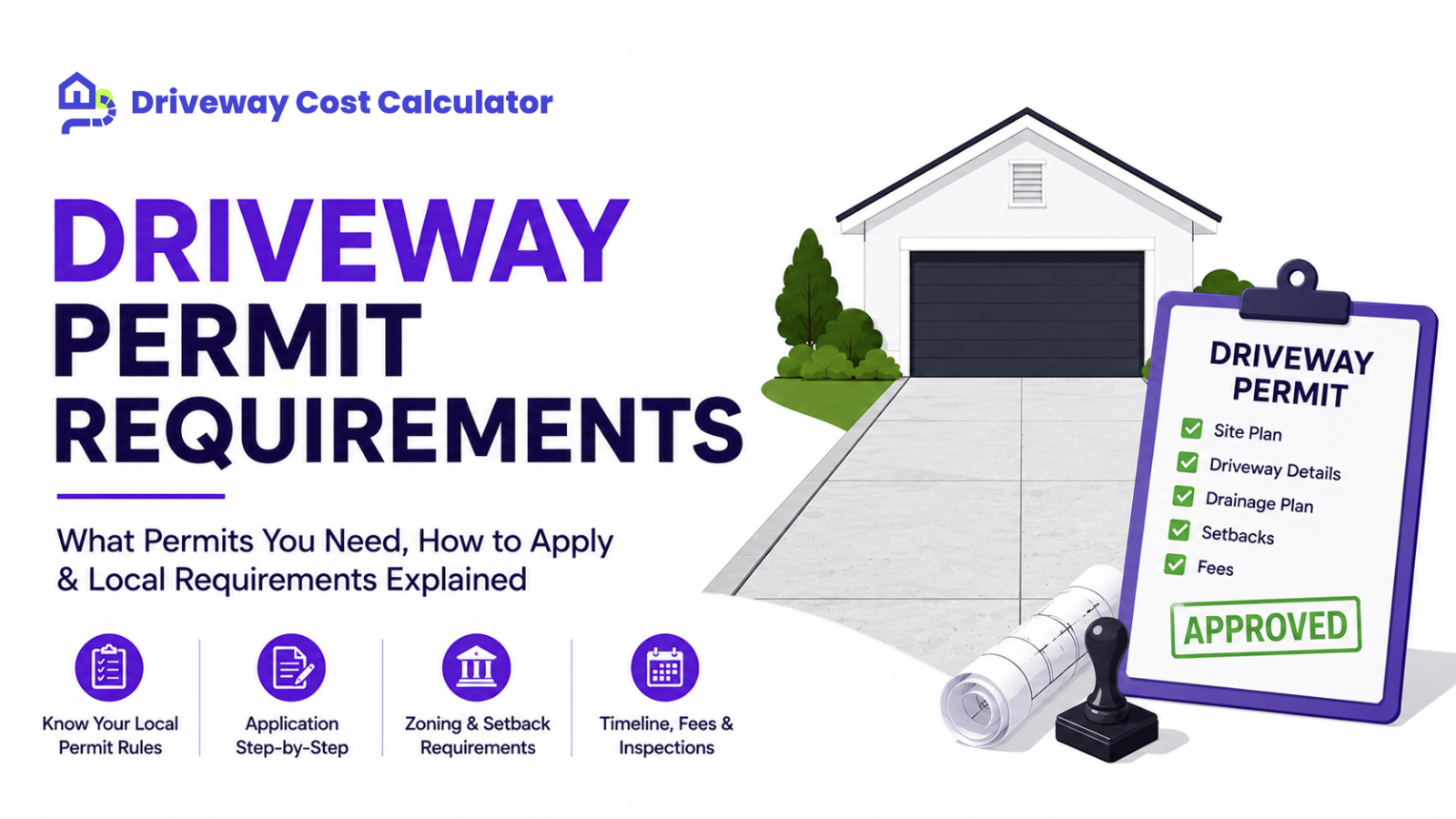
Installing a new driveway involves more than choosing a material and hiring a contractor. Depending on where you live, your project may also require one or more permits before construction can begin.
Permit requirements vary widely across the United States. Some cities require permits for every new driveway, while others only require approval when a driveway connects to a public road, changes drainage, or alters an existing curb.
Although obtaining a permit may seem like an unnecessary extra step, permits help ensure that driveway construction complies with local building codes, protects public infrastructure, manages stormwater runoff, and maintains neighborhood safety.
Before starting your project, it's important to understand whether permits apply to your situation, who is responsible for obtaining them, and what information your local authority may require.
In this guide, we'll explain the most common driveway permit requirements and help you prepare for the approval process.
Why Are Driveway Permits Required?
Local governments regulate driveway construction for several important reasons. A new driveway affects more than just your property—it can also impact nearby public infrastructure and neighborhood safety.
A driveway project may influence:
- Public sidewalks.
- Curbs.
- Street access.
- Stormwater drainage.
- Underground utilities.
- Traffic visibility.
- Pedestrian safety.
Permit reviews help ensure that new driveways meet local engineering standards while protecting both homeowners and the surrounding community.
Do All Driveways Require a Permit?
No. Permit requirements vary by city, county, and municipality.
In many areas:
- Replacing an existing driveway with the same dimensions may not require a permit.
- Expanding an existing driveway often requires approval.
- Installing a brand-new driveway commonly requires permits.
- Creating a new curb cut almost always requires municipal approval.
Because regulations differ across jurisdictions, homeowners should always verify local requirements before construction begins.
Common Situations That Require a Permit
Although every municipality has different rules, permits are commonly required for projects such as:
- Installing a new driveway.
- Widening an existing driveway.
- Creating a new entrance onto a public street.
- Modifying sidewalks or curbs.
- Changing drainage patterns.
- Installing retaining walls associated with the driveway.
- Working within the public right-of-way.
Projects that affect public infrastructure almost always require approval before work begins.
When a Permit May Not Be Required
Some smaller driveway projects may proceed without permits, depending on local regulations.
Examples may include:
- Minor crack repairs.
- Sealcoating.
- Resurfacing without changing driveway dimensions.
- Replacing or adding gravel.
- Routine maintenance.
However, homeowners should never assume that a permit isn't necessary. A quick phone call to your local building department can prevent expensive problems later.
Who Obtains the Permit?
Responsibility for obtaining permits varies depending on your contractor and local regulations.
In many cases:
- Professional contractors obtain permits on behalf of homeowners.
- Homeowners may apply directly for smaller projects.
- Some municipalities require the property owner to submit the application regardless of who performs the work.
Before signing a contract, ask your contractor:
- Who is responsible for obtaining the permit?
- Is the permit fee included in the estimate?
- How long will approval typically take?
Clarifying these responsibilities before construction begins helps avoid delays and unexpected costs.
Information Commonly Required
Permit applications often request several pieces of information before approval can be granted.
- Property address.
- Site plan or property survey.
- Driveway dimensions.
- Proposed driveway material.
- Distance from property lines.
- Drainage information.
- Contractor information.
- Estimated project value.
Some municipalities may also require photographs, engineering drawings, or additional documentation for larger or more complex projects.
Driveway Inspections
Many permitted driveway projects require one or more inspections during construction.
Depending on your municipality, inspectors may verify:
- Excavation depth.
- Base preparation.
- Drainage design.
- Material thickness.
- Compliance with approved plans.
Inspection requirements vary according to the size and complexity of the project. In many cases, inspections occur before the driveway is completed to ensure each stage of construction meets local standards.
Permit Costs
Permit fees vary considerably from one municipality to another.
The total cost often depends on:
- Project size.
- Municipality or county.
- Property type.
- Scope of work.
Some permits cost relatively little, while larger projects involving sidewalks, curb modifications, or public infrastructure may require higher fees.
Including permit costs in your overall project budget helps prevent unexpected expenses later.
Consequences of Skipping a Permit
Skipping a required permit can lead to significant problems during or after construction.
Possible consequences include:
- Stop-work orders.
- Municipal fines.
- Construction delays.
- Difficulties when selling your home.
- Removal of non-compliant work.
- Additional inspection or permit fees.
Obtaining the proper permits before construction begins is usually much less expensive than correcting problems afterward.
Questions to Ask Before Starting
Before beginning your driveway project, consider asking your local building department or contractor the following questions:
- Is a driveway permit required?
- Who is responsible for submitting the application?
- Will inspections be required?
- How long does permit approval usually take?
- Are there driveway width restrictions?
- Is a drainage plan required?
- Is a permit needed for a curb cut?
- Will underground utilities need to be marked before excavation?
Having answers to these questions before construction begins helps reduce delays and avoids unnecessary surprises.
Tips for a Smooth Approval Process
Although permit requirements vary, homeowners can usually make the approval process much easier by planning ahead.
- Contact your local building department early.
- Submit complete and accurate documentation.
- Hire an experienced driveway contractor.
- Allow extra time for permit approval.
- Schedule required inspections promptly.
- Keep copies of all permits and approvals.
Good preparation often results in a faster approval process and fewer construction delays.
Typical Permit Requirements
| Project | Permit Commonly Required? |
|---|---|
| New driveway installation | Usually Yes |
| Driveway widening | Often Yes |
| New curb cut | Almost Always |
| Sealcoating | Usually No |
| Minor crack repairs | Usually No |
| Replacing gravel | Usually No |
| Sidewalk modifications | Yes |
| Drainage changes | Often Yes |
Frequently Asked Questions
Do I always need a permit for a new driveway?
In many municipalities, yes. However, requirements vary depending on local regulations, driveway size, and whether the project affects public infrastructure.
Does replacing an existing driveway require a permit?
Sometimes. Replacing a driveway without changing its size or layout may not require approval, while widening or relocating the driveway often does.
How long does permit approval usually take?
Approval times vary widely. Some municipalities issue permits within a few days, while others may require several weeks depending on the complexity of the project.
Can my contractor obtain the permit?
Many professional contractors handle the permit application process on behalf of homeowners, although some local governments require the property owner to submit the application.
What happens if I build without a permit?
Depending on local regulations, you could face fines, stop-work orders, additional inspections, delays, or even be required to remove non-compliant work.
Final Thoughts
Understanding driveway permit requirements before construction begins can save homeowners significant time, money, and frustration. While not every driveway project requires a permit, many municipalities regulate new installations, driveway expansions, curb cuts, and projects that affect drainage or public infrastructure.
Because requirements vary from one location to another, always verify local regulations before scheduling construction. Working with an experienced contractor who understands local permitting procedures can also simplify the process and help prevent costly delays.
Before requesting contractor estimates, consider using a Driveway Cost Calculator to estimate your overall project budget. While permit fees are only one part of the total cost, planning ahead ensures you're financially prepared for every stage of your new driveway installation.